

Needing to pee more than usual – that’s frequent urination, plain and simple. Whether it’s every hour during the day, or three trips a night, it doesn’t matter which. Sometimes it’s just water or coffee catching up with you.
Other times your body’s flagging something worth a look from a urologist; it can be due to a UTI, overactive bladder, kidney stones, an enlarged prostate, even diabetes.
Frequency alone won’t confirm much of anything – it’s a symptom, not the answer. If frequent urination is persisting and wrecking your sleep, that’s your cue to see a doctor.
Get Relief from Symptoms >> Consult the best urologist in Patna
Searched “why am I peeing so much” at 2 a.m.? You are not alone. In the forthcoming sections, we explain what counts as normal, what doesn’t, and what you can actually do about it.
What is Frequent Urination?
Urinary frequency basically means you’re going to the bathroom more than what feels normal to you. And “normal” is different for everyone depending on how much you drink, your age, your bladder’s own capacity. So, frequency by itself doesn’t say much.
Urgency’s a separate thing entirely: that sudden, can’t-wait feeling. Usually they show up together. They’re not the same symptoms, though.
Here’s the part people miss. Frequent urination and producing more urine aren’t the same. You can run to the bathroom all day and only pass a little each time – that’s usually a bladder or prostate issue. Diabetes plays by different rules. It genuinely increases how much urine your kidneys make.
And nocturia, waking at night to go, is worth tracking as its own pattern, separate from whatever’s happening during the day.
Get that distinction straight, and describing symptoms to a doctor gets a lot easier. Next, the question worth asking is how many bathroom trips is actually too many?
How Often is Too Often to Urinate?
Somewhere around 6 to 8 times a day is typical frequent urination in adults, though that number moves depending on how much fluid you’re drinking, the weather, your medications, your own bladder capacity.
Pregnant? Drink a lot of tea, coffee, or alcohol? You’ll go more. That’s fine on its own. No magic number applies to everyone here.
What actually matters is change. Did your pattern shift out of nowhere? Has it been weeks since you’ve been experiencing symptoms?
Are you waking up repeatedly during the night? Pay attention to that. Same goes if bathroom trips start cutting into your day, especially with pain, fever, blood, leakage, or trouble getting the stream going.
Dealing with a burning sensation after urinating too alongside increased frequency? That combination is worth mentioning to a doctor as the two often trace back to one cause. Rule out fluid intake and caffeine first, then it’s time to look at what’s actually going on medically.
What Causes Frequent Urination?
Frequency of urination causes range from minor, short-lived triggers to conditions you’ll be managing long-term. To determine which is yours, look for other symptoms that are going on alongside frequent urination.
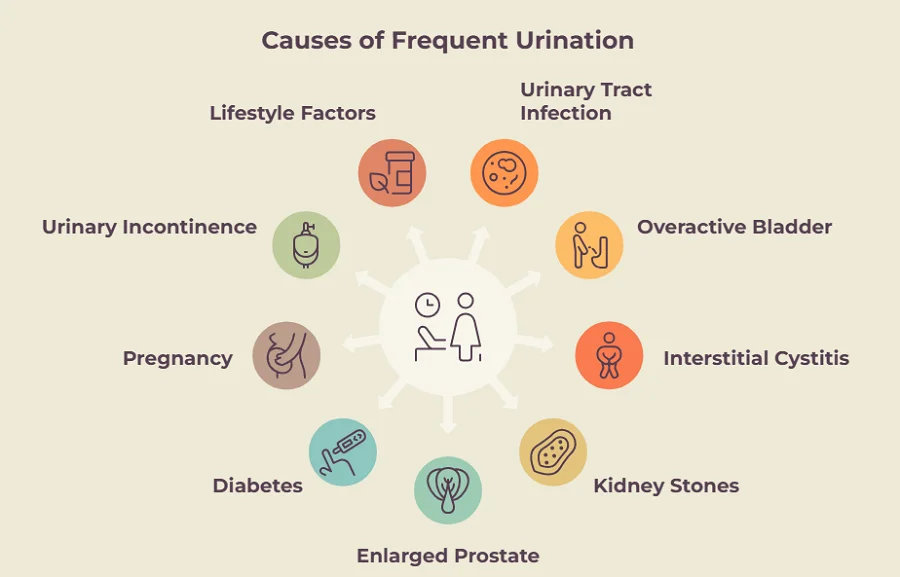
Below is the list of medical and lifestyle common causes. You can compare your own symptoms against these:
1. Urinary Tract Infection (UTI)
The bacteria invade the bladder or urethra, leading to an infection that is quite common in the urinary system and causing the lining to become inflamed and irritated; the consequence of which would be increased frequency and urgency of urination, and that burning sensation you have during urination.
Your urine might get cloudier, smell stronger, or occasionally show streaks of blood.
Sudden-onset frequent urination is a very typical sign of UTI (which is, in effect, a rather large number of female cases of UTIs) and is one of the most common causes of frequent urination in women. During a UTI, the inflammation might even show up as protein in urine.
2. Overactive Bladder (OAB)
The bladder muscle contracts on its own, even when it hasn’t even filled up. The consequence is a very immediate impulse combined together with frequent urination during the day.
The person even gets woken up many times a night to go to the toilet.
3. Interstitial Cystitis / Bladder Pain Syndrome
Frequency, urgency, ongoing bladder or pelvic pain is interstitial cystitis, also called bladder pain syndrome, and it can look almost identical to a UTI.
Here’s the giveaway: urine cultures usually come back clean. No bacteria, despite symptoms that feel the same.
It’s essentially frequent urination without UTI, and because of how closely it mimics infection, it gets missed or misdiagnosed constantly.
Trying to sort out which one you’re dealing with? Our bladder pain syndrome vs UTI comparison lays out where they overlap and where they distinguish in symptoms.
4. Kidney Stones
As stones move through the urinary tract, they irritate it causing frequent urination, urgency, a burning feeling much like a UTI. Bigger stones, or ones blocking urine flow, tend to bring sharp flank or abdominal pain, and blood in the urine isn’t rare either.
✅ Consulting a Urologist can Help Find the Cause

5. Enlarged Prostate (BPH)
After 50, benign prostatic hyperplasia, an enlarged prostate, is actually one among the few causes of frequent urination in men which is the top reason if your frequent urination starts during sleep.
As the gland grows, it presses on the urethra and this causes more frequent urination (especially at night), a weak flowing urinary stream in males, an incomplete emptiness feeling.
Early signs of prostate issues usually present themselves slowly, over months or years, which is exactly why so many men only get checked after things have become genuinely troublesome.
6. Diabetes
High blood glucose means your kidneys have to work overtime to filter out the extra sugar, pulling more water into your urine along the way – that’s what drives both the urgency and the thirst.
The key difference from almost every other cause on this list: diabetes actually increases your urine volume, not just how often you feel like going with small amounts each time. Frequent urination plus unusual thirst? Bring that up with a doctor soon.
7. Pregnancy
Hormones shift, blood flow to the kidneys increases, and you’ll likely notice more frequent urination even in early pregnancy. Later on, the growing uterus physically presses on the bladder, so it just can’t hold as much. This is expected, and it typically resolves after delivery.
8. Urinary Incontinence
Sometimes what people call frequent urination is actually urgency-driven leakage or a general loss of bladder control. It can happen with coughing, sneezing, or exertion, or right alongside a sudden urge, and it’s easy to mistake it for simply needing to go more.
Noticed urine leakage when coughing? It’s worth flagging to your doctor as its own separate issue.
9. Excessive Fluids, Caffeine, and Other Lifestyle Factors
More fluids, more caffeine, alcohol, carbonated drinks – all of it pushes your kidneys to make more urine, so naturally, more bathroom trips follow.
Some medications work the same way on purpose: diuretics prescribed for blood pressure or heart conditions are designed to increase urination. These patterns are usually easy to spot once you line up your intake against your symptoms.
Lifestyle causes and medical ones overlap constantly, which is exactly why guessing at this yourself gets messy. Not to mention, nighttime urination is worth a closer look on its own, since it points toward a slightly different set of possibilities.
Frequent Urination at Night: What Does It Mean?
Nocturia is waking up once or more a night to pee and it is one of the more disruptive versions of frequent urination, mostly because it eats directly into your sleep.
Simplest explanation: fluids, especially caffeine or alcohol, too close to bedtime. That ramps up urine production right when you’re trying to rest.
But plenty of medical causes show up here too. A UTI, overactive bladder, or an enlarged prostate symptoms can all get worse at night, since lying down shifts fluid around your body and sends more blood to the kidneys. Diabetes and some blood pressure or heart medications play a role as well.
Experiencing nocturia which is persistent and paired with daytime symptoms? Probably not just an evening habit. There can be an underlying cause in these cases, and it’s worth getting checked by a urologist.
Track how often you’re waking up and what you drank beforehand; that alone gives your doctor a real head start on pinning down the cause.
Frequent Urination With Other Symptoms: What Could It Mean?
Frequent urination and urgency almost never show up alone. Whatever tags along usually narrows things down faster than frequency by itself does. Treat the table below as a general guide, not a diagnosis.
| Symptoms Alongside Frequent Urination | Possible Causes |
| Burning or pain | UTI, irritation, kidney stones |
| Fever or chills | UTI, kidney infection |
| Blood in urine | UTI, kidney stones, other urinary conditions |
| Flank pain | Kidney stones, kidney infection |
| Weak urine stream | Enlarged prostate (BPH), obstruction |
| Sudden urgency | Overactive bladder, UTI |
| Pelvic or bladder pain | Bladder pain syndrome |
| Excessive thirst | Diabetes |
| Urine leakage | Incontinence, overactive bladder |
Pattern-matching like this is useful for gauging how urgently to act. It’s not a replacement for an actual medical evaluation, though – that’s what the diagnostic process is for.
How is Frequent Urination Diagnosed?
Your age, sex, how long symptoms have lasted, what else is going on, your broader medical history – it all factors in here. A urologist usually starts with a real conversation, not a test order.
Medical History
Expect questions. How often you’re going. Roughly how much urine each time. Whether urgency’s part of it. Whether nighttime trips are wrecking your sleep.
Your doctor will also ask about fluid intake and caffeine habits, current medications, past UTIs, and, when it comes to men, prostate-related symptoms like a weak stream or straining. Often, this conversation alone narrows things down well before a single test gets run.
Tests
A urinalysis and urine culture check for infection. A blood glucose test screens for diabetes. Kidney function tests and an ultrasound look at the urinary tract for stones or structural issues.
Depending on what’s going on, your doctor might add a post-void residual measurement, uroflowmetry, or urodynamic testing for the trickier cases.
These tests are what actually confirm a cause instead of leaving it to guesswork. Diagnosis lands, and treatment gets built around it from there.
Treatment for Frequent Urination
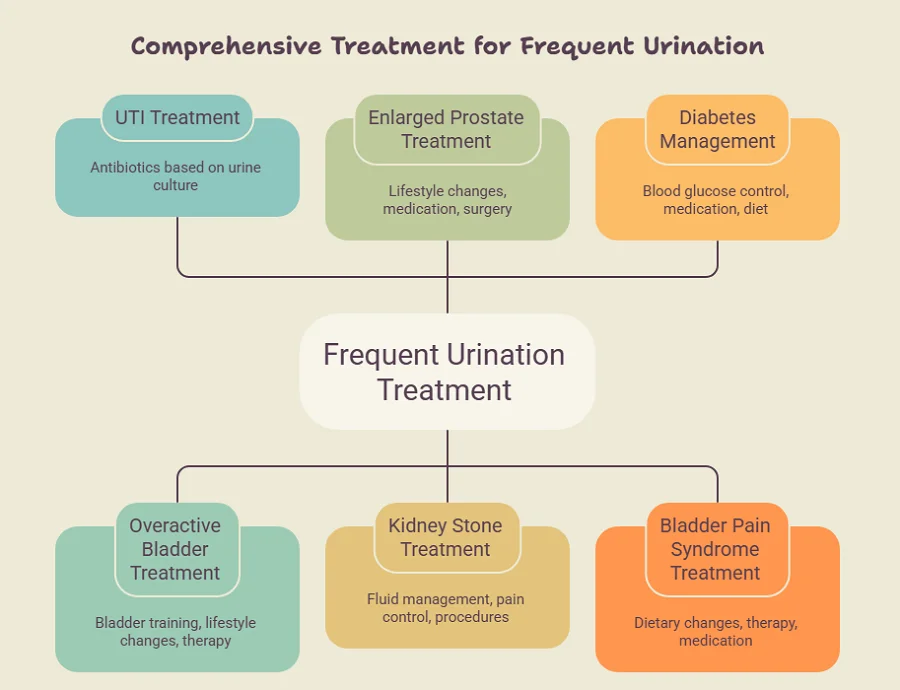
Frequent urination treatment hinges entirely on what’s causing it. That’s the whole point of getting the diagnosis right before trying random remedies.
1. UTI
Antibiotics are prescribed once a urine culture confirms the infection and then the urologist will prescribe you the right medication and the course.
2. Overactive Bladder
The treatment depends on how severe it is. Bladder training, lifestyle and diet changes, pelvic floor therapy, prescribed medication, or other specialist options can be prescribed if the basics don’t cut it.
3. Enlarged Prostate (BPH)
Mild cases often just get lifestyle changes and monitoring. Moderate symptoms might need medication. But if the symptoms are severe or persistent, that can mean minimally invasive procedures or surgery to clear the blockage.
4. Kidney Stones
Depends on the stone’s size, location, and whether it’s causing a blockage or infection. The treatment could mean fluid management and pain control or you could be prescribed a procedure to break up or remove a bigger stone.
5. Diabetes
Controlling blood glucose through medication, diet, and monitoring, under the guidance of an endocrinologist or your regular doctor, is usually the first line of treatment for managing frequent urination linked to diabetes.
6. Bladder Pain Syndrome
It looks different from person to person, so treatment gets built around the individual. The treatment is often a mix of dietary changes, bladder therapies, and medications aimed at reducing pain and urgency.
Don’t self-treat with OTC antibiotics or other prescription-only medications. Wrong treatment just delays finding out what’s actually wrong with you.
Talk to a doctor to get the right treatment plan for your specific cause >> Book Appointment →
Home Measures That May Help
Medical treatment handles the root cause. A few habits can still take the edge off in the meantime, though.
- Cut back on caffeine.
- Ease up on evening fluids if nighttime trips are the main issue.
- Don’t hold urine out of habit for long stretches,
- and stay reasonably hydrated – don’t cut fluids too aggressively trying to fix this yourself.
A simple log helps too: having a mental or written record of how often you go, plus any urgency, pain, or leakage gives your doctor something concrete to work with at the appointment. But remember that these habits support treatment, they don’t replace it.
When Should You See a Doctor for Frequent Urination?
Get evaluated if frequent urination persists, keeps coming back, or disrupts your sleep and daily life. See a doctor promptly if any of this shows up alongside it:
- Burning or pain during urination
- Blood in the urine
- Fever or chills
- Flank or back pain
- Difficulty passing urine
- Significant leakage or loss of control
- Excessive thirst or unexplained weight changes
Catch the cause early with proper diagnosis and the treatment tends to be faster and simpler. Dr. Kumar Rohit, Consultant Urologist at Big Apollo Spectra Hospital, brings 7 years of experience in endourology and kidney stone treatment to the table.
As the best urologist doctor in Patna, he can help track down and manage what’s actually behind your frequent urination.
>> Consult Dr. Kumar Rohit for a Urology Consultation
Frequently Asked Questions
Following are some of the commonly asked questions regarding urination frequency and concerning symptoms.
1. Is it normal to pee every 30 minutes?
No. Urinating every 30 minutes indicates real urgency or frequency, and it’s worth checking out. Common culprits: UTI, overactive bladder, too much fluid or caffeine, anxiety. If the pattern is new or won’t quit, see a urologist, and don’t just wait it out.
2. Are your kidneys ok if you pee a lot?
Not necessarily a problem. Could just mean you’re drinking a lot, on certain medication, or dealing with a bladder issue, not kidney disease. That said, diabetes and kidney disease can raise output too, so lasting changes deserve a doctor’s opinion.
3. When should I worry about peeing a lot?
When it’s sudden, won’t quit, or comes with pain, fever, blood, flank pain, or unexplained thirst. Losing sleep over it or having it interfere with your day is also a signal. These patterns usually point to something treatable.
4. What does healthy urine look like?
Pale yellow to amber. Clear, not cloudy. No strong or foul smell. Colour shifts a bit with hydration or certain foods and supplements – that’s normal. Cloudy, dark, or blood-tinged urine? That needs attention.
5. How many times a day is it normal to urinate?
Around 6 to 8 times in 24 hours for most people, though fluid intake, climate, and your own bladder capacity all shift that number around.
More or less isn’t automatically a problem unless it’s a real change from your usual pattern. The shift is what matters, not the raw count.
6. What causes frequent urination but no pain?
Overactive bladder, diabetes, pregnancy, too much fluid or caffeine, certain medications like diuretics can cause painless frequent urination.
Since there’s no pain, these causes often get overlooked longer than infections do. A urine test and blood glucose check can pin down the cause faster.
7. Can a UTI cause frequent urination?
Yes, it is one of the most common causes, especially when it hits suddenly with burning or urgency occurring simultaneously.
The infection irritates the bladder lining, so it feels full even with small amounts of urine inside. Antibiotics usually clear up both at once.
8. Why am I urinating frequently at night?
Could be evening fluids or caffeine. Nighttime frequent urination, or nocturia can also be caused by an enlarged prostate, overactive bladder, diabetes, or certain medications.
Lying down also shifts fluid around your body, which increases urine production overnight. If it keeps happening night after night, get it checked.
9. Can kidney stones cause frequent urination?
Yes. Stones irritate the urinary tract and can trigger frequent urination, urgency, and burning, especially as one moves toward the bladder. Flank pain or blood in urine often tags along. Imaging confirms whether a stone’s actually the cause.
10. Can frequent urination be a sign of diabetes?
Yes, frequent urination plus unusual thirst is a classic early sign, driven by high blood sugar pulling extra fluid into your urine.
Unlike bladder-related causes, diabetes genuinely increases total urine volume, not just how often you feel the urge. A blood glucose test confirms this quickly.
11. When should frequent urination be a concern?
When it’s new, persistent, disrupting your life, or paired with pain, fever, blood, leakage, or unexplained thirst. Small changes tied to fluid intake usually aren’t a big deal on their own.
Not sure which category you’re in? Get a diagnosis from a urologist to rule out anything serious.
12. Which doctor should I see for frequent urination?
A urologist covers most causes here – UTIs, kidney stones, overactive bladder, prostate issues. If diabetes seems likely, your urologist may loop in an endocrinologist or your regular physician too.
Consulting a urologist is still the most direct starting point to the right diagnosis for urinary issues.
Seek Care for Frequent Urination Before It’s Late!
Frequent urination can be due to something as simple as drinking more water, or it can point to something real like a UTI, an overactive bladder, kidney stones, an enlarged prostate, or diabetes.
Frequency alone is just a symptom, nothing more, so tracking your pattern alongside whatever else is going on gives your doctor an actual starting point.
If frequent urination is persistent, disruptive, or showing up with other symptoms, get it evaluated. Don’t just guess.
Dr. Kumar Rohit and the urology team at Big Apollo Spectra Hospital, Patna, can diagnose and treat the full range of conditions behind frequent urination.
Book an appointment today, and get a treatment plan built around what’s actually causing your symptoms.