Epilepsy is usually not curable in the way a bacterial infection gets cured and simply ends. But don’t let that discourage you. A lot of people with epilepsy go years without another seizure once they land on the right treatment.
What happens in your case comes down to a few things: the type of epilepsy, what caused it, how you respond to medication. Some kids outgrow certain epilepsy syndromes completely. Others are on treatment for good to stay seizure-free.
This guide gets into what “cure” really means for epilepsy care, what tilts the odds one way or another, and when it’s time to see a specialist.
Can Epilepsy Be Cured Permanently?
Most of the time, epilepsy treatment is about keeping seizures under control, not curing the condition. There’s no pill, no procedure, that guarantees your brain stops misfiring and producing abnormal electrical signals.
What doctors can actually offer is long-term seizure freedom and years without an episode. Sometimes on medication, sometimes, for a lucky few, even after coming off it under a doctor’s supervision.
Is epilepsy curable? Occasionally. Some childhood syndromes resolve as kids age, and in rare situations surgery removes a clearly identified seizure focus. For most people, though, treating epilepsy ends up looking a lot like treating diabetes or high blood pressure. You manage it. You don’t defeat it once and walk away.
So is epilepsy a lifelong condition for everyone? No, not for everyone. It depends entirely on your diagnosis.
👉 Get the Right Prognosis – Consult Neurologist in Patna
What Does It Mean to Be Cured of Epilepsy?
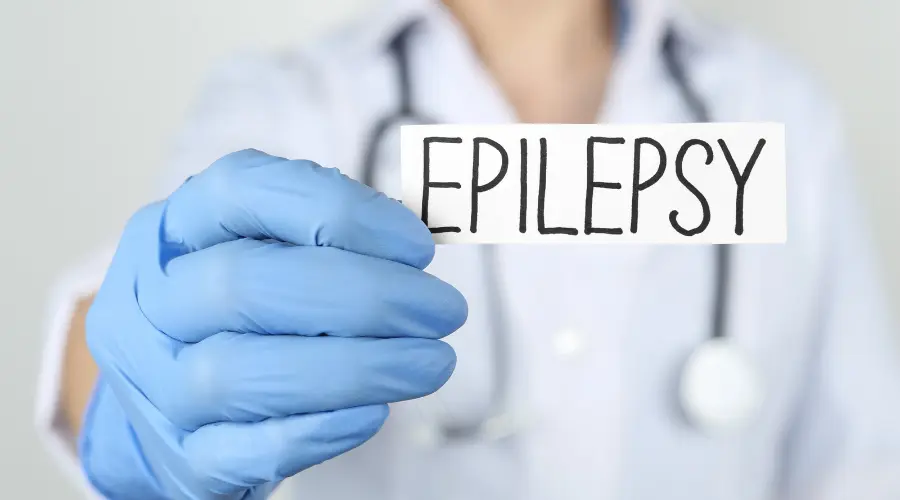
“Many people are confused about what it means to be “cured,” and what it means to be in control.
- Cured means that the patient has had their underlying tendency to go into seizure resolved, and therefore they do not require treatment.
- Controlled refers to when a person experiences a cessation of seizures, however they continue to take prescribed medication or participate in some form of ongoing therapy.
- Seizure free simply refers to an extended period during which a person has not experienced a seizure; this could potentially lead to long-term freedom from seizure activity.
While there are many people who have been seizure-free for decades, remaining on medications throughout that time, others will taper off treatment after years and never experience a seizure again.
Some children develop certain seizure disorders early in life (such as benign rolandic epilepsy) and these conditions typically improve with age as the brain matures. Our guide on what is epilepsy provides more information about the underlying causes of epilepsy.
Doctors use the term remission from epilepsy instead of cure. This is generally viewed as good news by the medical community, although it is not always a guarantee that a patient will remain seizure-free forever. A patient’s neurologist will track their history and current status over time.
>> Consult a Neurologist for a Detailed Treatment Plan

Will Epilepsy Resolve Without Lifelong Treatment?
Sometimes, yes. It really hinges on which syndrome you’ve got, how old you were at onset, the cause, your seizure history, and how medication’s worked so far for you.
Take childhood absence epilepsy. These cases often resolve as the child grows older. Brain activity settles as they age and for plenty of them, the seizures stop and never return. It’s a big part of why neurologists tend to be more optimistic with pediatric cases.
Structural causes tell a different story, though. Scarring from an old injury, a malformation someone was born with, these don’t settle on their own. You’re usually looking at long-term treatment to keep things under control.
Here’s where people trip up, though: a seizure-free year or two does not mean it’s safe to stop your medication.
Cut back or quit without medical supervision and you’re raising your odds of a breakthrough seizure, and it can hit worse than the ones before.
Can epilepsy go away permanently with zero medical involvement? In select syndromes, maybe. But waiting it out alone, unsupervised, isn’t a smart move for most people.
What Factors Affect the Chances of Long-Term Seizure Freedom?
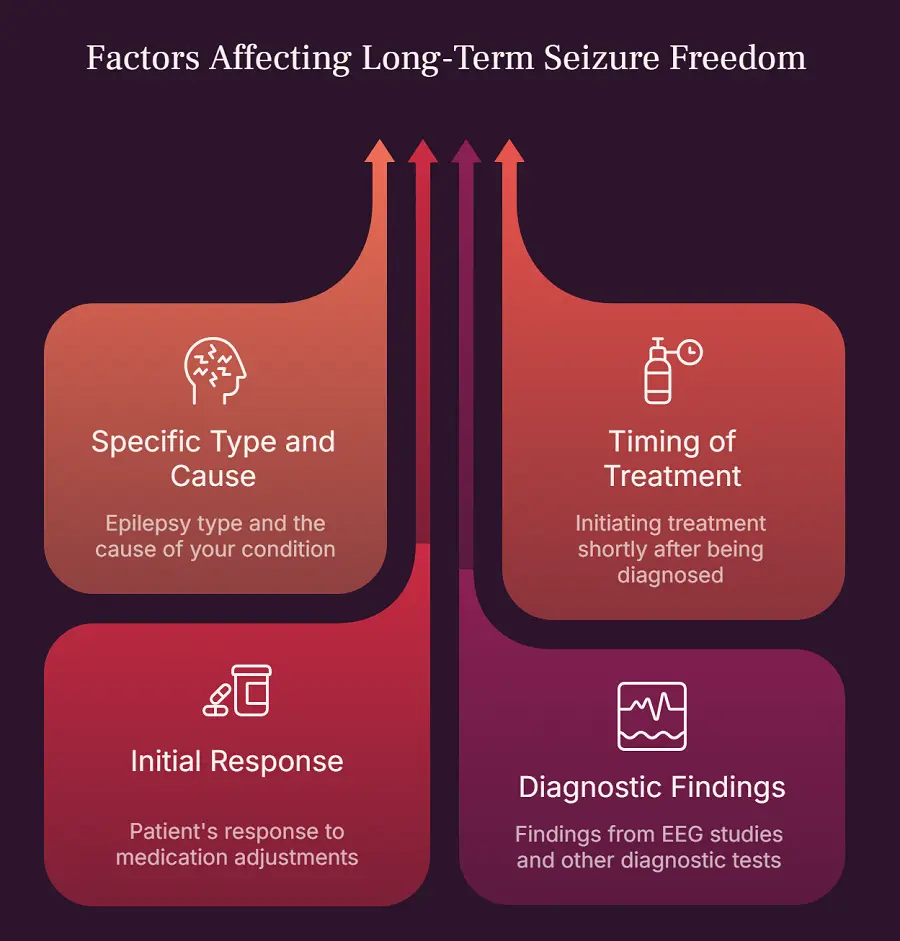
Many characteristics will determine how likely you are to achieve long-term control of seizures; but there is no one characteristic that alone defines your entire experience.
1. Specific Type and Cause of Epilepsy
Epilepsy type (focal, generalized, or a defined syndrome) and the cause of your condition will influence how well it responds to treatment. Different types of epilepsy (genetic, caused by structural changes to the brain due to an injury or stroke, or idiopathic) respond to treatment in different ways.
2. Timing of Treatment
Initiating treatment shortly after being diagnosed with epilepsy has shown improved outcomes. Seizure patterns tend to get more established over time and can make future control more difficult when treatment is delayed.
3. Initial Response to Medication
Approximately 2 out of every 3 patients who begin an appropriate medication regimen for their epilepsy become seizure free. The remaining require either an adjustment of dosage and/or use of a different medication until they find the most effective one.
4. Diagnostic Findings
Findings from EEG studies and other diagnostic tests provide your treating physician a better understanding of the structural and electrical basis of your seizures.
These findings assist both in establishing a definitive diagnosis as well as establishing reasonable expectations for potential response to therapy.
You cannot expect a doctor to provide you with a “fixed percentage chance of seizure freedom” based upon reviewing your medical history. Each patient requires individualized clinical evaluation.
What Are the Treatment Options for Epilepsy?

Treating epilepsy is not a one-size-fits all approach. The doctor will decide which type of treatment is best for you based on your seizure type, age, medical history and how your body reacts as the treatments are being used.
1. Anti-Seizure Medications
The majority of individuals diagnosed with epilepsy take anti-seizure medications. Anti-seizure medications help control the abnormal electrical activity within the brain that causes seizures.
However, medications do not correct the underlying cause of the condition; instead, they simply prevent the electrical storms that create the symptoms associated with an episode.
Finding the right type of medication may feel like guesswork during the adjustment period. A doctor evaluates all factors before selecting a medication.
Such factors include the individual’s seizure type, age, and possible additional health problems and potential negative side effects from taking different types of medications.
While some individuals may find relief with the very first medication prescribed, others may require several trials of different medications. Adjusting medications is a typical part of treating an individual suffering from this neurological disorder. Our guide on epileptic seizure treatment in Patna breaks these options down further.
2. Epilepsy Surgery
For those individuals who have taken appropriate medications yet still experience seizures, epilepsy surgery is another viable treatment option.
Can epilepsy be cured by surgery? In select cases, yes. Surgery can significantly decrease (or completely eliminate) seizures.
Typically, surgery has significant benefits for those individuals whose seizures originate in a specific area of their brain, identifiable through such diagnostic tests as EEG and MRI. The portion of the brain producing these seizures can then be safely removed or disconnected.
Surgery is not always viable for every individual. Additionally, surgery is generally not recommended until other forms of treatment have been attempted and a clear surgical target has been established. >> Consult neurosurgeon in Patna at Big Apollo Spectra Hospital to evaluate your options.
3. Device-Based and Dietary Approaches
A few other options exist too. Vagus nerve stimulation involves a small implanted device sending regular electrical pulses to bring seizure frequency down. The ketogenic diet, high fat, low carb, has helped some patients, especially kids dealing with drug-resistant epilepsy.
None of this guarantees a permanent cure by itself. Combined with your doctor’s guidance, though, it adds up to be the best shot at real seizure control for your situation.
Getting there takes patience and some trial and error along the way.
👉 Dr. Abhishek Kumar at Big Apollo Spectra Hospital, Patna, can help you find the right treatment plan – Book an Appointment.
Can You Stop Taking Epilepsy Medication After Seizures Stop?
People chasing a way to cure seizure permanently after a long stretch without an episode ask this one a lot. Some patients do get considered for gradual withdrawal, usually after several solid seizure-free years.
But there’s no magic number that applies across the board. It comes down to your type of epilepsy, seizure history, EEG findings, cause, and how likely a recurrence is for you specifically. What’s safe for one person may not apply to another, even with similar timelines.
One thing can’t be skipped, though: never do this on your own. A neurologist has to weigh the actual risks and walk you through withdrawal step by step. Stop too fast and you could trigger a seizure even after years of nothing happening.
What Happens If Epilepsy Does Not Respond to Medication?
The term drug-resistant epilepsy is used when you have continued seizures after using at least two different anti-seizure drugs that are well tolerated.
Some patients are affected by drug-resistant epilepsy, therefore alternative approaches need to be taken since simply increasing or adjusting the dose of the current anti-epileptic drug may not solve the problem.
Your physician will most likely want to perform an in-depth review. This usually involves:
- Review of your initial diagnosis
- Confirmation of your seizure type
- Check of your medical record for any potential medication interaction (or dosing errors)
- Repeat EEG and MRI studies in order to determine if there was something missed from previous testing.
Depending on what your assessment reveals, specialist evaluation can lead to other treatment alternatives such as epilepsy surgery or device based treatments (such as vagus nerve stimulation).
Drug-resistant epilepsy isn’t the end of the road. It simply means the next step needs a more targeted approach.
When Should You Consult a Neurologist for Epilepsy?

A handful of situations call for getting checked promptly instead of waiting around.
- A first suspected seizure, even one that seemed brief or mild
- Repeated seizures with no obvious trigger
- Breakthrough seizures while already on medication
- Side effects from current treatment that are genuinely hard to deal with
- Sudden changes in how often seizures happen, or how long they last
A neurologist works through your seizure history and orders the right tests, EEG, imaging, bloodwork, whatever applies, before building a plan that’s suited to you.
The neurology department at Big Apollo Spectra Hospital handles this kind of evaluation and ongoing care for patients across Patna.
Does any of this sound familiar? Get checked instead of waiting it out. A clear diagnosis tends to make everything that follows easier, for you and for your family.
Frequently Asked Questions
1. At what age does this condition typically resolve?
Some childhood syndromes, usually caught between ages 3 and 13, tend to resolve by adolescence. Adult-onset epilepsy rarely goes away on its own.
2. How to treat seizures at home?
Clear the area of anything that could hurt the person, turn them on their side, and never put anything in their mouth. That’s your action steps when a seizure happens at home. It’s not a substitute for an actual treatment plan from a doctor.
3. Why does epilepsy suddenly start?
Head injury, stroke, infection, genetics, any of these can trigger it. Many times, though, testing comes back clean and no specific cause ever turns up.
4. Can epilepsy get worse with age?
It can, particularly if seizures go untreated or something new develops underneath. Plenty of patients, though, see frequency stay steady or even improve once treatment’s dialed in.
5. How many years can a person live with seizures?
With treatment and regular follow-up, most people with epilepsy live a normal lifespan. In cases where it’s left untreated or poorly managed, risks go up, and yes, epilepsy can cause death in rare cases like SUDEP.
6. Can People with Epilepsy Live a Normal Life?
Most do, once seizures are under control. Full, active lives, work, relationships, all of it.
Read more – Can epilepsy patients live a normal life?
Get the Right Epilepsy Treatment Plan
Can epilepsy be cured completely? Not for most. But can epilepsy be treated permanently, in the sense of lasting seizure control? For a lot of people, actually yes.
It comes down to the type and cause of your epilepsy, how early you started treatment, and how your body responds over time. Keep up with follow-ups.
Never adjust or stop your medication without checking with your doctor first. Is epilepsy dangerous if left unmanaged? It can be. That’s the whole reason ongoing care matters so much. If this is something you or someone you care about is navigating, talk to a neurologist about what treatment actually looks like for your situation.