

Your kidneys do a lot of invisible work. They filter waste from your blood as well as extra fluid, keep minerals like potassium in check, all day, every day, and remove toxins from your body. When kidney function drops low enough, that stops happening on its own, and dialysis has to do the job.
Skip a session your doctor scheduled and that waste starts piling up fast. For someone looking into kidney disease treatment in Patna, it helps to know exactly what’s at stake: what a delayed dialysis actually does to your body, which warning signs matter, and when “I’ll go tomorrow” turns into “get to a hospital now.”
Understanding these risks helps you take your treatment schedule seriously rather than viewing a missed session as a minor inconvenience. Let’s start with why dialysis becomes necessary in the first place.
Why Do Some Patients Need Dialysis?

Your kidneys are much more important than simply making urine. In addition to producing urine, they remove wastes, such as urea and creatinine, from your blood; manage the amount of body fluids by removing excess amounts; regulate mineral levels (such as potassium and sodium), so they remain in the normal or “safe” ranges.
Therefore, once the level of kidney function has become severely compromised due to either chronic kidney disease (CKD) or acute kidney injury, those substances will accumulate in your bloodstream and negatively impact virtually every organ system.
The use of dialysis is an alternative to maintaining this filtration process, but is usually considered when CKD reaches the stage where your kidneys cannot safely maintain the filtration process themselves.
- Dialysis is sometimes used in patients who have suffered acute kidney injury and do not respond well to other medical therapy. This decision does not depend upon only one value (number).
- A patient’s nephrologist considers many different values including clinical presentation, blood test laboratory findings, fluid status and overall health prior to recommending dialysis. Because each patient is unique, the appropriate time to begin dialysis will be different for each individual.
Dialysis doesn’t start the moment a single lab report looks abnormal. Instead, your care team tracks several factors together, which is also why someone diagnosed with kidney disease in its early stages may not need dialysis for years, if at all.
What Happens If Dialysis Is Delayed?
If dialysis is needed because your doctor says so, then delaying that will result in waste, extra fluid and electrolyte accumulation within your bloodstream.
How quickly things develop depends on the length of time the delay in dialysis lasts and the level of kidney disease present, but there are many complications resulting from the delay in receiving necessary dialysis, explained below.
1. Accumulation of Waste Products in the Blood
If your kidneys cannot remove toxins and you have a delay in getting dialysis, the waste product (urea) builds up in your bloodstream. A buildup of toxins causes symptoms such as nausea, vomiting, loss of appetite, intense itching sensations, extreme fatigue and difficulty concentrating.
Symptoms increase and usually worsen depending on how much time has passed and how long the waste products are allowed to accumulate in the bloodstream. This is one reason why people wonder what happens if you miss 2 days of dialysis rather than just one.
2. Fluid Overload and Breathing Difficulties
Fluid accumulation in the body is a direct result of impaired kidney function. Since an individual’s kidneys have difficulty eliminating the fluids taken into the body from consumption (food and water), the excess fluid will collect in the lower extremities, such as legs and feet, and also on the upper parts of the body such as the face.
This fluid accumulation creates swelling that can be easily observed. If there is severe fluid collection within the lungs, or what is called pulmonary edema, then this excessive fluid accumulation in the lungs causes breathing difficulties that could possibly need emergency care.
In many cases, fluid retention is a symptom of declining kidney function and can be more apparent in older adults.
3. Dangerous Electrolyte Imbalances
Dialysis removes excess electrolytes from the blood. Potassium is an example of an electrolyte removed by dialysis when in excess, and when dialysis does not occur on a regular basis, this potassium can build up in high concentrations within the bloodstream.
When potassium builds to dangerous levels in the bloodstream, it can interfere with the electrical activity of the heart. High levels of potassium in the bloodstream can lead to abnormal rhythms of the heart, some of which can be fatal.
Individuals who miss their scheduled dialysis appointment may not notice any symptoms of missing dialysis due to elevated potassium levels early on because it generally exhibits no symptoms until serious.
4. Increased Risk of Cardiovascular Problems
The increased fluid load, high blood pressure, and imbalances in electrolytes all take their toll on your body’s cardiovascular system.
The combination of an electrolyte imbalance in chronic kidney disease caused by delayed dialysis in patients with Chronic Kidney Disease (CKD) may cause arrhythmias and potentially lead to cardiac failure.
5. Metabolic Acidosis and Other Complications
In addition to maintaining your blood’s acid-base balance, your kidneys will also assist in maintaining your energy level. Metabolic acidosis develops when your kidneys have failed to a point where you are unable to remove acidic substances from your blood and dialysis has also been delayed.
Eventually, metabolic acidosis can develop into low energy, affect bone health, while also affecting how well other organs function.
While it is true that not all delays will result in all of the potential complications listed above simultaneously; the likelihood of each complication occurring does depend upon several factors including your degree of renal impairment, general health status, and duration of the delay.
Warning Signs That Dialysis May Be Needed Urgently
A few symptoms mean you shouldn’t wait for your next scheduled appointment:
- severe breathlessness or trouble breathing while lying flat,
- chest pain or pressure,
- swelling that’s increasing fast in your legs, feet, or face,
- nausea or vomiting that won’t let up,
- sudden confusion or unusual drowsiness,
- muscle weakness that comes on quickly,
- or urine output that’s dropped significantly.
None of these confirm on their own that you need dialysis immediately. But they all warrant urgent evaluation, especially if you already have advanced kidney disease.
Breathlessness, chest pain, confusion, anything that looks like a dangerous electrolyte shift, these go straight to emergency care, not a wait-and-see approach at home.
Recognising these signs early can make a real difference to the outcome. The silent symptoms of kidney disease are easy to write off as nothing. That’s exactly why paying attention to sudden changes once you’re on dialysis matters so much.

Can You Delay Dialysis by a Few Hours or Days?
There really doesn’t exist a “safe” time frame for delaying dialysis sessions. You might wonder what happens if you miss dialysis for a week or can you skip dialysis for a day without risk, but the truth of the matter is that the prognosis in these cases differs significantly from one individual to another.
A patient who misses an appointment for dialysis may quickly begin developing excess fluids in their body (fluid overload), high levels of potassium in the blood (hyperkalemia), and/or worsening uraemia, while another patient with some level of renal reserve may be able to tolerate a short delay before these symptoms occur.
Maintenance dialysis patients are all placed on a variety of different schedules by their physicians, and individuals experiencing acute problems do not have time to wait to see how long they can go until needing emergency management; therefore, there is no safe “rule” that can apply to every individual regarding missing dialysis for four days or three days.
Never independently choose to skip or reschedule an appointment. If you miss an appointment, or cannot attend as planned, please call your physician/nephrologist and the dialysis center/unit immediately for instruction.
Do not attempt to make up for lost time at home through additional water restriction, medication changes, or other home remedies because you can cause yourself greater harm than good without proper medical oversight.
What Factors Determine When Dialysis Should Begin?
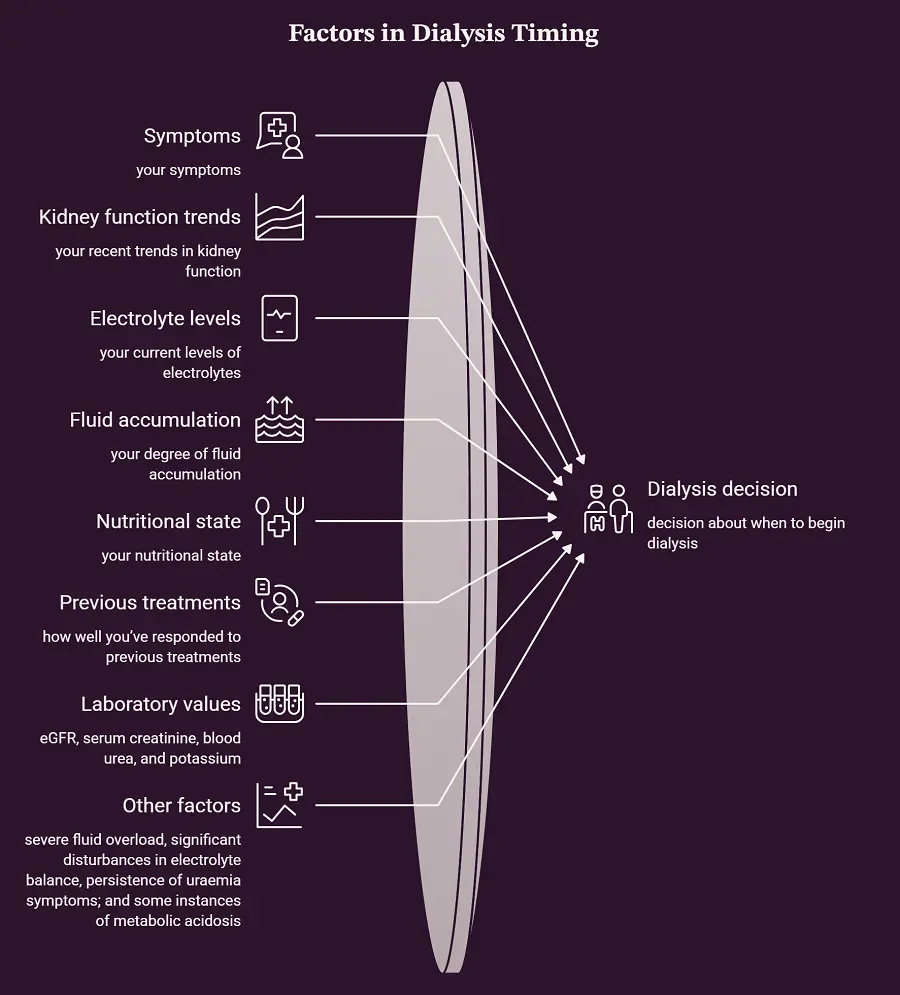
A doctor’s decision about when to begin dialysis for you isn’t made by an individual laboratory value. Your doctor will consider your symptoms, your recent trends in kidney function, your current levels of electrolytes, your degree of fluid accumulation, your nutritional state, and how well you’ve responded to previous treatments.
All these laboratory values, e.g., eGFR, serum creatinine, blood urea, and potassium contribute to the decision-making process as do other factors such as severe fluid overload, significant disturbances in electrolyte balance, persistence of uraemia symptoms; and some instances of metabolic acidosis.
In patients with advanced CKD, it is beneficial to monitor their condition regularly under the guidance of a nephrology specialist, because this enables planning of care before serious complications develop.
Can missing dialysis cause mental confusion? Yes, if the amounts of toxic substances or electrolytes reach levels that compromise normal functioning of the brain. This is why there is so much emphasis placed on early detection and diagnosis of chronic kidney disease.
What Happens If Kidney Failure Is Left Untreated?
There are significant differences between missing one dialysis appointment and allowing a serious kidney problem to continue without treatment.
Missing one dialysis appointment presents a certain amount of risk; however, those risks are generally managed once recognized as such. Conversely, if you allow untreated advanced kidney disease to progress for weeks/months, the risk will significantly increase.
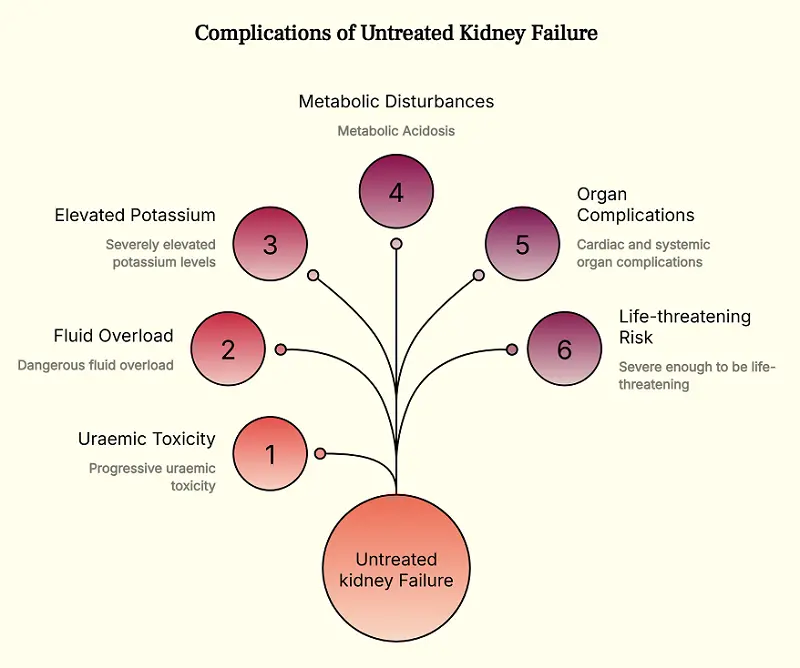
If allowed to go untreated for extended periods of time, untreated kidney failure can lead to many complications including progressive uraemic toxicity, dangerous fluid overload, severely elevated potassium levels, metabolic disturbances, cardiac and systemic organ complications (severe enough to be life-threatening).
Additionally, note that dialysis is not the only component involved in treating kidney failure. Treatment options depend upon each patient’s clinical status and can consist of medications, dietary management for kidney patients, fluid management, dialysis and/or potentially renal transplant.
Regarding peritoneal dialysis not working, this is a concern to consider in relation to patients treated with peritoneal dialysis.
Failing PD typically indicates that it would be appropriate to consult with your nephrologist regarding a potential modification to your treatment plan rather than attempting to manage the situation independently.

How Can Patients Avoid Delays in Dialysis Treatment?
Stick to the schedule your doctor gave you. Show up to nephrology appointments. Pay attention to your own symptoms between visits so nothing sneaks up on you and changes don’t go unnoticed. Follow the fluid and diet guidance you’ve been given, because it genuinely changes how your body handles the time between sessions.
Plan your transportation ahead so getting there isn’t the thing that makes you miss a session. Keep your records somewhere you can access quickly.
If you do miss an appointment, call your dialysis unit right away instead of waiting for the next one. And don’t adjust your own schedule or medication, ever. Talking to your care team early is still the single best way to avoid gaps in treatment.
When Should You Consult a Nephrologist?

If your kidney function test results continue to be abnormal, your eGFR continues to decline, you cannot control your high blood pressure, there’s swelling with no explanation, you are producing less urine than normal, or you notice other symptoms indicating progression of your kidney disease, get an evaluation.
Missed a recent dialysis treatment and noticed a new sign or symptom? Your team needs to hear from you ASAP, not later.
Dr. Khushboo Rani is a consultant nephrologist at BIG Apollo Spectra Hospital in Patna working with patients to make the same kinds of decisions as those described above.
She brings her focused experience in managing chronic kidney disease (CKD), providing care related to dialysis, and treating electrolyte disorders to support her patients.
What usually determines which direction a patient will take, i.e., either continued monitoring of their condition by their primary physician, adjustment of medications, or preparation for renal replacement therapy – is when they receive a consultation with a nephrologist.
At BIG Apollo Spectra Hospital, we provide nephrology care in Patna with in-house diagnostic support. Therefore, all testing regarding your kidney function is done without having to wait for an external referral.
If you’re looking for the best kidney doctor in Patna, you may want to consider consulting a nephrologist concerning your symptoms, your laboratory studies, or current dialysis treatments.
If you are experiencing effects from delayed dialysis, or if your symptoms worsen, consult with Dr. Khushboo Rani, nephrologist at Big Apollo Spectra Hospital.
Get Specialist Nephrology Care in Patna
Dialysis on schedule matters more than it might seem day to day. Delay it, and waste, fluid, and electrolytes build up in ways that can eventually affect your heart, your lungs, and your overall health.
How risky that is depends on the person, which is exactly why treatment decisions need to stay with your medical team and not get guessed at home.
If you’re living with advanced kidney disease, or something feels off, don’t sit on it. Book a nephrology consultation and get the specialist assessment you need.