Your heart is truly your lifeline. So, when you hear the word “Blockage,” it’s natural to feel fearful. You’ve just undergone an angiography to see if there were any problems with blood flow to your heart.
Unfortunately, the test confirmed what you had feared – narrowed arteries. And then your doctor tells you that he wants to perform bypass surgery, and before you know it, you are facing the realities of the operating room, the cost of the operation, the time of recovery and all the potential risks involved. But hold on a minute.
Have you considered if surgery is really your only option? Would taking medication be enough to open up those blocked arteries? Are there ways to allow your heart to heal itself naturally?
Fortunately, heart disease does not have to mean surgery for many people. While heart disease can be cured without surgery in many cases, choosing the right treatment plan will depend upon how bad your blockage is, as well as how severe your symptoms are, how well your heart is functioning and also your overall health.
Are you concerned about your heart health? Contact Dr. Nirav Kumar, one of the best cardiologists in Patna at BIG Apollo Spectra Hospital – Schedule an Appointment now!
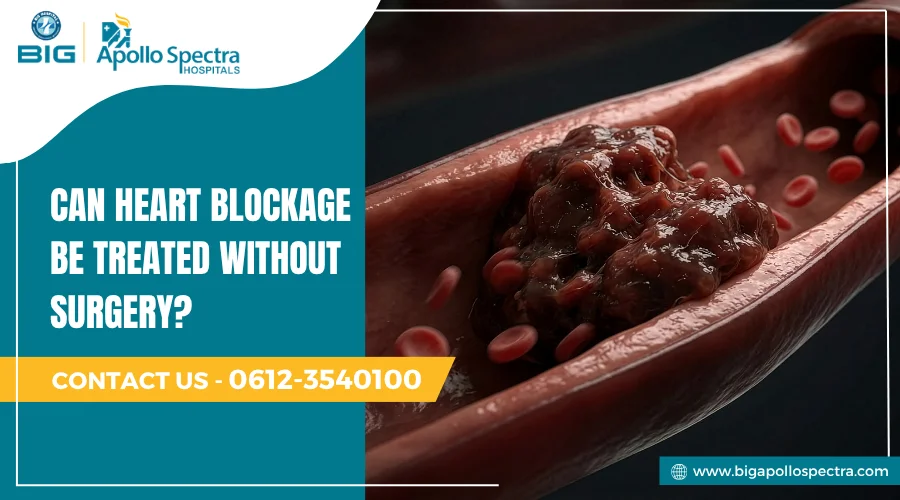
Can Heart Blockage Be Treated Without Surgery?
While many heart blockages can be treated and managed using non-surgical methods such as medication and lifestyle modification.
Depending on what your individual circumstances are, this is typically determined by a number of different factors including but not limited to percent of blockage.
If your blockage is mild, the most common treatment is usually medication and/or changing your lifestyle along with close observation.
Your cardiologist will evaluate multiple factors (not just the % of blockage) to determine if you require intervention.
| Situation | Can Surgery Be Avoided? |
| Mild blockage (<50%) | Often yes |
| Moderate blockage (50–70%) | Often yes |
| Severe blockage (>70%) | Sometimes |
| Multiple blocked arteries | Less likely |
| Left main artery blockage | Usually intervention needed |
| Heart attack due to blockage | Emergency treatment needed |
At BIG Apollo Spectra Hospital, Dr. Nirav Kumar, the top cardiologist in Patna, creates personalized treatment plans that take into account both your quality of life and long term outcomes.
If you’re looking to clear blocked arteries without surgery or want complete cardiac care from a specialist who works closely with patients, then we’re here to support you throughout the entire process.
Understanding Heart Blockage
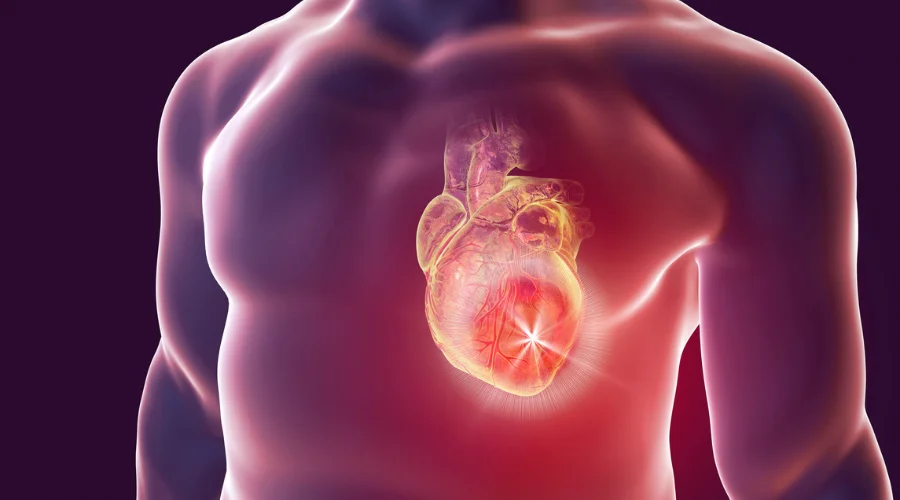
The first step in understanding why you have heart blockage is to learn what coronary artery disease (CAD) means. CAD develops from the gradual build-up of plaque within the coronary arteries; this narrowing reduces the amount of oxygen delivered to your heart muscle through these narrowed arteries.
Plaque builds up over time as a result of many factors including diet, lack of physical activity, genetics, and high cholesterol levels.
The narrowing caused by plaque will occur differently for each person. One person’s plaque may grow at an extremely slow rate while another’s grows rapidly. Additionally, some people will develop more severe blockages, causing obstruction of blood flow.
However, not all plaque is created equally. A patient who has 50% unstable plaque may be in much greater danger than a patient who has 70% stable plaque.
Unstable plaque has a very thin, fragile outer layer called a “cap” which is prone to sudden rupture causing a heart attack.
However, if a patient has a significant amount of stable plaque it does pose less of an immediate threat due to its thick fibrous covering, but understand that both these cases require treatment on time.
The difference in plaque type is important to understand because it makes all the difference in how your cardiologist decides to treat you.
For example, two patients with different percentages of blockage may receive entirely different treatment options.
Doctors also look at the blood flow patterns as seen on stress tests and how your body is responding to blockage before making a decision. In addition to using angiography, our cardiologists may use other methods to assess your condition before deciding on the ideal coronary artery disease treatment.
Does the Percentage of Blockage Always Determine Treatment?
No. The percentage of blockage does not give an indication of the entire clinical situation.
How bad your symptoms are, how good your heart functions when it beats (how much cardiac output you produce), whether there is more than one artery narrowed, and how the rest of your circulation supplies your body with blood also play an equal role.
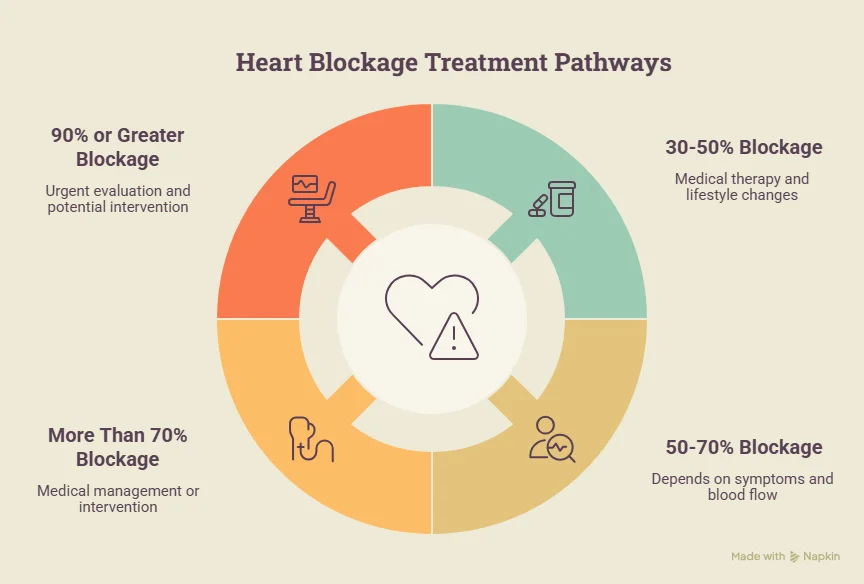
1. 30-50% Blockage
Generally speaking, blockages that fall into this category can be treated medically. Statins will be prescribed to lower your cholesterol levels, beta blockers to decrease the amount of work your heart has to do, and various other medications to help regulate your blood pressure and help to keep clots from forming.
Lifestyle modifications should be used as your foundation. You will be encouraged to make dietary changes; to gradually increase your level of physical activity; if you smoke, you will be encouraged to stop; and you will learn techniques to manage stress.
It is essential that you follow up regularly with your doctor so that he/she can monitor your condition and determine if the blockage is progressing. Stress tests may also be ordered periodically to assess the progression of the blockage.
2. 50-70% Blockage
Treatment at this point depends on three factors: symptoms, blood flow pattern during stress testing, and general cardiac function.
If you develop chest pain when you exercise and your stress test indicates decreased blood flow through the blocked area(s) of your coronary arteries, then intervention is likely indicated.
However, if you remain asymptomatic and your heart continues to pump efficiently producing normal amounts of cardiac output, then conservative medical therapy will most likely be recommended.
In such situations, a comprehensive evaluation by a cardiologist who understands the complete picture of each patient’s clinical status should take place prior to making a final decision regarding treatment.
While some patients experience spontaneous improvement in their heart blockage with extremely aggressive medical and lifestyle interventions, some require intervention at this level.
3. More Than 70% Blockage
More than 70% of a coronary artery being blocked results in a significant narrowing of the artery. However, it does not necessarily result in an automatic need for surgery.
In cases where there are no symptoms present and the body is able to maintain adequate circulation through collateral blood vessels (i.e., smaller vessels which provide additional pathways around the blockage) then medical management may continue as a viable option.
For those individuals considering whether or not a heart blockage can be cleared without surgical intervention, the 70% threshold is essential for discussion with your physician.
When you begin to experience symptoms related to the narrowing of the artery, or testing indicates that your blood supply is being reduced by the blockage, then the cardiologist will likely evaluate whether an angioplasty or bypass procedure would be required.
As each patient’s situation is unique, understanding your 70 percent heart blockage treatment options should be conducted on an individual basis in collaboration with your cardiologist.
4. 90% or Greater Blockage
A 90% or greater blockage carries an increased level of risk. An urgent evaluation typically involves performing an angiography test to evaluate blood flow, search for clots within the vessel, and assess whether intervention via either angioplasty or bypass is necessary at once.
For 90 percent heart blockage treatment, doctors must balance immediate risk against procedural risks.
Even at 90%, if blood supply is preserved through collaterals and you’re stable, medical management with close monitoring might be pursued initially. Urgent doesn’t always mean surgery.
Is EECP a Viable Treatment Alternative?
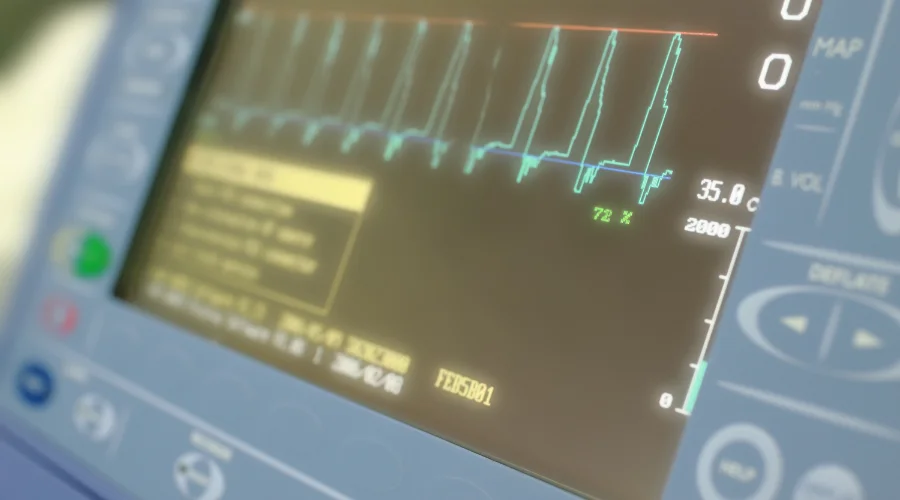
Enhanced External Counterpulsation (EECP), is a non-invasive procedure that improves circulation of the heart. The cuffs are placed around your legs and inflate/deflate in time with your heart beat and help push blood back to your heart and reduce the workload of your heart.
Who can benefit from EECP?
Patients who have had persistent chest pain even after taking their medications may find they feel better when treated by EECP.
As a modern approach, EECP is another way of medication-based treatment. Studies have shown an improvement in symptoms and exercise ability in some patients.
EECP is good for symptom control for those with persistent angina and can be used in addition to other treatments. However, EECP cannot replace emergency treatment and does not replace all surgery when needed.
When is Angioplasty Recommended?

Angioplasty opens blocked arteries using a balloon catheter and usually places a stent to keep the artery open. Four key factors that your cardiologist will consider include:
1. Persistent Angina
If you continue to experience chest pain even though you are on optimal medication therapy, it means that there is not enough blood flowing to your heart through the narrowed coronary artery. This means that your heart muscle has been deprived of adequate oxygen during activity or stress.
2. Significant Narrowing
Coronary artery narrowing of 70 percent or greater, confirmed as reduced blood flow on stress tests, requires immediate intervention to prevent future complete occlusion of the coronary artery.
3. Reduced Blood Flow
If testing has shown that your heart muscle is not receiving enough blood flow to meet its needs, widening the artery to restore blood flow and prevent potential injury to the heart muscle is important.
4. Failed Medical Management
If six weeks of aggressive medical management did not provide relief of symptoms, then it is logical for your cardiologist to perform angioplasty to restore normal blood flow to your heart muscle.
Read More: What to Expect During Angioplasty?
When is Coronary Bypass Surgery Necessary?
Coronary bypass surgery helps create alternative routes for blood flow into the heart when there are severe blockages in the coronary arteries. The surgeon will use a healthy vein or artery taken from another part of the body. Coronary bypass surgery has remained the gold standard treatment for certain conditions to clear clogged coronary arteries.
The Most Common Situations Where Coronary Bypass Surgery May Be Required:
1.) left main artery disease (the main artery supplying your heart),
2.) triple vessel disease (all three of the main arteries leading to the heart are affected);
3.) Other complex blockages for which angioplasty would not be suitable.
ALSO READ: Life Expectancy After Bypass Surgery
1. Triple Vessel Disease
Angioplasty is usually used as an initial approach to open up narrowed coronary arteries.
However, if all three of the major coronary arteries are significantly narrowed, bypass surgery has been shown to provide a higher rate of long-term survival and improved symptoms.
Additionally, diabetic patients tend to experience restenosis (re-narrowing of the arteries) after angioplasty and therefore benefit more from bypass surgery.
2. Left Main Artery Disease
This is the largest single artery feeding 50% of the heart muscle. If it is severely narrowed, it puts you at high risk. Therefore, bypass surgery generally produces better outcomes than angioplasty in these cases.
3. Extensive Disease with Diabetes
Patients who suffer from diabetes and have extensive narrowing of several of their coronary arteries also achieve greater long-term success with bypass surgery due to the fact that they often develop restenosis after angioplasty.
4. Poor Heart Pumping
A patient whose ejection fraction (a measure of how much of each heartbeat pumps out into circulation) is extremely poor may need surgical intervention instead of angioplasty to obtain maximum blood flow and increase heart pump efficiency.
5. Blockages That are Complex
There are some blockages that are located where they can’t be safely treated using angioplasty. Complex blockages include branching arteries, calcification. In such cases, surgery may become necessary to ensure the patient receives safe care.
👉 Consult for Detailed Evaluation of Your Heart Blockage

Who Can Potentially Avoid Surgery?
You can’t treat yourself for a blocked coronary artery; however, there are some cases that do not require an operative procedure.
When you understand where you fall within this spectrum, it is easier to find relief from your anxiety and determine your course of treatment. A large number of individuals have had their coronary artery blockage managed through effective medical management and lifestyle modification.
Patients More Likely to Avoid Surgery:
✓ Mild Blockage (less than 50%)
✓ Stable or No Symptoms
✓ Good Heart Pumping Function
✓ Single Vessel Disease
✓ Good Response to Medication
In these cases, patients continue to rely on medication, lifestyle changes and monitoring. There is no additional benefit to the patient if he/she has surgery.
Patients Less Likely to Avoid Surgery:
✓ Multiple Blockages in multiple Arteries
✓ Severe Disabling Chest Pain
✓ Recurrent Chest Pain regardless of Medications
✓ Left Main Artery Disease
✓ Recent Myocardial Infarction with significant damage
These situations demand intervention. The risk of not operating outweighs the risk of surgery.
✅ Consult experienced angioplasty surgeons in Patna to discuss your individual options.
How Cardiologists Decide the Best Treatment?
The cardiologist will take into account several different pieces of information when deciding on a course of action for the patient. There are many factors that go into this decision-making process, so no one single measurement or number is going to determine what is best for the patient.
Therefore, understanding the evaluation criteria used by cardiologists to assess heart blockage treatment without surgery in India will help to appreciate the unique aspects of every individual case.
1. Blockage Severity
While the percentage of blockage can provide some perspective, it should also be understood as one factor out of many others.
For example; an unstable 60% blockage could indicate the need for immediate intervention, while a stable 75% blockage would likely result in the recommendation of waiting and monitoring for a period of time prior to considering surgical intervention.
2. Number of Arteries Involved
Patients who present with single-vessel disease typically respond very favorably to angioplasty, whereas those presenting with multi-vessel disease typically respond better to bypass surgery, particularly if diabetic.
3. Diabetes
Angioplasty has poor success rates in diabetic patients due to high incidence of re-narrowing after procedure. Bypass surgery is generally recommended to diabetic patients for extensive coronary disease.
People Also Read – Diabetes and heart disease risk.
4. Location of Blockage
Blockages located in the left main coronary artery represent higher risk than other locations and usually require surgical intervention.
Peripheral vascular blockages, however, may remain under medical management for longer periods of time before the necessity for surgical intervention becomes evident.
5. Symptoms
Severe disabling chest pain directly related to physical exertion strongly indicates the necessity for both medical and/or interventional management, whereas vague symptoms without direct correlation to physical exertion may suggest a trial of medical management initially.
6. Cardiac Output
Surgical restoration of blood flow to the heart muscle via grafts tends to offer greater benefits over angioplasty in patients whose hearts do not pump effectively (low ejection fraction).
7. Age
Patients that are younger and otherwise healthy tend to tolerate surgery well and experience significant reduction in their symptoms long term.
Patients that are older and have numerous co-existing conditions tend to prefer less invasive forms of treatment such as catheter-based interventions.
8. Lifestyle
Patient’s desires regarding future activities play a role in determining whether or not surgery or medical management is best for them.
If a patient wishes to pursue vigorous levels of physical activity, surgery will provide superior long-term results.
On the other hand, if a patient is willing to accept limitations, then medical management may provide sufficient improvement in quality of life.
These conversations happen in your cardiologist’s office. Share your goals, ask questions, and understand the reasoning behind recommendations.
ALSO READ: Keeping your heart healthy after 50
FAQs
Following are some of the common queries patients have about heart blockage and the possibility of reversing it without surgery. If any of your questions are not addressed here, feel free to leave them in the comments section below.
1. How to clear blockage in the heart?
Depending upon how severely clogged the arteries of the heart are, treatment will vary. Mildly clogged arteries usually will resolve themselves using prescribed medications as well as some recommended lifestyle changes.
Patients with moderately to severely clogged arteries, however, may have to undergo angioplasty or surgery via coronary artery bypass grafting. Discuss your options with a heart specialist at Patna for further individualized assistance.
2. Can artery blockage be reversed naturally?
While you cannot remove all of the plaque that has accumulated inside the arteries, you can help stabilize it and slow down its advancement by taking prescribed statins and making significant lifestyle changes.
3. Is heart block serious?
A blocked artery reduces blood flow to the heart muscle and increases the chance of a future heart attack. The degree of seriousness of the artery being blocked varies greatly; ranging from mild to potentially fatal.
4. Can a 70% blockage be treated without surgery?
Yes, you could possibly receive treatment for your heart condition without going under the knife.
If you have no symptoms and your heart functions properly and there is still adequate blood flowing to your heart muscle, then your doctor might recommend medical therapy along with being closely monitored by your cardiologist.
5. Can medicines remove heart blockage?
Medicine cannot physically take out the plaque blocking the artery, but it does work to stop the growth of new plaque, reduce inflammation within the arterial walls, lower cholesterol levels and prevent progression.
6. Can 100% heart blockage be reversed?
No, when a coronary artery becomes completely blocked (100%), a person’s only option is either angioplasty or surgical bypass grafting to allow for continued blood flow to their heart muscle.
7. Is angioplasty considered surgery?
No, angioplasty is an interventional cardiology technique performed using specialized catheters inserted into the patient’s femoral artery located in their groin area (or radial artery located in the wrist).
This procedure is a relatively minimally-invasive approach and does not constitute traditional major surgery.
8. Can heart blockage be cured by exercise?
Exercising alone will not remove any existing clog, but it will cause the body to strengthen additional small blood vessels called collaterals surrounding the original clog.
Combining medication with consistent physical exercise may also help slow down the buildup of plaque and decrease symptoms associated with clogged arteries.
9. Is EECP effective for heart blockage?
In selected patients who experience chronic chest pain despite optimal medical therapy, EECP (Enhanced External Counterpulsation) helps alleviate chest pain by increasing blood flow to those areas of the heart.
However, EECP is not a cure-all; rather it is a method used to control symptoms.
10. How do I know if I need bypass surgery?
Only a cardiologist can determine whether you are a candidate for bypass surgery. He/she makes this determination based upon your symptoms, results from angiography or stress tests, and your overall cardiac function.
Typically left main disease, three-vessel disease or failure to achieve satisfactory improvement using medical therapies suggest bypass surgery.
Do not allow fear to guide your decision. Contact us to schedule a heart evaluation today.
Book Your Personalized Cardiac Evaluation
The presence of a blocked artery does not automatically imply that you will need surgery.
There are many things that can impact what treatments for an artery blockage you should have – such as the extent of the blockage, your symptoms, whether your heart is functioning properly, and if you are able to effectively take prescribed medications.
Understanding this process enables you to be better educated when making decisions about your heart care with your cardiologist.
Treatment for a blocked artery without surgery in India has advanced significantly.
Treatment options range from intense medication therapies to minimally invasive procedures (angioplasty) and EECP. Our team of cardiologists at BIG Apollo Spectra Hospital in Patna, offer patients comprehensive care.
We provide support throughout all aspects of your cardiovascular disease journey. Whether it is an initial diagnosis or ongoing maintenance of cardiovascular health, we work closely with each patient to ensure they maintain the best possible quality of life.
Schedule your heart health assessment today for the best plan of action.