

Sudden, hard-to-control urges to urinate. That’s overactive bladder (OAB) in a sentence. If that’s what’s happening to you, you’ve probably also been wondering about frequent urination patterns which often coincide with OAB.
Plus, trips to the bathroom at night, maybe some leakage before you get there is also common and something worth investigating.
None of that is unusual for older women to experience, and none of it means you just have to live with it. Women get told this is “normal for your age” more often than they should.
It’s not, really, not in the sense that it needs to just be tolerated. Left alone, OAB eats into sleep, work, travel, exercise, and your plans when you want to leave the house for a few hours.
A few other conditions mimic it closely enough that trying to self-diagnose usually is not advisable, so getting an actual diagnosis matters more than guessing.
At Big Apollo Spectra, we have specialists for women’s health and urinary symptoms who can diagnose and treat persistent cases.
What is an Overactive Bladder in Women?
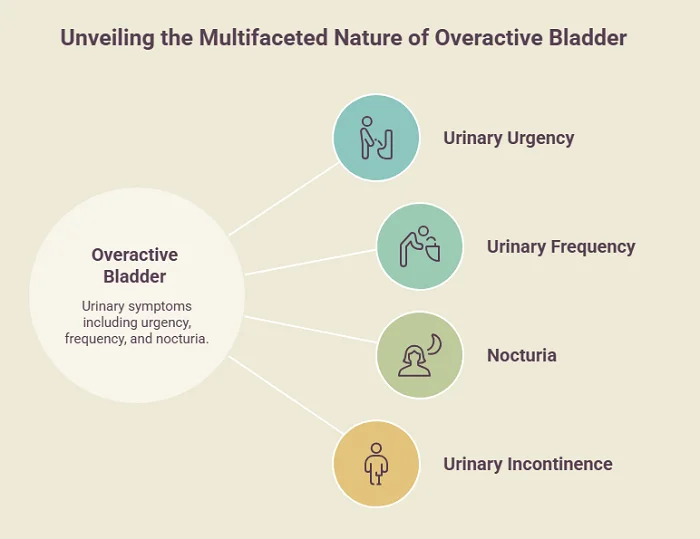
A cluster of urinary symptoms, sudden urgency mainly, often paired with frequent and nighttime urination, sometimes with leakage and sometimes without.
That’s the working definition your doctor uses for an overactive bladder. It’s not really “one disease,” more a pattern that gets pieced together from what you describe.
Urgency comes first: a strong, sudden need that’s hard to put off, not the slow build-up of a normally filling bladder. Frequency tags along, meaning more bathroom runs than what’s typical for you specifically.
Then nocturia is also common, waking up at night to go, which wrecks sleep quality, more than most women expect. Doctors sometimes describe urinary urgency in women as reaching a point where it triggers urge urinary incontinence, leakage that shows up right after the urge hits.
Quick caveat: drinking a lot of water and peeing often doesn’t mean OAB. Sometimes a full bladder is just doing its job. And you don’t need leakage to have OAB either. Plenty of women have it without urine leakage.
So what does OAB actually feel like, based on symptoms? Knowing the difference between normal urination and true OAB symptoms sets up the next section.
>> Consult for a Complete Diagnosis of Persistent Urinary Issues
Symptoms of Overactive Bladder in Women

Overactive bladder symptoms aren’t identical across every woman, but a handful keep showing up in the same combinations.
Overactive bladder symptoms in women and bladder urgency and frequency get used interchangeably in everyday conversation, but understanding these patterns and separating one from the other helps when you’re actually describing this to a doctor.
1. Sudden Urge to Urinate
This one everyone with OAB is familiar with as this is the hallmark symptom. Fast, urgent, nothing like the gradual “I should probably go soon” most people are used to.
2. Frequent Urination
Eight or more trips in a day isn’t rare with OAB. Any pattern that’s well past what most women consider their normal rhythm.
3. Waking at Night to Urinate
Nocturia disrupts sleep quality. You can technically log eight hours of sleep and still wake up feeling tired.
4. Urge Urinary Incontinence
The leakage happens in that small gap between the urge hitting and actually reaching a toilet.
5. Difficulty Postponing Urination
Once the urge arrives, holding it, even for a minute, gets genuinely hard.
6. Small Amounts of Urine Passed Frequently
Oddly enough, despite how urgent it feels, what actually comes out is often small amounts of urine. Doctors use that mismatch as a diagnostic clue.
7. Fear of Being Unable to Reach a Toilet
Less talked about, but common. A lot of women start scouting bathroom locations and planning their outdoor trips accordingly before they’ve even left home.
NOTE: Frequency, urgency, urge incontinence, three words people mix up constantly. Frequency just means going often. Urgency is that sudden, can’t-wait feeling. Urge incontinence is the leakage that sometimes follows it.
Persistent symptoms with any of these variations are worth having looked at by a urologist, and earlier is almost always easier than later.
At Big Apollo Spectra, we have the best urologist in Patna to help you figure out your symptom patterns and take action to get rid of discomfort and embarrassing urination urgency situations.
What Causes Overactive Bladder in Women?
What causes overactive bladder in females doesn’t have a neat one-line answer, which frustrates a lot of women looking for a single explanation.
Overactive bladder causes in women span a real list; sometimes it’s one factor that’s contributing to your patterns, sometimes two or three stacked together.
1. Bladder Muscle Overactivity
Your bladder wall has muscles that’s supposed to stay relaxed while urine collects. In OAB, it contracts on its own, sometimes well before the bladder’s actually full, and that’s what produces the urgency.
Doctors often point to this as the main cause of overactive bladder, though it rarely explains everything by itself.
2. Urinary Tract Infection
A UTI brings frequency, urgency, burning, general discomfort – symptoms that are common while urinating if you have UTI. The two aren’t the same condition though, and they’re treated differently.
Burning specifically is worth reading about separately: how to stop burning sensation after urinating covers that overlap in more depth.
3. Pregnancy and Childbirth
Pregnancy adds real, mechanical pressure on the bladder. Delivery reshapes the pelvic floor, and that doesn’t always bounce back on its own.
Postpartum bladder-control issues show up for some women. That’s not the same as saying pregnancy causes OAB automatically, it’s a contributing factor for some, not a rule.
4. Menopause and Hormonal Changes
Hormonal shifts around menopause change urogenital tissue and bladder sensitivity, which can raise the odds of urinary symptoms.
5. Bladder Pain Syndrome / Interstitial Cystitis
Frequency, urgency, bladder or pelvic discomfort, this condition overlaps with OAB enough that the two get confused often.
6. Pelvic Floor Dysfunction
Weak or poorly coordinated pelvic floor muscles feed directly into urgency and leakage, since they help control the bladder outlet.
Pregnancy, childbirth, years of heavy lifting, all of these wear that muscle group down over time, which is why targeted exercises usually show up somewhere in a treatment plan.
7. Neurological Conditions
Some conditions affecting the nerves that control the bladder function can look like OAB from the outside. This is a smaller factor for most women, and when it’s suspected, it usually needs a separate neurological workup, since the nerve pathways involved are shared with several other bodily functions.
8. Diabetes
Diabetes affects bladder function and urinary frequency over time, mostly through its impact on nerves and fluid balance.
When diabetes-related urinary changes seem to be getting worse, it’s worth checking whether kidney damage caused by diabetes is part of what’s going on.
9. Lifestyle and Bladder Irritants
Caffeine. Too much fluid at once. Carbonated drinks, alcohol, certain medications. All of it can irritate the bladder or push urine production up. But lifestyle alone rarely explains persistent symptoms. If cutting back doesn’t change much, something else is likely driving it.
Also, because UTI is common in women with some of these same symptoms, it’s important to be able to tell the differences apart.
That’s not to say that you should self diagnose; rather being able to tell the difference between an OAB and an infection can save a lot of time that lapses before the patient seeks care.
Overactive Bladder vs UTI: What’s the Difference?
Frequent urination but no UTI is more common than most women assume, and it’s probably the number one source of confusion for females having overlapping urinary symptoms. A side-by-side comparison helps.
| Feature | Overactive Bladder | UTI |
| Urgency | Common | Common |
| Frequent urination | Common | Common |
| Burning | Usually absent | Common |
| Fever | Not typical | May occur |
| Pelvic/bladder discomfort | Possible | Possible |
| Bacteria in urine | Not expected | May be present |
| Antibiotics | Not routine | May be needed if bacterial |
Urgency and frequency show up in both, so neither one tells you much on its own. Burning and fever point toward infection. Their absence alongside ongoing urgency points more toward OAB.
Frequent urination doesn’t automatically mean UTI, and treating it like one when it isn’t just wastes time. Antibiotics do nothing for a non-infectious cause. A basic urine test settles the question fast, usually within a day. UTI and OAB aren’t the only two possibilities either.

Other Conditions That Can Cause Similar Symptoms
A handful of other conditions can look enough like OAB that proper evaluation is really the only way to come up with the right diagnosis.
- Pregnancy naturally increases bladder pressure. Urinary incontinence and pelvic floor disorders can produce leakage that resembles urge incontinence without technically being full OAB.
- Neurological conditions matter here too, though they’re less common as a driving factor.
- Bladder pain syndrome causes urgency and discomfort with no infection involved.
- Kidney stones can bring frequency along with pain, and if that combination sounds familiar, kidney stone symptoms are worth a look.
- Diabetes, covered above, affects urinary patterns independently too.
Self-diagnosis genuinely doesn’t hold up with this much overlap. So, what does an actual workup look like?
How Is Overactive Bladder Diagnosed in Women?

No single test confirms OAB on its own. Diagnosis comes mostly from your reported symptoms combined with ruling out other likely causes.
1. Medical History
Expect questions about how often you’re going, what the urgency feels like, whether you wake up at night to urinate, any leakage, your fluid and caffeine habits, current medications, past UTIs, pregnancy or childbirth history. That conversation alone tells a doctor a lot.
2. Bladder Diary
Log the time of each bathroom trip, a rough sense of volume, fluid intake, urgency, leakage, over a few days. Patterns emerge that you’d probably never notice just going about a normal day. Women are often genuinely surprised once they see it written out.
3. Tests
Depending on what your history points to, a doctor might order urinalysis, a urine culture, blood tests, an ultrasound, a post-void residual measurement, uroflowmetry, or, less often, urodynamic testing. Not every woman needs every test on this list. It gets tailored to your specific symptoms.
Infections that keep coming back or seem complicated sometimes warrant a closer look to understand how UTIs might be affecting kidney function over time, as part of a broader workup.
Once a diagnosis is confirmed, the real question becomes what treatment actually looks like, and that’s where a lot of women want practical answers.
Treatment for Overactive Bladder in Women
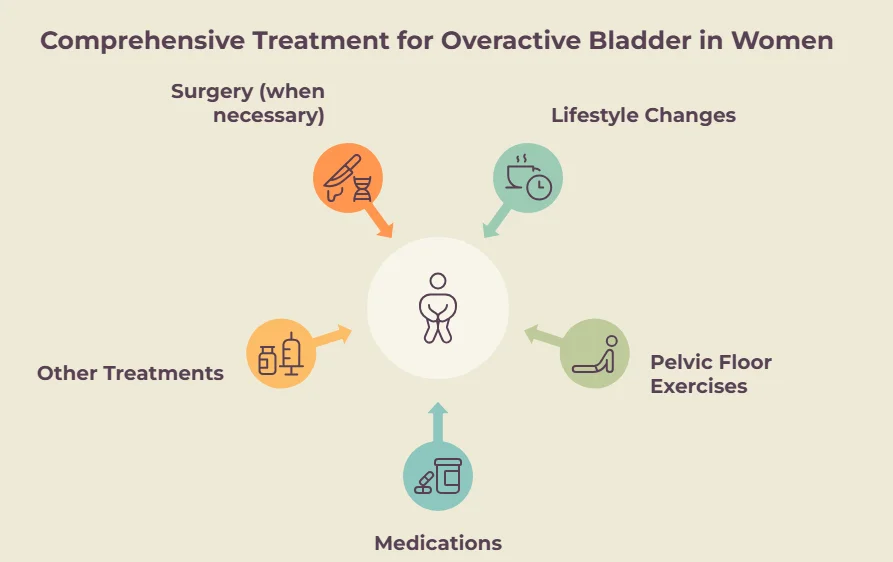
Overactive bladder treatment isn’t one-size-fits-all. How severe your symptoms are, what’s driving them, how much they’re disrupting daily life, all of that shapes the plan. As a result, overactive bladder treatment in women tends to get tailored in stages.
1. Lifestyle and Behavioural Changes
Treatment for overactive bladder in females typically starts here, and there’s a good reason for that. Bladder training, sensible fluid management, cutting back on caffeine and alcohol, timed voiding, keeping weight in a healthy range (since extra weight adds bladder pressure), all of it falls under this first step.
2. Pelvic Floor Exercises
Overactive bladder exercises, pelvic floor training in particular, strengthen the muscles that support bladder control. Done consistently, with the correct form, they noticeably cut down urgency and leakage over time. Get the form wrong and the benefit mostly disappears.
3. Medicines
When lifestyle changes alone aren’t enough, doctors sometimes add medication to calm bladder overactivity. No universal best medicine for overactive bladder exists. It comes down to your individual health profile, and your doctor walks you through what actually fits your situation.
>> Meet with a Urologist for a Treatment Plan – Consult Experts at Big Apollo Spectra Urology Department
4. Other Treatments
If first-line measures fall short, specialists sometimes consider bladder injections or nerve stimulation, depending on individual assessment.
5. Surgery
Surgery isn’t the first move for an uncomplicated OAB, and it shouldn’t be. It’s reserved for cases where nothing else has worked well enough, decided case by case rather than as a default option.
Clinic visits aside, there’s a fair amount you can manage from home too.
What Can Women Do at Home to Manage OAB?
Home strategies work best along with medical care, not instead of it. Start with a bladder diary to spot personal triggers, whether it’s caffeine, certain drinks, or specific times of day. Also, while you can cut back on caffeine, don’t swing the other way and cut fluids altogether, since concentrated urine irritates the bladder just as much.
Stick to whatever bladder training plan your doctor sets up, and get pelvic floor exercise technique right, since sloppy form limits how much they help. Maintaining a healthy weight also means putting less pressure on the bladder.
Travel a lot? Mapping out toilet access ahead of time can reduce anxiety and take a lot of the edge off overactive bladder at night and on longer trips especially.
These steps genuinely help. They’re not a cure by themselves though, and knowing when to bring in a specialist matters just as much as your home routine.
When Should You See a Urologist?

Seek timely care if you have one or more of these symptoms:
- Persistent urgency.
- Frequency that’s throwing off your day.
- Symptoms waking you repeatedly at night.
- Leakage.
- No improvement despite basic measures.
- Recurrent UTIs.
- Blood in urine.
- Real pelvic or flank pain.
- Trouble urinating at all.
Any single one of these is reason enough to get looked at rather than wait it out.
Leakage that happens specifically with coughing or sudden movement points somewhere slightly different. And urine leakage when coughing is worth a read since it’s important to understand what’s behind the pattern.
In any case, persistent bladder symptoms are worth getting evaluated early rather than managed alone indefinitely, since early diagnosis usually leads to a shorter, simpler path to treatment.
>> Consult Professor Dr. Rajesh Kumar Tiwari, Urologist at Big Apollo Spectra Hospital, Patna.
Furthermore, one question comes up in almost every consultation on this topic, and it deserves a straight answer.
Can Overactive Bladder Be a Sign of Kidney Disease?

Is overactive bladder dangerous in the sense of signaling kidney trouble? Mostly, no. OAB by itself doesn’t mean kidney disease. Certain conditions, diabetes and recurrent infections among them, can affect bladder symptoms and kidney health at the same time though, so ongoing or unusual urinary changes are still worth getting checked by a specialist.
Kidney disease can show up through urinary symptoms, frequency included, but frequent urination alone isn’t a diagnosis of anything. It’s one piece your doctor weighs against your history, test results, and sometimes imaging.
Noticing anything subtle alongside the urinary symptoms? Silent symptoms of kidney disease cover signs that get written off as ordinary tiredness way too often, which is a big part of why they go unnoticed for so long.
Bladder and kidney symptoms showing up together usually means coordinating care between urology and nephrology doctors, since the two share risk factors like diabetes, chronic infections, and long-standing high blood pressure.
Blood work and imaging clarify whether kidney function is genuinely involved or whether things are staying contained to the bladder, and that answer changes what happens next.
Catching things early matters here specifically. A slightly elevated creatinine or a subtle change in output means something very different from ordinary bladder overactivity, and testing is really the only way to tell them apart.
Women with confirmed or suspected kidney involvement can access kidney disease treatment in Patna through our nephrology team, working alongside the urology specialist.
A few symptoms, kidney concerns aside, should never get brushed off.
Red Flags: When are Urination Symptoms More Concerning?
Get evaluated promptly if urinary frequency or urgency shows up alongside any of these:
- Blood in urine
- Fever or chills
- Severe flank or back pain
- Inability to urinate
- Significant pelvic pain
- Repeated infections
- Unexplained swelling
- A sudden, major shift in usual urinary habits
Related: causes of blood in urine (haematuria)
Any of these deserves prompt attention rather than a wait-and-see approach, since a couple of them can point to something needing same-day care.
FAQs
Following are some of the common queries patients have when they have urinary symptoms and they suspect they have an OAB.
1. What are the first signs of overactive bladder in women?
Usually that sudden, can’t-wait urge shows up first, then more frequent bathroom trips follow along with occasional wake-ups at night to go for urination.
2. Can overactive bladder be caused by a UTI?
Not directly. A UTI looks similar on the surface, urgency and frequency both show up, but it’s a separate condition. Burning and fever point more toward infection than OAB.
3. What is the difference between overactive bladder and urinary incontinence?
OAB centers on urgency as the main symptom. On the other hand, urinary incontinence just refers to involuntary leakage, and that can happen with OAB or completely on its own.
4. Can menopause cause overactive bladder?
Hormonal changes around menopause affect bladder tissue directly, but menopause by itself doesn’t necessarily cause OAB.
5. Why do I feel the urge to urinate but pass only a small amount?
Classic OAB pattern, actually. The bladder muscle contracts before it’s genuinely full, so the urgency arrives without much urine volume.
6. Can overactive bladder be cured permanently?
Managed is the more accurate word than cured. Real, lasting improvement comes through behavioural changes, pelvic floor training, and medical treatment together.
7. How is overactive bladder diagnosed?
Mostly through history and a bladder diary, with targeted tests like urinalysis added when needed, largely to rule out infection or kidney involvement.
8. When should a woman see a urologist for bladder problems?
See a urologist when symptoms are sticking around, disrupting sleep or daily life, involve leakage, or paired with warning signs like blood in urine, fever, or real pain – any of that is your cue to get checked.
Seek Urology Care for Lasting Relief from Your Symptoms
Female overactive bladder becomes manageable once you actually know what’s driving it, bladder muscle overactivity, hormonal changes, or something else entirely.
Guessing rarely helps in persistent cases. Bladder control problems in women respond well once there’s a real diagnosis behind the treatment plan, not just trial and error stretched out over months.
Nighttime trips wearing you down, or a sudden urge to urinate that’s hard to plan around? Don’t just push through it indefinitely. Book appointment at Big Apollo Spectra Hospital, Patna, and get an evaluation built around what you’re actually dealing with.