Surgery is usually the first thing people worry about when their doctor diagnoses them with a “slipped disc”. However, the reality is that most cases never get there.
Research published in the Deutsches Ärzteblatt International found that disc herniation resolves in up to 60-80% of patients within 3 months through conservative care. Still there are many people who wonder whether they will need to undergo surgical procedures to get back the same mobility and standard of living.
This blog provides fact-based information and answers some critical questions like how slipped disc heals naturally, what non-surgical treatment looks like, which symptoms to watch out for, and when surgery is actually the right call.
Can a Slipped Disc Heal Without Surgery?
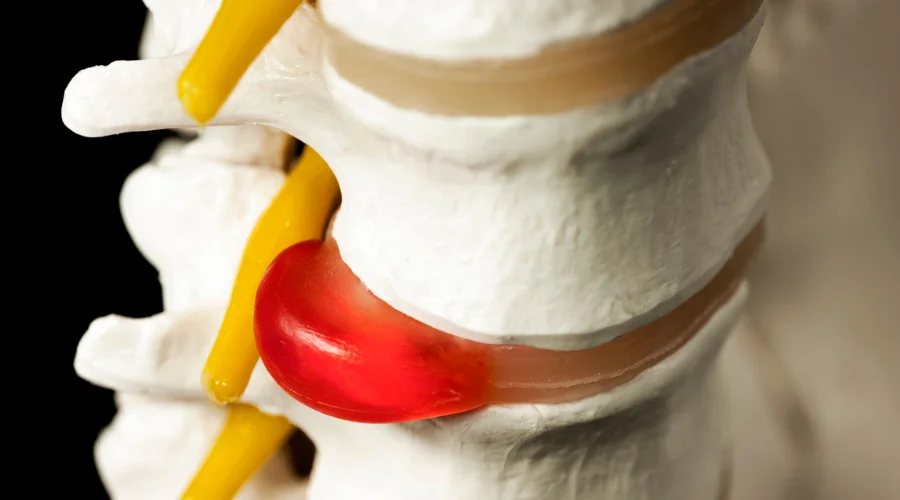
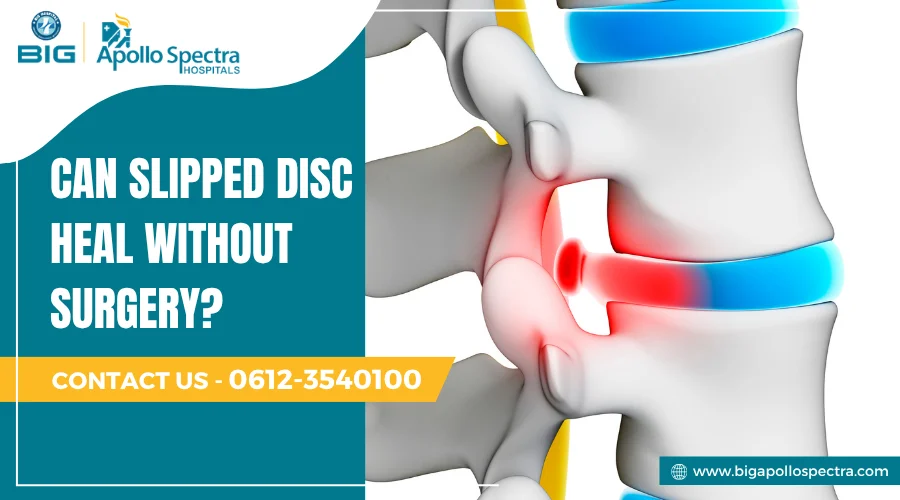
Yes, most of the time, a slipped disc can heal without surgery. Your body can manage disc herniation through phagocytosis – a process where immune cells gradually absorb and break down the herniated disc material. Inflammation around the nerve root reduces with time. The disc shrinks. Nerve irritation settles.
Moreover, many patients can recover within weeks to a few months with proper medical supervision and advised conservative care.
Three things drive natural recovery:
- Inflammation around the affected nerve reduces over time without intervention.
- The herniated disc material shrinks, releasing pressure on spinal nerves.
- As swelling goes down and the disc material retracts, nerve irritation improves.
Conservative treatment works for the majority of patients. That said, if you are noticing persistent signs and symptoms of slip disc like leg weakness or severe numbness symptoms that are getting worse rather than better, it is not something to wait out. These can mean the disc is pressing harder on the nerve and needs prompt attention.
Knowing how healing actually works helps you make decisions about your care with more confidence. The section below breaks down the non-surgical options that support the recovery process.
➤ Book an Appointment with Dr. Amit Kumar Sinha, Orthopedic Specialist: https://bigapollospectra.com/e-appointment | Emergency Line : 0612-3540100 | 0612-7131415
Non-Surgical Treatment Options for Slipped Disc
Slipped disc treatment without surgery is a layered approach to rest, medication, physiotherapy, and sometimes more targeted interventions. Most patients do best with a combination treatment approach tailored to how severe their symptoms are.
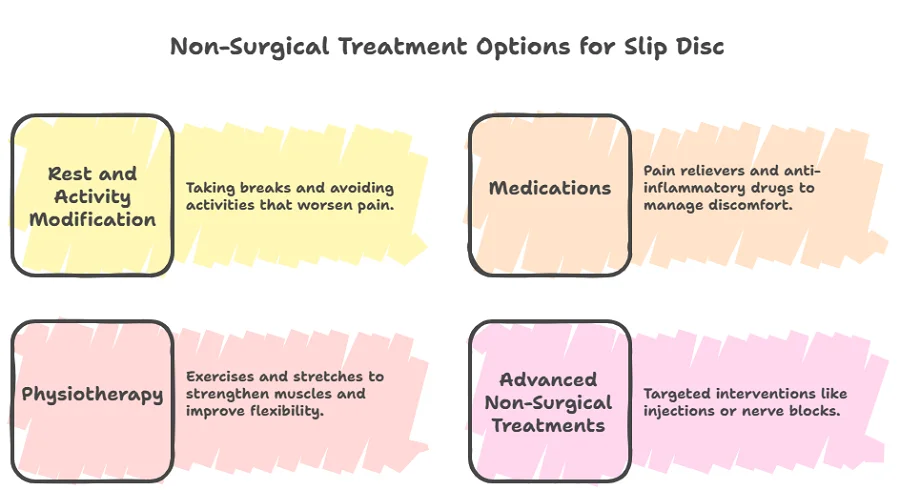
1. Rest and Activity Modification
Bed rest is often the first thing a person thinks of when dealing with back pain. However, lying in bed for too long will make the muscles around your spine weak and can make your recovery time longer.
A better method is to use controlled movement to your advantage which means cutting down on the activities that seriously worsen the pain like heavy lifting or sitting for long periods while keeping up with a nice, easy pace of walking.
If a person has a severe episode, a few days (1-2) of complete rest are quite alright. However, beyond this timeframe, what helps the natural healing mechanism of the body best is continual mobility.
2. Medications
Medications play the role of a supporting aspect in the overall treatment plan. NSAIDs such as ibuprofen and naproxen are the most popular ones as they address both pain and inflammation simultaneously.
Paracetamol is an alternative for less severe symptoms. Muscle relaxants are used when spasms are the primary issue, and short courses of oral corticosteroids might be given if nerve inflammation is quite severe.
Using NSAIDs for a very long time can have significant harmful effects on the stomach and kidneys, so it is very important to get professional advice on this.
3. Physiotherapy
The pain can be drastically hindered and reduced by the strategic use of physiotherapy. Physical therapy in fact counts as the most crucial non-surgical treatment for a slipped disc.
A professionally designed physiotherapy for slip disc programme significantly builds the core muscles which are essential for spine stability, brings back the right posture so that nerve irritation is minimized, and enhances the spine’s flexibility.
Physiotherapy with the targeted exercises to relieve back pain is a highly effective method of not only relieving back pain but also achieving an increase in flexibility and faster recovery from a slip disc.
In line with the NCBI Lumbar Disc Herniation Review, it is established that physical therapists are essential to the initial management of patients with a lumbar disc herniation.
Structured physiotherapy for such patients, according to the data, yields results that outshine the pharmaceutical-only approach even in the long term.
4. Advanced Non-Surgical Treatments
If physiotherapy and medication do not show promising results, then step up to the targeted therapies for herniated disc relief.
Epidural steroid injections are used to deliver the anti-inflammatory drug directly to the affected nerve root, which is really not possible to do with oral tablets.
TENS (Transcutaneous Electrical Nerve Stimulation), ultrasound therapy, and spinal traction are other treatment procedures. Usually, a spine specialist based on the assessment of the extent of nerve compression and the patient’s response to conservative care will recommend these therapies.
➤ Ready for a Consultation? Book an Appointment Now!

Non-surgical treatment successfully treats most cases of herniated discs. But surgery is still a feasible option for certain conditions and really the key is to be aware of the signs that indicate the need for it.
When Is Surgery Needed for a Slipped Disc?
NOTE: Consulting the best orthopedic doctor in Patna is the first step for a personalized treatment plan that will in turn ensure faster relief in mild to moderate cases.
Majority of the time, surgery is considered the last resort after the failure of conservative treatments for a period of 6 to 12 weeks or when there are certain warning signs:
- Intense nerve compression resulting in major leg weakness that progressively worsens.
- Development of limb weakness that continues to get bad and which is not responsive to physiotherapy or medication.
- Sudden bladder and bowel control loss are indications of cauda equina syndrome which requires immediate attention.
- After a full round of non-surgical treatment, the patient still experiences pain.
The reality is that the majority of patients never reach the stage of persistent symptoms even after targeted conservative treatments. That’s because early and consistent management is what will keep the vast majority of cases from progressing.
If you are in or nearby Patna and wondering where your symptoms stand, Dr. Amit Kumar Sinha, Orthopedic and Joint Replacement Surgeon at Big Apollo Spectra Hospital, is the best specialist who can evaluate your condition and discuss your options.
➤ Consult Dr. Amit Kumar Sinha Today: Book Your Appointment →
Knowing when surgery is and is not on the table removes a lot of unnecessary anxiety. Just as useful is having a realistic sense of what recovery actually looks like.
How Long Does Slipped Disc Recovery Take?
Slipped disc recovery time depends on several factors. Age, severity of the herniation, your lifestyle, and how consistently you follow your treatment plan all play a role.
- Mild cases typically see significant improvement within 4 to 6 weeks with rest, activity modification, and basic physiotherapy.
- Moderate cases usually take 3 to 6 months when physiotherapy and medication are used consistently together.
- Severe or delayed cases, particularly in patients who waited to get treatment or have underlying health conditions, may take 6 to 12 months.
Disc tissue becomes less resilient with age, and the natural reabsorption process slows down.
Moreover, everyday choices like keeping up with low-impact activity, maintaining a healthy weight, and not sitting for hours at a stretch directly affect how quickly you recover. Of all the variables, treatment adherence is the one most within your control.
A 2017 study in Pain Physician found spontaneous resorption in 66.66% of lumbar disc herniation cases with conservative treatment.
Note that recovery is a process. Some weeks feel slower than others. What moves it forward consistently is what you do daily, not what you do occasionally.
Tips to Support Your Recovery
Small habits change speed recovery and lower the odds of a relapse or recurrence. These steps are grounded in evidence and practical to start today:
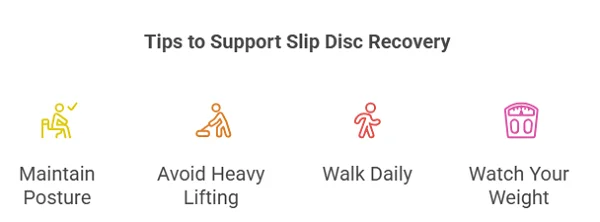
- Maintain posture: Posture matters more than most people think. Use a chair with lumbar support, keep your screen at eye level, and break up long sitting stretches regularly.
- Avoid heavy lifting: In most cases, it is best to avoid heavy lifting. But if you must lift, bend at your knees, not your waist. Keep whatever you are lifting close to your body, and avoid twisting at the waist.
- Walk daily: Twenty to thirty minutes promotes blood flow to disc tissue, which has no direct blood supply and depends on movement to stay nourished.
- Watch your weight: Every extra kilogram puts additional load on lumbar discs. Getting to a healthy BMI reduces that stress in a measurable way.
Poor posture and sedentary routines nowadays are driving more cases of chronic back pain in young people as well as early disc-related problems than in previous decades.
The above mentioned habits pay off faster when they go alongside professional guidance. If you are unsure where to start, that is exactly what a consultation is for.
When Should You See an Orthopedic Specialist?
Late diagnosis of a slipped disc and the consequent prolongation of symptoms are problems which are encountered by many patients.
If a number of complaints (listed below) have not improved with simple measures to alleviate back pain, it is wise to seek an opinion from a specialist in spinal disorders. Here are the warning signs:
- Pain that radiates from the lower back down through the hip and into the leg or calf and foot (sciatica).
- Numbness or tingling in the leg or foot that is persistent or spreading.
- Pain which is persistent (more than two weeks) and does not improve with home care.
Early diagnosis and the correct treatment are important to prevent serious damage and to quickly cure the condition. Accurate diagnosis is essential and it is carried out by the spine specialist with an MRI or clinical examination. So, do not delay too long and let the pain get worse.

The most common questions relating to slipped discs are addressed in the following section. Go through them before you leave the blog and if any of the questions are not answered, leave them in the comments section below.
Frequently Asked Questions
Following are some of the most commonly asked questions by patients regarding slipped disc and its recovery potential.
1. Can a slipped disc heal completely?
Most people with a mild to moderate herniation of their disc can be cured of their complaints by conservative treatment.
2. Can you live with a herniated disc without surgery?
Yes, the vast majority of people with a herniated disc are treated with physiotherapy and with making some changes to their way of life, and from time to time they will be reviewed by their doctor as well.
3. How long does it take to heal from a slipped disc?
Healing time for a slipped disc depends on the degree of severity and in general mild cases will take approximately 4-6 weeks to fully recover from, whereas moderate to severe cases can take anywhere from 3 to 6 months or even longer to heal.
4. How does physiotherapy treat L5-S1 disc bulge?
For a L5-S1 disc bulge, your treatment through physiotherapy will generally involve a number of core strengthening exercises in addition to some nerve mobilisation techniques, and the biggest part of treatment will be to teach you how to change your posture so that you don’t place as much pressure on the L5-S1 nerve root.
5. Can a herniated disc heal after 2 years?
Even after two years herniated discs can spontaneously regress. This is, however, more common in the first 6 to 12 months after the onset of the symptoms.
6. Can massage help a herniated disc?
Massage may only provide relief from tension and or spasms of the surrounding muscles of a herniated disc and NOT provide treatment for the actual herniated disc itself.
7. Can L4-L5 disc bulge get back to normal?
It is possible for the L4-L5 disc bulge to reduce significantly with conservative treatment. The degree to which the disc bulge returns to normal size depends on several factors including the degree of the disc bulge and the patient’s adherence to treatment.
8. Is walking good for slipped disc?
Yes, walking is good for a slipped disc. It is recommended that patients with slipped discs do regular walking as this helps to keep the spinal muscles supplied with nutrients and also helps to stop them from weakening.
9. What should be avoided during recovery?
Heavy lifting, long periods of sitting, high impact activities, forward leaning (bending at the waist) without support.
10. Can physiotherapy cure slipped disc?
The majority of patients with slipped discs can be cured from their symptoms by appropriate amounts of physiotherapy within a few weeks to a few months or so, provided they do the required exercises. This required consistent effort over weeks to months.
11. How do I know if I need surgery?
Surgery is recommended for individuals who experience progressive leg weakness or have a loss of bladder or bowel control.
Severe, persistent back or leg pain which has not improved within 6 to 12 weeks with conservative management can also require surgical intervention.
These answers reflect current evidence-based guidance. For any concern specific to your own condition, a personalised consultation remains the most reliable route.
Find Relief from Slip Disc Pain at Big Apollo Spectra
A majority of slipped disc cases can improve without surgery. But it is very important to identify a slipped disc in the initial stages and then treat it with the right non-surgical approach so the body can get all the support to cure a slipped disc herniation without complications.
It is very important to treat a slipped disc correctly, follow up with the treatment process consistently and then seek the help of a specialist if the slipped disc symptoms start to deteriorate or worsen.
If you are searching for a “bone hospital near me” in Patna, Big Apollo Spectra Hospital has a team of professionals who are at the forefront of orthopaedic care.
The team for orthopedic care and joint replacement at Big Apollo Spectra Hospital, Patna is equipped to manage all types of slipped disc cases through physiotherapy, pain management and surgery (when required).
The treatment is given under a multidisciplinary approach that considers the severity of your condition as well as your recovery expectations.
So, do not let pain take over your life. Treat your slipped disc problem before it ruins your life. For best slipped disc treatment, consult Dr. Amit Kumar Sinha, Orthopedic and Joint Replacement Surgeon in Patna. Visit www.bigapollospectra.com to book your appointment today.