Despite its small pouch-like size, your gallbladder performs an essential digestive function through bile storage, which is produced by the liver. However, in cases of certain diseases or when patients develop gallstones or inflammation, they might require surgical removal of the gallbladder (cholecystectomy).
While recovery is generally without complications, medical know-how and staying informed throughout the process remain important. The effects of gallbladder removal on liver are especially concerning, considering that the way bile flows will change completely post-surgery.
So, can your liver be affected after gallbladder removal? This question concerns those who have been advised by their doctors to go for the cholecystectomy surgery.
Yes, liver problems after gallbladder removal are rare but possible. Warning signs include jaundice, persistent abdominal pain, dark urine, and fatigue. If these symptoms last more than a few weeks or worsen, consult a doctor immediately.
Patients usually need time to adjust to changes that happen immediately after gallbladder removal. Your body requires a period of adjustment to accommodate bile flow, which now moves directly from the liver to the small intestine.
In the initial weeks after surgery, you will likely notice digestive changes while your body works to establish its new normal functioning.
However, some patients complain of experiencing issues after the surgery that aren’t really minor. This blog covers everything you need to look into to recognize the signs and avoid any dangerous repercussions.
8 Common Signs of Liver Problems After Gallbladder Removal
Monitoring the physical changes you feel due to how the liver interacts with the former gallbladder site is essential because it provides crucial insights into possible liver problems following gallbladder removal.
The body’s ability to adapt to post-surgical changes largely determines whether you experience any signs of complications after gallbladder surgery.
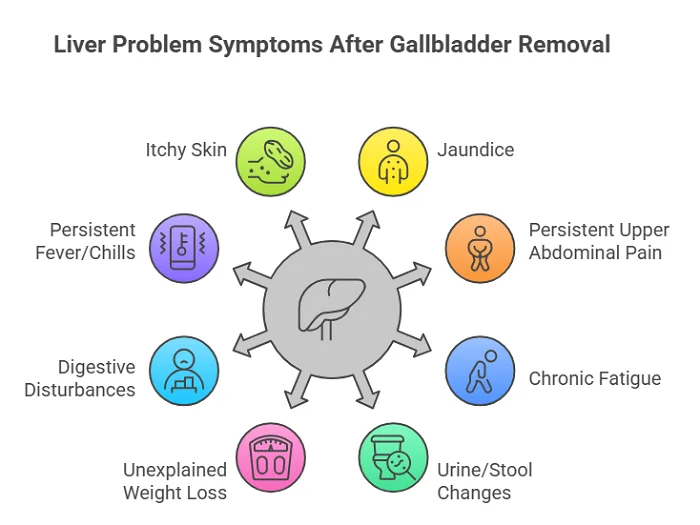
Following are some of the signs of liver issues after gallbladder removal that might suggest liver-related complications:
1. Jaundice (Yellowing of Skin and Eyes)
A distinctive yellowing develops when bilirubin accumulates in the body, and there are chances that the patient may develop jaundice. The main reason behind this is the disrupted bile flow after gallbladder removal, which serves as a vital sign of possible liver strain or bile duct issues.
The first signs of yellowing may appear in the whites of the eyes before it’s visible on the skin.
Thus, monitoring even slight shifts in skin colour is important because recognizing these signs early helps avoid more serious health problems later on. Also, observing the yellowing in natural light conditions is essential because artificial lighting can conceal slight yellow colouration.
2. Persistent Upper Abdominal Pain
Liver-related pain usually presents as a persistent ache or intense discomfort located in the upper right section of the abdomen.
This aching may further increase after meals and physical movement, suggesting problems with bile flow or liver inflammation. This discomfort extends to the back and right shoulder blade, setting it apart from typical digestive pain symptoms.
Patients report experiencing a persistent throbbing sensation that remains unaffected by standard painkillers or OTC treatments. A short log of pain patterns connected to food intake and particular movements should be maintained for your healthcare provider’s review.
In fact, it is advisable to not underestimate these symptoms, especially when occurring after gallbladder removal.
NOTE: Those living in Patna have access to the top-of-the-line medical expertise with patient-centric treatment and advanced diagnostic technology. Visit the best liver specialist in Patna, Dr Vijay Prakash Singh, at the Big Apollo Spectra, located in Agamkuan.
3. Chronic Fatigue and Weakness
Patients who undergo gallbladder surgery may experience persistent fatigue that does not subside after rest. When this type of fatigue appears alongside additional symptoms, it may signal difficulties in your liver’s ability to produce and transport bile properly.
This fatigue differs from typical tiredness because it feels intense and often results in muscle weakness. Patients frequently report that basic daily activities now present challenges that they could perform without difficulty before.
The physical exhaustion typically also induces mental fog along with difficulties in concentration, affecting both professional responsibilities and personal relationships.
4. Changes in Urine and Stool Colour
The presence of dark urine and clay-coloured stools suggests potential problems with bile production or bile flow issues. Liver dysfunction causes these changes because it fails to manage waste processing or it can also happen when the bile fails to reach the intestines properly.
Your urine may have amber or cola-like hues while stools develop pale gray or clay-like colouring. Because these changes develop slowly, maintaining a record of daily colouration enables the detection of worrisome changes.
Healthcare providers may inquire about the time when changes started to occur in order to monitor disease progression.
5. Unexplained Weight Loss
If you experience substantial unplanned weight loss, it might suggest that your body is struggling to absorb nutrients properly. When the liver cannot perform its functions properly, it leads to impaired digestion and reduced nutrient absorption.
A medical consultation should become a priority when experiencing a body weight reduction that’s greater than 5% over a few months time.
Patients experiencing this weight loss frequently show changes in their appetite and can also feel that they are full after eating only small quantities of food. Some patients may also start noticing their clothes fitting differently while also experiencing muscle mass reduction.
6. Digestive Disturbances
The occurrence of nausea along with vomiting and indigestion after eating fatty foods suggests that your liver may not be producing or releasing bile properly.
These symptoms are usually more severe following consumption of large meals or foods rich in fat. Patients often report symptoms of gas, bloating, and altered bowel habits.
By analyzing the correlation between eating and symptom occurrence, doctors can gain valuable insights into your liver health. Several people also discover that monitoring their dietary habits through a food diary enables them to pinpoint exact triggers and eating patterns.
7. Persistent Fever and Chills
A continuing pattern of fever or chills indicates possible infection or inflammation in the liver or bile ducts, which requires urgent medical evaluation.
The temperature changes observed in this condition continue beyond the usual post-surgical recovery timeframe. The fever may also demonstrate a recurring pattern where it typically intensifies during evening hours or after meals.
Patients should monitor night sweats and general feelings of discomfort and communicate these symptoms to their healthcare provider. In many cases, the presence of these symptoms signals an infection or inflammatory condition that demands urgent treatment.
8. Itchy Skin (Pruritus)
A person experiencing unexplained itching without a rash may have bile salts building up in their bloodstream, which signals potential liver function problems.
People usually experience more itching during nighttime hours which can manifest anywhere on the body, but it predominantly affects the palms and soles.
The distinguishing feature of this kind of itch is the lack of an accompanying visible rash, which eliminates the chances of any skin allergies and conditions.
Some patients experience skin crawling sensations under the skin and find that scratching usually does not alleviate their discomfort.
If you’re experiencing any of these symptoms, seek care early and don’t postpone an appointment as persistent issues may further complicate your case.
➤ Ready for a Consultation? Book an Appointment with Dr. Vijay Prakash Singh at BIG Apollo Spectra Hospital, Patna – Call 0612-3540100

Is It Normal to Have Liver Symptoms After Gallbladder Removal?
Yes! Symptoms post-gallbladder removal surgery are not unusual and research shows up to 30-40% of patients report digestive complaints in the weeks after surgery.
Digestion changes in the absence of a gallbladder are prominent since your liver is now constantly supplying bile to your small intestine and your body needs time to get used to this new arrangement.
Most symptoms are temporary, however, some can signify complications of the liver and should be heeded – the trick is to know the difference.
What Symptoms Are Normal (Temporary)
In the weeks immediately following surgery, normal short-term symptoms to expect are:
- Loose stools or diarrhea
- Mild bloating and gas
- Nausea after eating fatty foods
- Discomfort at or around the incision site
- Fatigue during recovery
What Symptoms are Indicative of Liver Problems?
Some symptoms are definitely beyond normal and should be an indication of liver stress and/or complications of the bile duct:
- Yellowing of your skin or eyes (jaundice)
- Pain that persists or is worsening in the upper right side of your abdomen
- Dark urine or pale stool
- Weight loss for no reason
- Irritated, itchy skin without a rash
If you notice any of these, do not dismiss them as routine recovery discomfort.
PEOPLE ALSO READ: Symptoms of Liver Issues and When to Seek Medical Help?
Role of the Liver Post-Gallbladder Removal
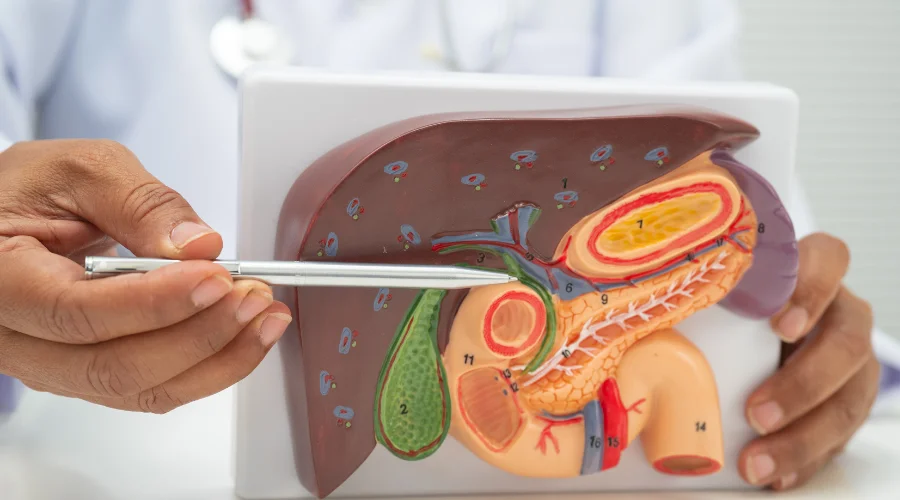
Your liver demonstrates amazing flexibility in adapting its functions in the absence of a gallbladder. The liver needs to completely reorganize how it manages bile production after the gallbladder stops storing bile.
Under regular conditions, your liver generates between 800-1000 ml of bile each day, and your gallbladder concentrates and stores this bile.
After surgery, the liver needs to keep producing bile and adjust its release according to your digestive requirements. This process requires significant metabolic adaptation.
Post-gallbladder removal, the liver now takes on three critical additional responsibilities:
- The liver needs to adjust its bile production to match your eating habits since it can’t store bile in the gallbladder for controlled release during meals anymore.
- The liver adjusts bile composition for better continuous release which results in bile that is less concentrated but flows in consistent amounts.
- Now, the liver has to keep appropriate pressure levels within the biliary system since the gallbladder used to function as a pressure-relief valve.
Whether someone experiences the long-term side effects of gallbladder removal or not largely depends on their liver’s ability to adjust to the new physical conditions. There are multiple functions that change for the liver; functions that were previously shared with the gallbladder.
Now, the liver must maintain a continuous flow of bile while also adjusting production timing to accommodate the eating habits.
Due to these changes, some patients may complain about experiencing discomfort after gallbladder removal. Finding out the root cause will help your gastroenterologist in preparing a treatment protocol suitable for your specific case.
Causes of Liver Problems after Gallbladder Removal
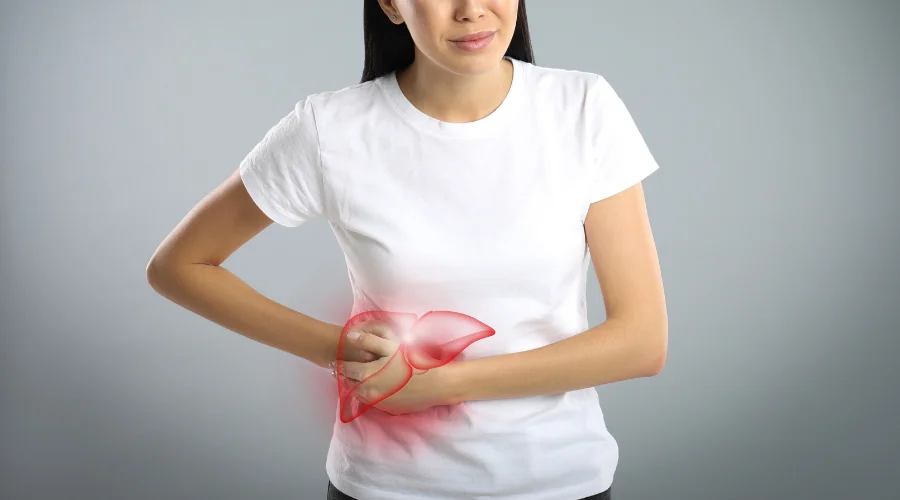
Multiple factors can result in liver complications after gallbladder removal. The gallbladder’s storage function helps maintain the typical bile flow pattern, which changes drastically when the gallbladder is removed. This condition can result in inflammation within the bile ducts or the formation of strictures.
Surgical intervention to remove gallbladder might also make pre-existing health issues more apparent while the use of certain drugs could produce new effects on liver function.
Removing the gallbladder sometimes results in heightened pressure within the liver’s bile production system, which can lead to serious complications without proper monitoring.
1. Bile Duct Complications
Bile duct system issues stand as the primary cause of liver complications following gallbladder removal. The gallbladder serves a critical regulatory function for bile ducts, which once removed can cause bile ducts to become inflamed, narrowed or blocked, thus creating multiple complications.
The absence of the gallbladder’s buffering effect leads to continuous bile flow that increases pressure within the ducts which may cause dilation or irritation.
2. Post-surgical Inflammation
Surgical inflammation can sometimes impact adjacent liver tissue, which may lead to either short-term or long-term changes in liver function. Surgical tissue manipulation or the body’s natural healing mechanisms may also produce inflammation.
The inflammatory response can lead to temporary disruptions in bile flow and liver function which typically improve over time but may require medical attention in certain situations.
3. Increased Biliary Pressure
The loss of the gallbladder’s function to relieve pressure causes some patients to experience heightened pressure in their biliary system which might impact liver function.
The buildup of increased pressure within the biliary system may cause bile to accumulate in the liver where it causes inflammation and leads to potential liver tissue damage.
4. Pre-existing Conditions
After gallbladder removal, patients with previously manageable liver conditions may experience worsening symptoms that necessitate further medical intervention.
The typical causes for this are surgical stress and alterations in bile flow. Among health conditions, fatty liver disease and autoimmune disorders related to liver along with early-stage cirrhosis are some of the conditions that may require urgent care from a doctor.
5. Effects of Medications
Medications processed through the liver may now exhibit different effects on liver function after a patient undergoes gallbladder removal. Taking out the gallbladder impacts drug metabolism and elimination processes in the body.
Patients may exhibit increased sensitivity to particular medications while others experience reduced medication effectiveness.
Thus, it’s important to consult your doctor to manage the dosage and the timing of the medication intake after the removal of the gallbladder.
6. Dietary Challenges
The absence of the gallbladder’s concentrated bile secretion forces the body to adapt to a steady bile stream which makes digesting specific foods more difficult.
Eating large portions of food, consuming high-fat meals, and maintaining irregular eating patterns all create further stress on the body’s systems. Thus, the difficulties are only exacerbated due to unhealthy dietary selections and abrupt dietary changes.
Asking your doctor about how to prevent fatty liver after gallbladder removal becomes especially crucial as the liver works hard to adjust to its new role and dietary habits.
In addition, you must also follow prevention tips as suggested by your doctor and monitor your health with regular checkups.
Emergency vs Non-Emergency Symptoms
| Emergency Symptoms (Seek Immediate Care) | Non-Emergency Symptoms (Monitor & Manage) |
| Yellowing of skin or eyes (jaundice) | Mild bloating |
| Severe or worsening abdominal pain | Occasional diarrhea |
| High fever with chills | Gas or indigestion |
| Persistent vomiting | Mild, temporary fatigue |
| Dark urine and pale stools | Slight discomfort after eating fatty foods |
| Rapid, unexplained weight loss | Temporary loss of appetite |
NOTE: If non-emergency symptoms persist beyond a few weeks or start worsening, it’s best to consult a doctor for diagnosis to rule out underlying complications.
How Are Liver Problems Diagnosed?
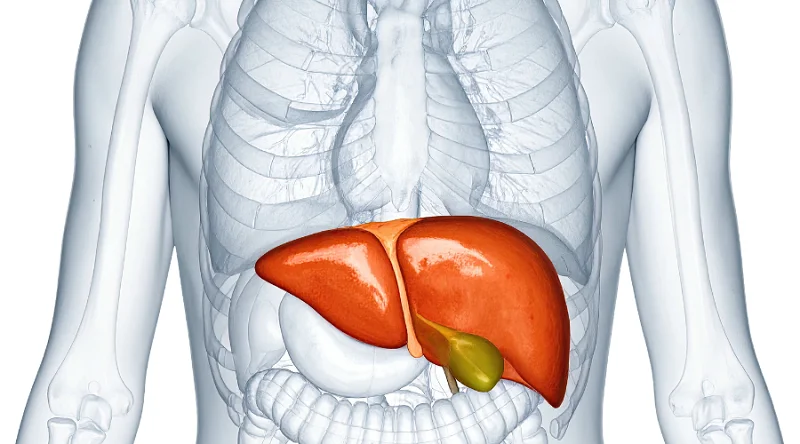
Diagnosis is made by your doctor based on a blood test along with an imaging test. Blood testing will identify what has happened to the liver.
Imaging will help diagnose the area where the problem is located. Early diagnosis can keep bile duct blockage, liver inflammation and other issues related to the liver from getting worse.
Your liver doctor may order some of the following tests:
- A Liver Function Test (LFT) – Measures liver function enzymes including alanine transaminase (ALT), aspartate aminotransferase (AST) and measures how much bilirubin you have in your blood. These are used to see if there is any damage to the liver or disruption of bile flow.
- An Ultrasound or CT scan – Uses non-invasive ultrasound technology or CT scans to evaluate the liver and look for blockages in the bile duct, enlargement of the liver and any structural anomalies in the bile duct.
- An MRCP (Magnetic Resonance Cholangiopancreatography) — Provides high-resolution images of the bile duct that do not involve radiation. It is particularly good at identifying retained stones and/or strictures in the bile duct.
- Complete Blood Count — Assesses if you have an infection or inflammation that could be causing your symptoms.
Early diagnosis helps prevent serious complications.
How to Prevent Liver Complications After Gallbladder Removal?
Research demonstrates that there’s a higher incidence of liver cirrhosis after gallbladder removal, which emphasizes the importance of preventive measures for long-term health maintenance.
Several essential strategies exist for preserving optimal liver function following gallbladder removal. Your dietary choices take on heightened importance during this stage post-surgery.
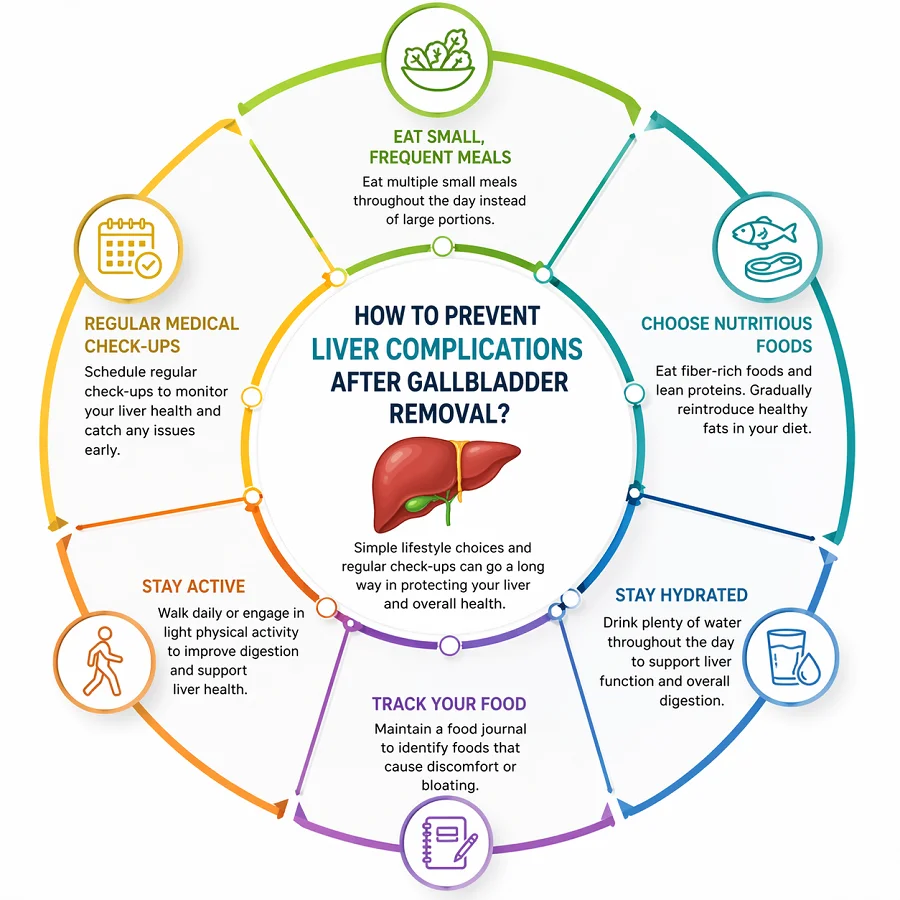
- To support your dietary goals, prioritize eating multiple small meals throughout the day instead of consuming large portions.
- Eating fiber-rich foods and lean proteins should be combined with the gradual reintroduction of healthy fats in the diet plan.
- Staying hydrated is essential
- Maintain a food journal to discover foods that lead to discomfort.
- Walking daily is a simple exercise that promotes healthy digestion while supporting liver function.
The most important step for liver health is to arrange regular medical appointments which allow for early monitoring and prompt intervention. Although it’s a rare complication, regular monitoring can also help prevent stones in liver after gallbladder removal.
Diet After Gallbladder Removal
After gallbladder removal, the liver releases bile directly into your small intestine and therefore your digestive system is more “reactive” to what you consume.
Adhering to a proper diet prevents the liver from being overburdened and consequently improves digestion and decreases the likelihood of nausea/vomiting after a meal.
Small, mindful adaptations to diet will make a difference!
Foods to Eat:
- Foods with fiber – Oats, lentils, whole grains and vegetables promote good bowel habits and help regulate bile absorption.
- Lean proteins – Fish, eggs and legumes are the gentlest on your digestive system and force your liver to work less.
Foods to Avoid:
- Fried and fatty foods – They incite a bigger bile response and increase both diarrhoea and bloating along with abdominal discomfort!
- Processed foods – Loaded with sodium and other preservatives, all this adds further distress to the liver and digestive system.
- Excess sugar – It can contribute to fatty liver and slows down recovery after surgery.
It is also better to have smaller meals than a few big ones.
When to See a Doctor Again?

A little discomfort is normal after surgery, but if you have any of the following symptoms, don’t hesitate to call for medical assessment.
Dr. Vijay Prakash Singh, Consultant Gastroenterologist with over 30 years’ experience treating liver patients and post-surgical complications suggests not to self manage and disregard concerning symptoms.
“Don’t try to self diagnose – red flag signs should result in urgent assessment before something treatable becomes a serious issue.”
Seek medical attention if you experience any of the following:
- Jaundice – Yellowing of the skin and whites of eyes is indicative of bile duct obstruction or impaired liver function
- Persistent pain – Non-settling upper right tummy pain lasting for a number of days
- High temperature fever – Fever over 38.5 degrees with accompanying chills may mean there is an infection, or other internal inflammation, in the abdomen
- Dark urine or pale stools
- Weight loss; unexpected and unintentional weight loss
- Severe vomiting or nausea causing inability to eat
👉 Consult Dr. Vijay Prakash Singh for Persistent Symptoms – Don’t sit at home and disregard what your body is telling you if you are experiencing any of these symptoms after gallbladder surgery.

Frequently Asked Questions
The following queries will provide more insight into how gallbladder removal surgery affects liver function and what you should be aware of.
1. How long does it take to return to normal after gallbladder removal?
Patients typically return to their normal routines within 1-2 weeks after surgery but full internal recovery and dietary adaptation can require another 4-6 weeks. It’s important to visit for your regular appointments during this time.
2. What is not normal after gallbladder surgery?
Anyone experiencing intense pain, continuous fever, jaundice symptoms, or substantial eating difficulties should seek urgent medical care.
3. What are the disadvantages of removing the gallbladder?
Patients who undergo gallbladder removal may experience temporary digestive changes which require careful dietary management and patience.
4. How can I protect my liver after gallbladder removal?
Protecting the liver function after surgery requires a balanced diet alongside regular exercise and hydration. Also, keep up with all your medical appointments.
5. What are the problems years after gallbladder removal?
Patients may endure continuous digestive sensitivity which requires them to follow specific dietary guidelines.
Successful recovery and long-term health after gallbladder removal surgery require proper care and consistent monitoring to ensure positive outcomes. Continuous communication with your healthcare provider combined with the right information helps maintain your liver health and supports general well-being.
Contact Big Apollo Spectra When in Doubt!
Always seek medical attention when you experience symptoms that are both severe and persistent. You need immediate medical attention if experiencing severe abdominal pain, persistent fever symptoms, jaundice, or significant digestive changes, affecting your daily life.
Visit the medical professionals at the best gastroenterology hospital in Patna who will diagnose all the critical signs of potential liver complications to ensure an accurate diagnosis.
Our healthcare professionals possess extensive experience and grasp the distinctive challenges that occur after gallbladder surgery. Our comprehensive support services include routine check-ups and assistance with complex post-surgical issues.
The hospital provides ongoing monitoring to enable optimal liver function maintenance as well as the early identification of possible health concerns to prevent complications down the line.
✅ Book Your Appointment with Dr. Vijay Prakash Singh | BIG Apollo Spectra Hospital, Patna | Emergency Line: 0612-3540100