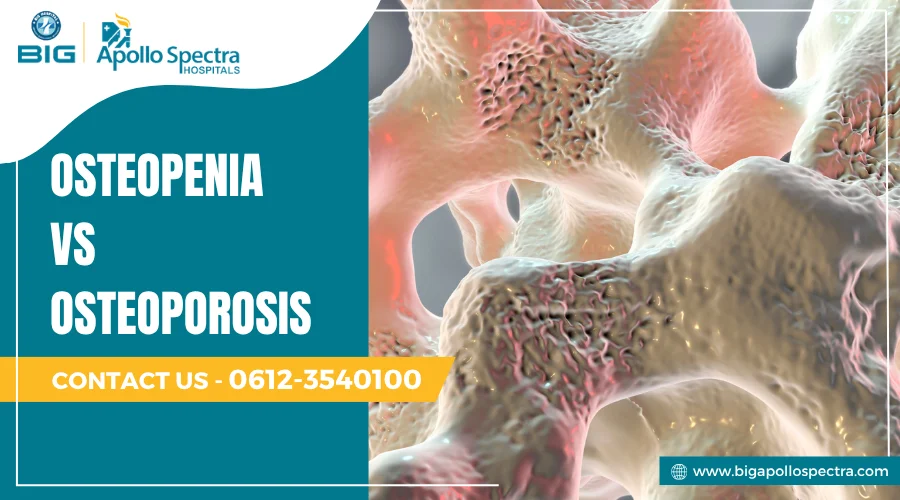
Both osteopenia and osteoporosis conditions mean your bones have lost density. That’s where the similarity ends. Osteopenia is an early stage of bone thinning; osteoporosis is further down that same road, with a real jump in fracture risk. And no, it isn’t just “mild osteoporosis” versus “severe osteoporosis” – density is only part of the story here.
Your age, whether you’ve broken a bone before, and a handful of other clinical factors all weigh in too. So, a report that says osteopenia doesn’t mean osteoporosis is inevitable for you.
If you’ve just gotten a bone-density report and you’re staring at unfamiliar numbers, talking it through with a rheumatology doctor in Patna here at Big Apollo Spectra is the fastest way to make sense of it.
Dr. Rajiv Ranjan, consultant rheumatologist and clinical immunologist at Big Apollo Spectra Hospital, sees this exact confusion play out often – patients handed a DEXA printout and getting anxious about the results and what they mean for them in the long run.
Our specialists are here to help you make sense of your report and take actions accordingly.
Osteopenia vs Osteoporosis: The Difference at a Glance
The difference between osteopenia and osteoporosis really just comes down to two things: how much density you’ve lost, and how fragile that leaves your bones.
| Factor | Osteopenia | Osteoporosis |
| Bone density | Lower than normal | Significantly reduced |
| T-score | −1 to −2.5 | −2.5 or lower |
| Bone strength | Reduced | More fragile |
| Fracture risk | Increased | Higher |
| Symptoms | Usually absent | Often absent until fracture |
| Main concern | Prevent further density loss | Prevent fractures and further density loss |
| Treatment | Lifestyle plus risk-based management | Lifestyle plus medication when indicated |
Those T-score cutoffs trace back to the World Health Organization’s classification, and both NIH/NIAMS and Cleveland Clinic reference them.
Not everyone with osteopenia ends up with osteoporosis, and that’s worth sitting with for a second. Progression is a common path, not a guaranteed one, and quite a few factors decide which way it goes.
>> Book a Consultation for Proper Diagnosis

What Is Osteopenia?
Your bone mineral density is lower than normal, but not low enough to cross into osteoporosis. A midpoint, essentially.
And here’s the tricky part: you almost certainly won’t feel it. No aches, no warning signs, nothing that tells you your bones are thinning, which is exactly why testing matters even when you feel perfectly fine.
Osteopenia does push your fracture risk up compared to normal density, but it isn’t a one-way street either. It can sit stable for years, especially once you start addressing whatever’s driving it.
NOTE: Early onset osteoporosis in young adults is entirely possible, and many times it can show up suddenly due to underlying secondary medical conditions before the traditional age-related osteopenia ever shows up.
In general, diagnosing osteopenia early offers real room to act before things move further along.
What Is Osteoporosis?
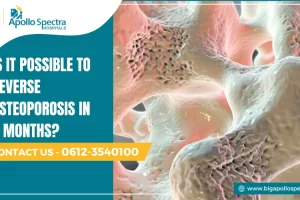
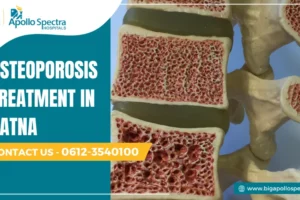
Osteoporosis means bone structure has weakened enough that fractures can happen from things that shouldn’t cause them – routine everyday movements. It’s not just a low number on a report. It reflects an actual change in the bone itself: more porous, more fragile tissue than healthy bone has.
Hip, spine, and wrist are the usual fracture sites. And like osteopenia, it can stay quiet for years. A lot of people only find it out after a minor fall breaks something that, frankly, shouldn’t have broken from a fall that minor.
Whether this can be undone once you’re here is a fair question. Our guide on reversing osteoporosis walks through what’s realistic and what isn’t.
A diagnosis isn’t the end of the road, but it does mean closer monitoring than osteopenia calls for, which brings up the number everyone fixates on: the T-score.
What Does Your T-Score Actually Mean?
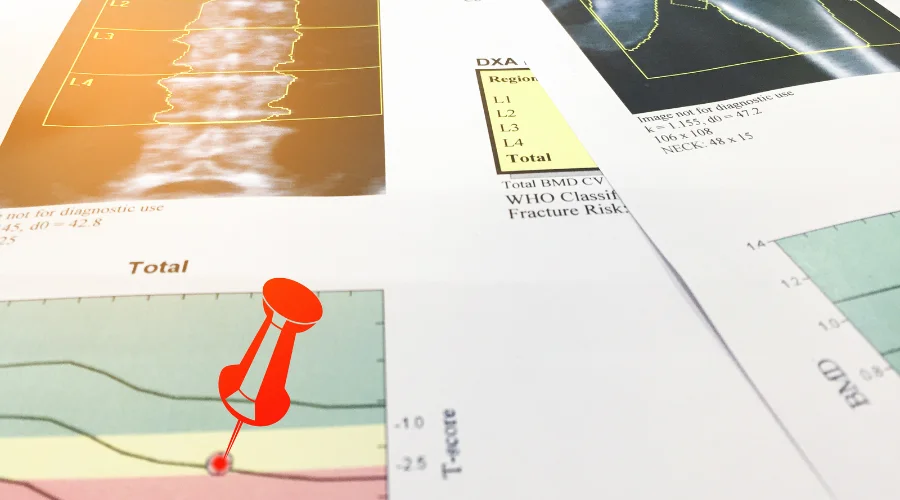
Your T-score is simply your bone density measured against a healthy young adult of the same sex. On an osteopenia vs osteoporosis X ray, that number comes from a DXA scan – dual-energy X-ray absorptiometry, a low-dose scan usually done at the hip and spine.
A T-score of
- −1 or above: normal.
- Between −1 and −2.5: osteopenia territory.
- −2.5 or lower: osteoporosis.
Here’s what gets missed, though: the T-score alone doesn’t tell you your actual fracture risk. Age matters. A previous fracture matters.
Medications, other health conditions – all of it factors into what your doctor ends up recommending. Two people can have the exact same T-score and walk away with completely different treatment plans, because the number was never the whole story.
Can Osteopenia Turn Into Osteoporosis?
Yes. Not always, but yes. It’s probably the single most-asked question on this topic, and the honest answer sits somewhere between reassurance and caution.
A few things tend to push things along towards progression:
- Increasing age
- Menopause and the hormonal shifts that come with it
- Family history of osteoporosis
- Low calcium or vitamin D intake
- Physical inactivity
- Smoking
- Heavy alcohol use
- Long-term steroid use or certain other medications
- Underlying conditions that affect bone metabolism
Regular follow-up scans, plus doing something about the risk factors that you can control, genuinely slows this down. Sometimes they stop further skeletal weakening.
Osteopenia vs Osteoporosis: Are the Symptoms Different?
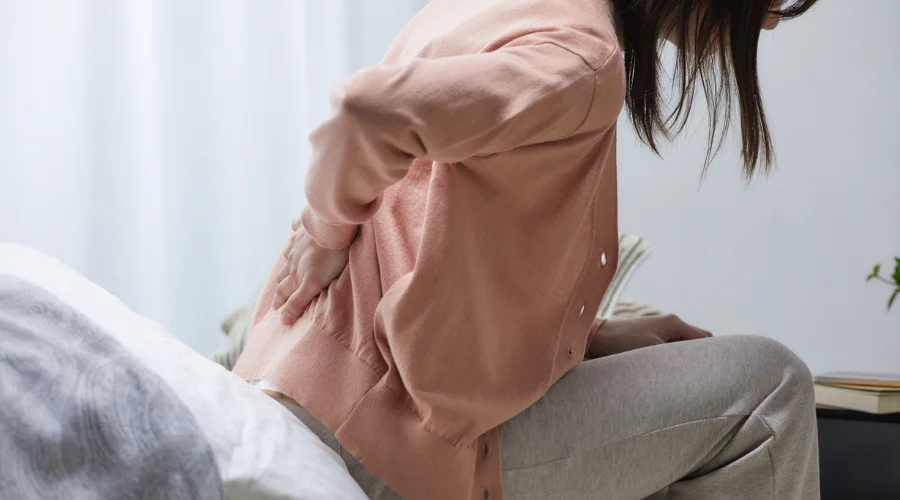
Whether you can actually feel your bones losing density is a common question, and mostly the answer is no. Both conditions tend to be quiet in their earlier stages – no pain signaling that anything’s wrong, right up until something breaks.
When symptoms finally do show up, it’s usually after a fracture. Keep an eye out for osteopenia vs osteoporosis symptoms such as ongoing back pain, a noticeable drop in height, a stooped posture, or a hip, wrist, or spine fracture from a fall that really shouldn’t have caused one.
NOTE: If a fragility fracture does happen, our guide on bone fracture recovery covers what the healing timeline usually looks like.
No early warning system means it helps to know, going in, who’s actually at higher risk.
Who Is More Likely to Develop Osteopenia or Osteoporosis?
Skip the generic risk-factor list for a second. It’s more useful to split this into what you can’t change and what you can.
Non-modifiable:
- Increasing age
- Family history of osteoporosis
- A previous fracture
- Menopause and hormonal shifts
- Smaller body frame
Potentially modifiable:
- Physical inactivity
- Poor nutrition, low calcium intake especially
- Smoking
- Excess alcohol
- Certain long-term medications
One thing that trips people up: this isn’t a women-only issue. Osteoporosis affects men too – they just tend to get diagnosed later, mostly because bone-density screening isn’t routinely offered to them the way it is to postmenopausal women.
Once you know where you land on this list, the next logical step is understanding how a diagnosis actually gets made.
How are Osteopenia and Osteoporosis Diagnosed?
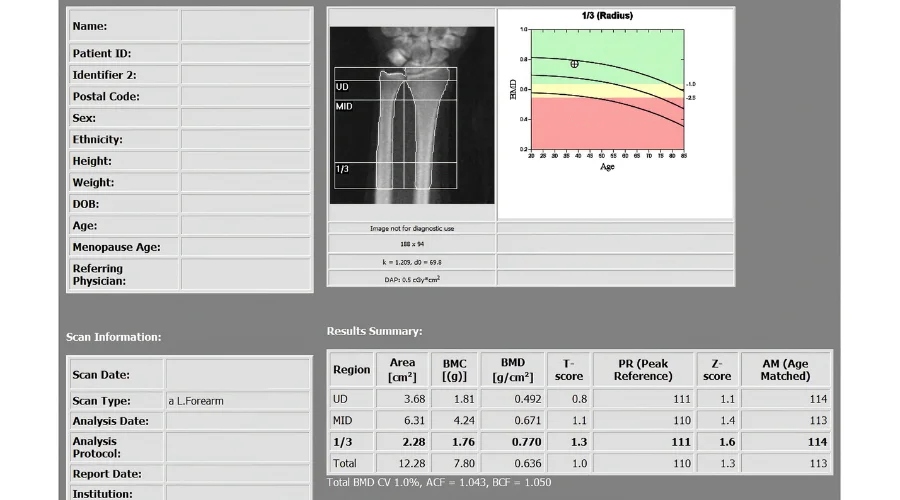
It starts with a DEXA scan for osteoporosis – a quick, low-radiation scan that measures bone mineral density at the hip and spine. It is the current standard for measuring bone density, and for good reason: it’s fast, low-radiation, and non-invasive.
Younger patients, or those with certain medical conditions, sometimes get a Z-score. It compares bone density to others of the same age rather than a young-adult baseline.
Your doctor will also dig into your fracture history and, quite often, run a risk-assessment to estimate your odds of fracturing something over the next decade.
Once low bone density shows up on the report, what happens next depends on how far things have progressed and your overall fracture risk – which is where osteoporosis treatment planning comes in. Osteopenia treatment starts from the same foundation but rarely needs to go as far in terms of how aggressive it is.
Is Treatment Different for Osteopenia and Osteoporosis?
Genuinely, yes, and this is probably where most of the confusion around osteopenia vs osteoporosis treatment comes from.
With osteopenia, the plan usually leans on:
- Lifestyle and bone-strengthening habits,
- enough calcium and vitamin D,
- weight-bearing and resistance exercise,
- watching out for falls,
- and repeat scans down the line to track things.
Medication only enters the picture for a smaller group of higher-risk patients.
Osteoporosis keeps all of that but adds more:
- Fall prevention becomes non-negotiable
- Prescription medication, bisphosphonates being the common one, gets added when indicated.
- If something underlying is driving the bone loss, that gets managed,
- Regular monitoring to see whether the plan is actually working.
Not everyone with osteopenia needs medication, worth repeating that. Treatment comes down to your individual fracture risk and clinical picture, never the T-score in isolation. Bisphosphonates tend to get reserved for people where lifestyle changes alone won’t move the needle enough.
Can You Prevent Osteopenia From Getting Worse?
Yes. If you’ve just been told you have osteopenia, here’s a list you can act on today instead of waiting around for your next scan.
- Weight-bearing exercise, regularly – walking, stairs climbing.
- Resistance training, two or three times a week
- Calcium-rich foods, plus safe sun exposure for vitamin D
- Cut out smoking
- Go easy on alcohol
- Fall-proof your home – get rid of loose rugs, bad lighting, the usual suspects
- Keep up with monitoring scans on whatever schedule your doctor sets
On the flip side, a few foods work against you too. Common foods to avoid with osteopenia include a lot of sodium, heavy caffeine, and ultra-processed food, since all three interfere with how well your body holds onto calcium.
None of this replaces an actual medical plan, but stick with it daily and it genuinely bends your trajectory.
When Should You See a Rheumatology Doctor for Low Bone Density?
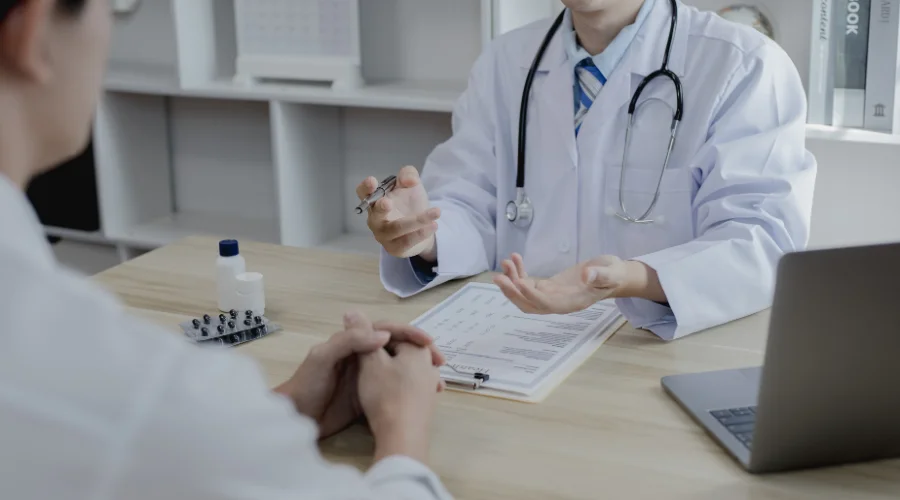
Not every low bone density reading is an emergency. But a few situations are worth acting on sooner rather than later:
- a report showing osteopenia or osteoporosis,
- a fracture from a minor fall,
- any past fragility fracture,
- real risk factors like family history or long-term steroid use,
- postmenopausal bone concerns,
- or unexplained height loss and back pain that won’t quit.
If there’s a fracture, it’s worth consulting with the best orthopedic doctor in Patna we have at Big Apollo Spectra for a face-to-face consultation.
Get evaluated early and the path tends to be simpler – a specialist weighs your scan against your actual medical history instead of going purely off the T-score.
That conversation is also where treatment planning genuinely starts, rather than a guessing game. And it leaves you with a documented baseline, so any future scan gets compared against something real instead of getting assessed on its own, which makes it far easier to tell whether things are actually improving a year or two down the line.
Consult Dr. Rajiv Ranjan for a personalized bone health assessment >> Book Appointment
You don’t have to wait for something to break before getting answers. Once you know where you stand, the next question is what to actually do about it.
Osteopenia vs Osteoporosis: What Should You Do After a Diagnosis?
Got an osteopenia result? Start by understanding your T-score, talk through your personal fracture risk with your doctor, tackle whatever lifestyle factors are within your control, and stick to whatever monitoring schedule gets set.
Got an osteoporosis result? The conversation goes a bit further – fracture risk in more depth, identifying what’s driving the bone thinning, weighing treatment options, and regular follow-ups to track how things are going.
Already had a low-trauma fracture? Get checked regardless of your T-score. Fracture history changes the treatment conversation on its own, whether or not your score has technically crossed −2.5 yet.
FAQs
1. Is osteopenia the same as osteoporosis?
No, osteopenia sits below the osteoporosis threshold. Osteoporosis means more advanced bone thinning and a steeper osteoporosis fracture risk.
2. Can osteopenia become osteoporosis?
It can, though it’s not guaranteed. Age, hormones, nutrition, and lifestyle all play a part in whether and how fast that happens.
3. Which is worse osteopenia or osteoporosis?
Osteoporosis, by a fair margin. Osteopenia does raise fracture risk too, just not to the same degree.
4. Can osteopenia be reversed?
Sometimes, with consistent lifestyle changes, though how much it changes varies person to person.
Similarly, if you are wondering can osteoporosis be reversed to osteopenia, know that with sustained treatment it is possible, but that mostly comes down to how advanced things were to start and how closely the care plan gets followed.
5. Do people with osteopenia need medication?
Not usually. Most people manage it through lifestyle alone; medication tends to stay reserved for higher-risk cases.
6. What T-score indicates osteoporosis?
−2.5 or lower on a DEXA scan.
7. Can you have osteoporosis without symptoms?
Yes, and often until a fracture happens. That silent progression of low bone density is exactly why screening matters if you’re at risk.
8. When should you get a bone density test?
Postmenopausal women, men past 70, and really anyone carrying risk factors like long-term steroid use or a prior fragility fracture.
Get Checked Before Complications Arise
Osteopenia is lower-than-normal bone density that hasn’t crossed into osteoporosis. Osteoporosis is what happens further down that path – more bone weakness, more fracture risk.
A T-score is a useful starting point, but it was never meant to be read alone; your broader fracture-risk picture matters just as much.
Early checks, honest conversations with your doctor, and habits you actually stick with make a real difference at any stage.
If you’ve got a bone-density report you don’t fully understand, or you just want a baseline reading, book a consultation with our rheumatology team at Big Apollo Spectra Hospital today to get your bone density assessed.