

Robotic knee replacement is knee replacement surgery where a robotic system helps your surgeon plan the operation and then guides bone preparation and implant placement more precisely than freehand instruments would. The robot doesn’t operate by itself. Your surgeon makes every cut, every call, start to finish.
If you’ve spent any time researching this, you’ve probably run into terms like robotic-assisted knee replacement or robotic knee surgery and wondered if they’re the same thing.
Mostly, yes. This guide breaks down what the technology actually does, how the procedure works step by step, and how it compares to conventional knee replacement surgery.
What Is Robotic Knee Replacement?
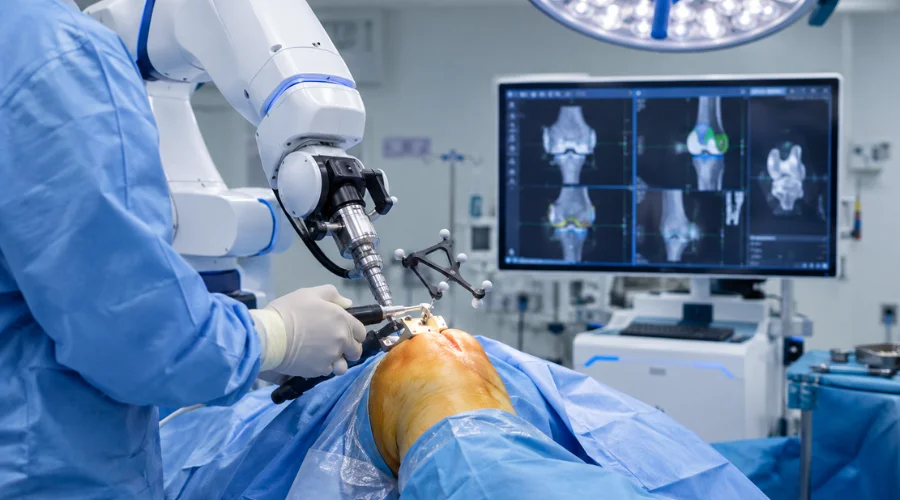
It’s a total or partial knee replacement surgery performed with a robotic assisted technology system. Rather than relying purely on manual measurements and a surgeon’s eye for alignment, the team builds a plan using a robotic system. Then, during the operation, the system tracks that plan and helps guide bone removal and implant placement.
Your surgeon still makes every cut or incision. The robot isn’t deciding anything on its own; it’s a precision tool on top of the surgeon’s skill and judgement, nothing more.
This comes into play when the surfaces inside your knee, usually worn down by arthritis or damaged cartilage, need to be replaced with an artificial joint.
Does a Robot Perform the Entire Knee Replacement?
No. And honestly, this is where most of the confusion starts. People hear “robotic surgery” and picture something autonomous. It isn’t. The robot assists. Your surgeon controls the instruments, adjusts the plan mid-surgery if the anatomy looks different once they’re actually in there, and owns the outcome completely.
At Big Apollo Spectra Hospital, an experienced knee replacement surgeon in Patna will always be there to guide the plan and their skill is supplemented with the advanced robotic assisted technology.
Here’s what the operation itself looks like, stage by stage.
How Does Robotic Knee Replacement Work?
The process involves structured stages. The robot supports the surgical team at specific stages – it’s never the one running the procedure.
Step 1: Preoperative Assessment
Your surgeon looks at your knee condition, your symptoms, how well you can currently move around. Arthritis severity, existing joint damage, your medical history – all of it feeds into whether you’re a reasonable candidate for the procedure.
Step 2: Surgical Planning
Imaging and precise measurements of your knee go into building a plan that’s specific to you. Two people can both have “bad arthritic knees” and still have completely different bone structures underneath. The plan accounts for the difference in bone structure and joint alignment, and also considers the extent of damage.
Step 3: Mapping the Knee
Once you’re actually in surgery, the system helps the team see your knee’s anatomy in fine detail and marks out where bone preparation needs to happen. It’s essentially a sharper version of what a surgeon would otherwise judge by eye before making any cuts.
Step 4: Bone Preparation
The system assists as your surgeon makes the planned cuts, keeping them within the boundaries the plan laid out. Your surgeon is doing the cutting. The system is keeping things aligned.
Step 5: Implant Positioning
Placing and aligning the implant comes next, following the plan from earlier. This step matters more than people expect – how well the implant sits affects how your knee moves for years afterward.
Step 6: Final Assessment
Before closing, your surgeon checks movement, stability, and alignment against what was planned. No system guarantees perfection for every patient, robotic or not. Individual healing and rehab still carry a lot of the weight after you leave the operating room.
That covers the sequence. There’s still a common misunderstanding worth clearing up about where the robot’s job stops.

What Role Does the Robot Play in Knee Replacement Surgery?
Surgical planning. Anatomical mapping. Guiding the bone cuts. Positioning the implant. Checking alignment. Helping with small adjustments mid-procedure. These are some parts where a robotic assisted knee replacement system helps with.
Everything else belongs to your surgeon: reading the imaging correctly, adapting the plan on the spot if your anatomy differs from expectations, physically doing the surgery, and handling any complication that shows up.
Robotic assistance doesn’t replace the skills and experience of the best orthopaedic surgeon in Patna at Big Apollo Spectra. It acts as a supporting tool in the skilled hands of a surgeon. Come to think of it, it’s similar to a GPS in a car, assisting a driver without taking over the actual driving.
All in all, outcomes still depend on the surgeon’s expertise. So, it’s worth being upfront about what the technology can and can’t actually promise.
What are the Potential Benefits of Robotic Knee Replacement?
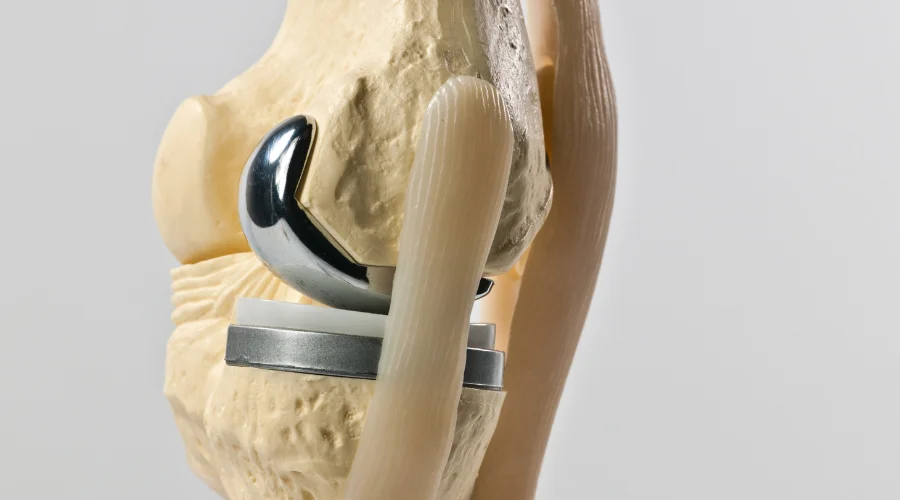
There are genuine upsides, though how much they matter varies from patient to patient.
- More detailed surgical planning allows the team to account for your specific bone structure before entering the operating room.
- Bone preparation tends to keep cuts closer to what was planned, and implant alignment gets extra precision for positioning decisions during the surgery itself.
- The system’s ability to account for individual knee anatomy means the plan isn’t generic – it’s built around imaging of your actual joint.
- Because the plan is built around your anatomy specifically, surgeons usually consider the whole execution to be more precise and controlled, especially during bone prep and implant placement.
That said – this isn’t a case for “robotics is always better.” It isn’t. Whether it helps you comes down to your knee’s anatomy, your clinical assessment, your surgeon’s judgement on the day, and how seriously you take rehab afterward.
Benefits are only half the conversation. Not everyone with knee pain is actually a candidate.
Who May Be Considered for Robotic Knee Replacement?
Robotic assisted surgery isn’t prescribed to anyone with knee pain.
It is usually considered for patients with:
- advanced knee arthritis,
- real cartilage damage,
- or pain that hasn’t moved despite medication and physiotherapy.
Trouble walking, climbing stairs, or just getting through a normal day are also common reasons people end up being evaluated for knee replacement. Not sure you’re even at that point yet? It’s worth reading through the signs you may need joint replacement surgery before narrowing in on the robotic-assisted option specifically.
At the end of the day, it’s a clinical call – imaging, assessment, your overall health – not something the technology decides by itself. Once someone’s confirmed as a candidate and surgery happens, recovery is the next part of the process and a rather important one.

What Happens After Robotic Knee Replacement?
Recovery tends to start quickly. Most patients are advised to start moving the knee within a short window after surgery, which helps keep stiffness from setting in.
Pain management gets you through the early days, and physiotherapy is really where the strength and range of motion come back.
It’s gradual. Improvement will be seen in weeks, not days. Follow-up visits let your team track how you’re healing and catch anything off early, including keeping an eye out for knee replacement surgery complications in case they arise. Most people return to their normal routine on their own timeline, with guidance from their care team along the way.
On a different note, many readers also get confused by the overlapping terminology used across different sources for robotic surgery. Let’s untangle that next.
How Long Does a Robotic Knee Replacement Last?
No single number fits everyone here. A handful of things decide how long an implant holds up:
- Implant type – materials and designs wear at different rates.
- Patient age and activity level – more activity in younger patients place more stress on the implant over time.
- Weight – extra load speeds up wear.
- Implant positioning – better alignment, which the robotic planning process supports, usually means more even wear.
- Overall health – conditions like diabetes or osteoporosis can affect healing and how long things last.
- Rehabilitation and follow-up care – sticking with physiotherapy and check-ins genuinely makes a difference long term.
A lot of implants function well for over a decade when properly cared for. Your surgeon can narrow that down with a personalized estimate once they know your specific case.
Frequently Asked Questions
1. What is robotic knee replacement?
A knee replacement where a robotic system assists with planning, bone preparation, and implant positioning. Your surgeon still performs the operation.
2. Does a robot perform knee replacement surgery?
No, it assists with planning and precision. Your surgeon controls every step.
3. How does robotic knee replacement work?
Assessment first, then imaging-based planning, anatomical mapping, guided bone preparation, implant positioning, and a final surgical check. This is the typical process followed for the surgery.
4. Is robotic knee replacement better than traditional knee replacement?
Both can lead to good outcomes. What’s right for you depends on your knee and your surgeon’s recommendation.
5. Is robotic knee replacement safe?
It carries the same general risks as any surgery. Your care team will walk you through what applies to your specific case.
6. Who is eligible for robotic knee replacement?
Usually patients with advanced arthritis, notable cartilage damage, or pain that hasn’t responded to conservative treatment.
7. How long does robotic knee replacement take?
Depends on the case complexity. Your surgeon can give you a realistic number once they’ve reviewed your imaging and history.
8. How long does it take to recover from robotic knee replacement?
Movement and physiotherapy typically start early on, with steady improvement over the following weeks and months.
9. Is robotic knee replacement the same as robotic knee surgery?
Yes, and the terms overlap significantly. Robotic-assisted knee replacement, robotic knee surgery, and robot-assisted knee replacement get thrown around fairly interchangeably.
The specific robotic system in use, how much of the procedure it assists with, and the exact surgical approach can shift from one hospital or surgical team to another, though.
If you’ve seen slightly different phrasing somewhere else, it’s almost always pointing at the same general category of technology-assisted surgery.
Contact for Enquiry About Robotic Knee Replacement
At the end of the day, robotic knee replacement is a surgeon-led procedure with technology built in, not a fully autonomous robotic operation.
The system helps with planning, mapping, bone preparation, and implant positioning, but it doesn’t operate on its own. Whether it’s right for you depends on your knee, your health, and a proper clinical assessment.
If knee pain has been slowing you down, or arthritis has reached the point where nothing conservative seems to help anymore, it’s worth talking to someone who can walk you through the options honestly.
Consult Dr. Amit Kumar Sinha at Big Apollo Spectra Hospital, Patna, to find out if robotic-assisted knee replacement makes sense for you. Book Appointment today.