
Ever notice how your heart just beats? No thought required. That’s the normal sinus rhythm doing its job, starting in the sinoatrial node, which is basically your heart’s natural pacemaker.
Atrial fibrillation, or AFib, breaks that pattern. The atria stop contracting the way they should and quiver instead, and the rhythm loses its normal coordination.
Maybe you’ve ended up here due to an ECG report with “irregular rhythm” written on it, trying to figure out what it actually means for you. It’s a fair thing to wonder about. And it matters, because it changes what a doctor does next with your results.
If a report has you second-guessing, the best cardiologist in Patna at Big Apollo Spectra can tell you in five minutes what an hour of searching online won’t.
Prof. Dr. Nirav Kumar, Cardiology specialist at Big Apollo Spectra Hospital, sees this a lot. Patients come in with a rhythm flag on a routine ECG and no idea what to make of it.
👉 Consult Dr. Nirav Kumar for an evaluation today.
Atrial Fibrillation vs Normal Sinus Rhythm: What Is the Difference?
The core difference comes down to how organised your heart’s electrical activity is. A healthy rhythm sticks to one path, beat after beat, no exceptions. AFib doesn’t.
Normal sinus rhythm:
- Originates from the sinoatrial (SA) node, your heart’s built-in pacemaker.
- Produces a regular, predictable rhythm.
- Keeps atrial and ventricular activation consistent with each beat.
Atrial fibrillation:
- Involves chaotic electrical activity spreading across the atria.
- Creates an irregularly irregular ventricular rhythm, meaning there’s no consistent pattern at all.
- Prevents the atria from contracting in a coordinated way, so they quiver rather than pump effectively.
| Feature | Normal Sinus Rhythm | Atrial Fibrillation |
| Rhythm | Regular | Irregularly irregular |
| Electrical origin | SA node | Multiple disorganised atrial impulses |
| P waves | Usually present | Usually absent/replaced by fibrillatory activity |
| R-R intervals | Relatively regular | Irregular |
| Heart rate | Usually 60–100 bpm at rest | May be slow, normal or rapid |
| Atrial contraction | Coordinated | Disorganised |
These differences aren’t academic. They’re exactly what a doctor looks for on your ECG strip, and they explain why some irregular heartbeats need closer monitoring.
>> Book an Appointment for ECG Monitoring

AFib vs Normal Sinus Rhythm on an ECG: What Does the Difference Look Like?
Most of the time, the difference in these two rhythms is diagnosed through an ECG, since it actually records your heart’s electrical signals. And once you know what to look for, the two patterns really don’t look alike. Usually, these differences can be clearly explained only by a cardiologist.
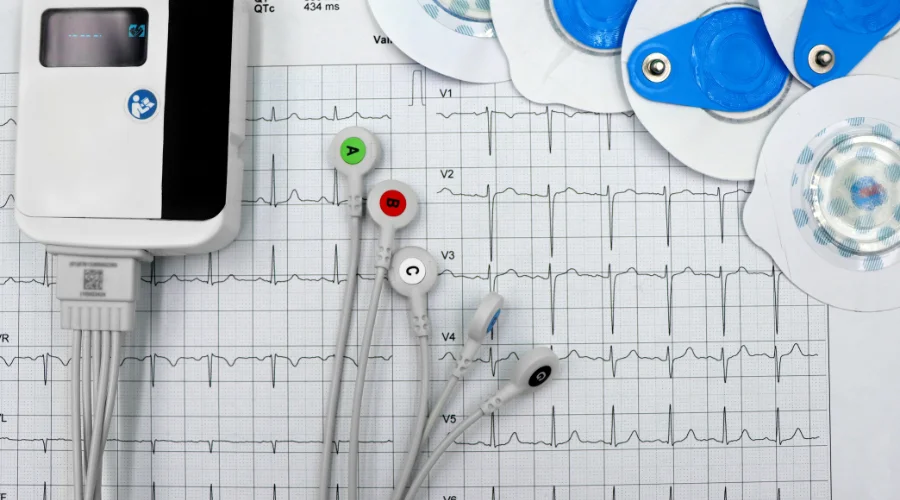
Normal sinus rhythm shows a clean P wave right before the QRS complex, proof the signal came from the SA node like it should. The gaps between beats, the R-R intervals, stay fairly consistent too.
AFib is messier on paper. The P waves basically disappear, swapped out for rapid, disorganised fibrillatory waves that leaves the baseline looking fuzzy. And the spacing between beats stops following any consistent pattern at all. That’s the “irregularly irregular” bit doctors keep mentioning.
Even the ventricular rate can vary in AFib, sometimes fast, sometimes closer to normal, depending on how many of those chaotic signals happen to reach the ventricles.
This is really why the ECG matters so much. It doesn’t just flag that something’s wrong, it shows you which kind of wrong you’re dealing with, essentially the specific pattern that separates AFib from other rhythm disturbances.
Once you get an ECG done, the treating doctor will usually share the results and the difference between normal vs abnormal ECG in case there are issues in your ECG results.
What Are the Symptoms of Atrial Fibrillation?

No two people experience this the same way. Some feel every irregular beat. Others feel absolutely nothing. When symptoms do show up, they usually include:
- palpitations,
- a racing or irregular heartbeat,
- breathlessness,
- fatigue,
- and dizziness.
You might also notice you’re tiring out faster than usual during exercise, or get mild chest discomfort, or in some cases, you might actually faint or come close to it. And the severity isn’t fixed either. It can shift from one episode to the next.
If palpitations keep returning or just feel wrong in a way you can’t quite name, don’t wave it off.
Knowing when heart palpitations are dangerous is worth five minutes of your time, because sometimes AFib gives you no warning at all and only turns up when a doctor happens to catch it on an ECG done for an unrelated reason.
Can Your Heart Rate Be Normal During Atrial Fibrillation?
Yes, and this trips a lot of people up. AFib is defined by irregularity, not by how fast your heart is beating. Your average rate can sit between 60 and 100 beats per minute while the rhythm underneath is still all over the place.
The reason comes down to the AV node, which relays signals from the atria to the ventricles and doesn’t let every single chaotic signal through.
Some get filtered out, and that’s what keeps the overall rate from spiking even though the spacing between individual beats stays unpredictable.
So, checking your pulse alone won’t tell you much here. A rate that feels totally normal can still be hiding an irregular rhythm underneath, and that’s exactly why doctors reach for an ECG instead of just counting beats at the wrist.
How Do Doctors Confirm Whether a Rhythm Is AFib?
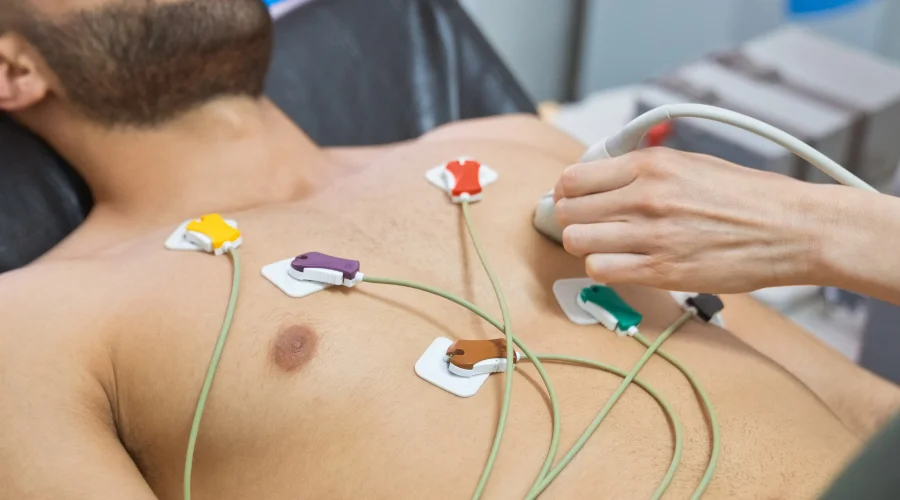
Usually it starts with a standard ECG, a quick snapshot of your heart’s electrical activity at that moment. If it shows the classic irregular pattern with no clear P waves, that’s often enough on its own.
But AFib doesn’t always sit still long enough to be caught. It can come and go, especially early on, so one ECG taken on a particular day might miss it completely.
That’s when Holter monitoring or similar ambulatory devices come in, tracking your rhythm continuously for a full day or sometimes weeks.
Your doctor might also order an echocardiogram or blood work to rule out anything else going on underneath. Age matters here too, and risk assessment shapes how closely you’re monitored. It’s part of why cardiac risk assessment after 40 tends to come up more in these conversations once you cross that age bracket.
Can Atrial Fibrillation Be Dangerous?
Honestly, the irregular rhythm itself usually isn’t what makes AFib risky. It’s what it can lead to. When the atria quiver instead of contracting the way they’re supposed to, blood doesn’t get pumped out efficiently. It just pools. And pooled blood is exactly where clots start forming.
If one breaks free and travels up to the brain, you’re looking at an ischaemic stroke, which explains why AFib and stroke risk keep showing up together in the research.
There’s a second concern too: persistently fast heart rates from AFib left untreated can wear the heart muscle down over time, affecting how well it pumps overall.
That said, not every episode turns into something serious. Far from it. How much risk you’re actually carrying depends on your age, your existing health, and how well the condition is being managed.
What Is Normal Sinus Rhythm and Is It Always a Sign of a Healthy Heart?
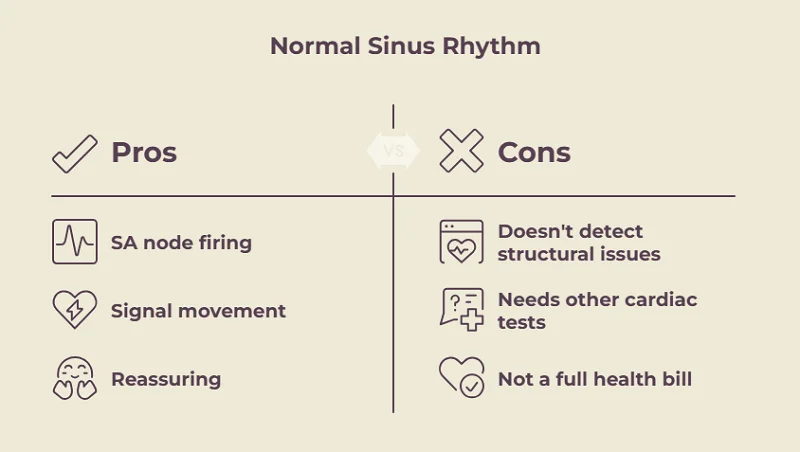
Normal sinus rhythm only describes electrical timing of the heartbeat. Nothing more. It confirms the SA node is firing on schedule and the signal is moving through the heart the way it’s meant to.
It says nothing about everything else. You can have picture-perfect sinus rhythm and still be dealing with a valve problem, a blocked artery, or some other structural issue an ECG alone cannot catch, which is why doctors don’t read an ECG in isolation.
They weigh it against your symptoms, a physical exam, and sometimes an echocardiogram or stress test. A “normal” rhythm reading is reassuring, sure, but it’s not the same as a full clean bill of health.
When Should You See a Cardiologist for an Irregular Heartbeat?
Book a cardiac checkup if palpitations keep coming back, your heartbeat feels off in a persistent way, or you’re dealing with breathlessness, dizziness, or fainting you can’t explain.
The same goes if you’ve had AFib in the past, or you’re carrying known risk factors like high blood pressure or diabetes.
If you’ve noticed your tolerance during exercise quietly dropping over weeks, mention it rather than chalking it up to being out of shape. And if severe chest pain, real breathlessness, or fainting hits suddenly, that’s not something to wait out. Get emergency care immediately.
For a routine workup, Big Apollo Spectra, with a top-tier multispeciality setup, is often regarded as the best hospital in Patna for cardiac checkups. We’ve all the diagnostic tools to get a clear picture of your heart rhythm.

Frequently Asked Questions
1. What is the main difference between atrial fibrillation and normal sinus rhythm?
Normal sinus rhythm is regular and starts at the SA node. AFib is irregularly irregular, caused by chaotic electrical activity in the atria.
2. Can an ECG detect atrial fibrillation?
Most of the time. It picks up missing P waves and irregular R-R intervals. If AFib is intermittent, though, you may need longer monitoring to actually catch it.
3. Can you have atrial fibrillation with a normal heart rate?
Yes, you can. The rhythm stays irregular even while your average rate sits comfortably within the normal 60-100 bpm range.
4. Is atrial fibrillation always dangerous?
Not necessarily. Plenty of cases stay low-risk for years with proper management. It depends on your age, your health history, and how closely things are being monitored.
5. Does atrial fibrillation come back after treatment?
Sometimes, yes. Recurrence happens often enough that doctors typically build in follow-up monitoring rather than calling it done after one successful treatment.
Get Cardiac Rhythm Evaluation in Patna
Got an odd ECG reading, or palpitations and breathlessness that just won’t quit? Time for a proper rhythm evaluation.
That usually means a standard ECG, extended monitoring if it’s needed, and a full assessment from a cardiologist to figure out what’s actually happening.
Big Apollo Spectra Hospital in Patna handles this kind of workup regularly, telling AFib apart from normal sinus rhythm and managing arrhythmias alongside other heart conditions as they come up.
Consult Prof. Dr. Nirav Kumar or book an appointment with our cardiology team to get your heart rhythm checked properly.