
A slipped disc can leave your back or neck aching, and if it’s pressing on a nerve, you might also feel tingling, numbness, or weakness running down an arm or leg. There’s no single fix here. What works depends on how bad it is, where the disc sits, and how your body’s responding.
The good news: most people get better without ever having to undergo a surgery. Surgery only comes up if things aren’t improving, or a nerve is under real pressure.
If you’re looking into slip disc treatment in Patna, here’s how doctors actually decide what to do, from the first line of care to surgery. And if you haven’t found the right doctor yet, seeing the best orthopaedic doctor in Patna early can spare you months of trial and error.
Slip Disc Treatment in Patna: What Are the Options?
Treatment ranges from bed rest and physiotherapy to minimally-invasive procedures to (in some cases) surgery. As with diagnosis, where you begin treatment depends on your symptoms, not simply on what a scan may or may not show.
Non-Surgical Treatment
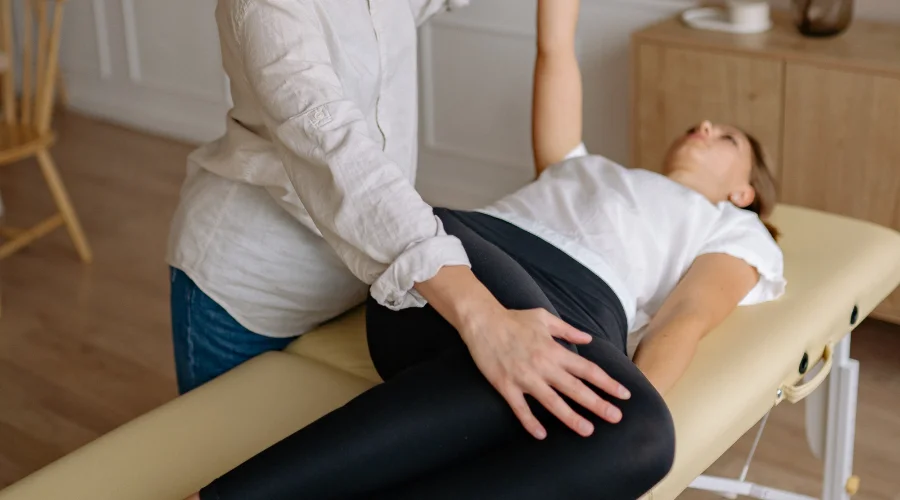
This is often the beginning of your treatment. Also, likely, the end. Your doctor may recommend painkillers and anti-inflammatories, refer you to physiotherapy to strengthen your core muscles, and ask you to modify your activities for some time.
Heat or ice packs may work for some. So can small lifestyle tweaks like walking a little more and sitting at your desk less.
This isn’t a magic bullet. This approach usually plays out over several weeks. Your doctor will follow up, adjust medications if your pain persists, and progress physiotherapy as you build up core strength and flexibility.
Also, activity modification doesn’t mean you should be immobile: it means you should be mindful of what movements bother your back and which ones don’t so you’re not constantly sabotaging your own recovery every other day.
Most patients will find that relief comes slowly instead of all at once. That’s completely okay. In fact, that’s kind of the goal.

Minimally Invasive Treatment
Sometimes conservative care doesn’t fully do the job. That’s when doctors turn to procedures that fall between medication and open surgery. These are smaller in scope but faster to recover from.
Also, these usually only come up after four to six weeks of conservative treatment meaning when physiotherapy and medication hasn’t moved the needle. Injection usually means exactly what you think.
Typically it means injecting into the exact area of inflammation, or other interventions to help settle down an irritated nerve. Most are done as outpatient procedures, meaning you go home the same day.
This isn’t meant to bypass conservative care, it’s meant to help conservative care have a better chance of working before we even consider surgery.
Surgery
Surgery is usually recommended when nothing else has worked, or if nerve compression is causing significant or progressive symptoms.
And even then, “surgery” doesn’t mean one procedure fits every case. What gets recommended depends on which disc is involved, how bad the compression is, and whether there’s anything else going on, like instability, alongside it.
A lot of modern spine surgery is far less dramatic than people imagine: smaller cuts, quicker recovery than the open procedures. Your surgeon should walk you through exactly what’s being proposed and why, not hand you a generic script.
To learn more on how conservative and surgical care fit together, check out this guide to spinal disorder treatment.
So, those are the options on paper. The harder part is figuring out which one actually applies to you.
How Is the Right Slip Disc Treatment Decided?
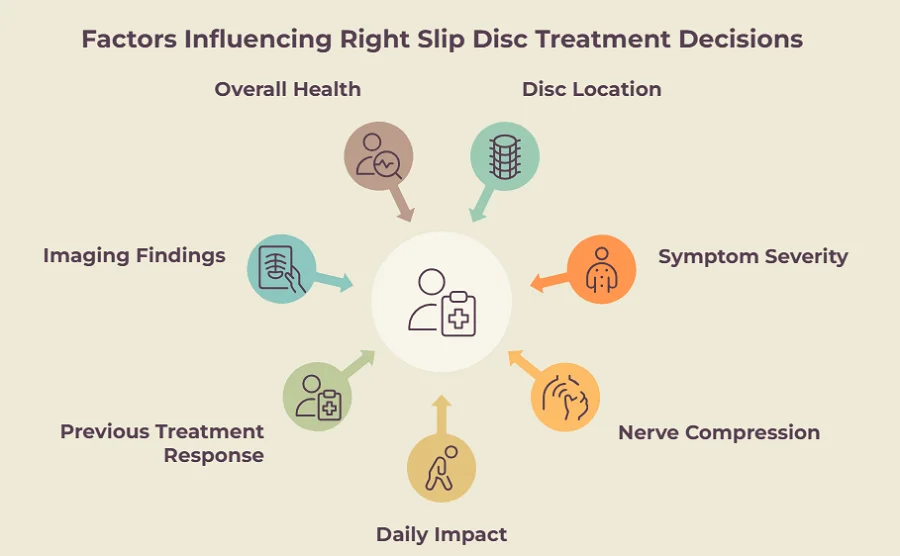
Doctors weigh several things at once before landing on a plan: where the disc is affected, how severe and how long-lasting your symptoms are, whether there’s confirmed nerve compression or muscle weakness.
How much it’s getting in the way of your day-to-day life? How did you respond to any earlier treatment? What does the imaging actually show? Your overall health. All of these factors in.
One thing that surprises a lot of patients: an MRI finding alone doesn’t mean surgery is coming. Some people have scans that look alarming and feel completely fine.
Others have mild-looking images and real, limiting pain. Doctors are treating you and your symptoms, not the picture.
That’s exactly why some patients never need surgery at all, and stay on a conservative path the whole way through.
When Can a Slipped Disc Be Treated Without Surgery?
Plenty of patients are managed conservatively from day one, and most stay there. Mild to moderate symptoms, no progressive nerve weakness, steady improvement week over week, that combination usually means surgery isn’t on the table.
Physiotherapy does most of the heavy lifting here, backed by activity modification and the right medication for pain and inflammation. Regular follow-up matters too. It’s how your doctor tracks what’s working instead of leaving you to guess.
For more on how non-surgical treatment for a slipped disc plays out over time, this piece covers recovery in more depth. >> Slipped disc healing without surgery.
Conservative care works for most people. Still, it helps to know when a case has moved past that point.
When Is Surgery Needed for a Slipped Disc?
Surgery becomes a real option when severe pain sticks around despite conservative treatment, or symptoms are seriously limiting daily life.
Confirmed nerve compression, weakness that’s getting worse, other significant neurological symptoms, these all push a case toward surgery. Certain emergency symptoms need urgent evaluation, not a wait-and-see approach.
The exact call also depends on where the compression is and what’s causing it, and it only comes after a clinical evaluation backed by appropriate imaging.
More detail in this guide to spine surgery in Patna.
➤ Not sure if you need surgery? Consult Dr. Vaibhav Sinha for a personalised evaluation and clear next steps.

What Types of Surgery Are Used for a Slipped Disc?
Surgical options here are more varied, and less invasive, than most people expect. Which one you’d need depends on where the compression sits and how you’ve responded to the treatment path so far.
1. Microdiscectomy (Discectomy)
Removal of the portion of the disc that is causing nerve compression. This is currently the standard procedure for a herniated disc. Surgery typically involves removal of only the fragment(s) of disc material that are involved.
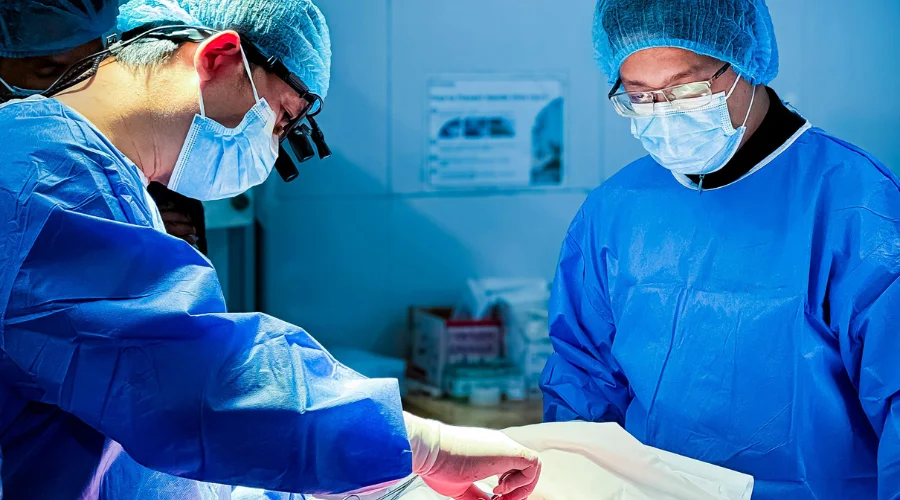
Microscopic or magnifying (loupe) visualization through a small incision allows the surgeon to see and limits damage to other muscle and tissues.
Patients typically are able to walk within hours of the surgery and go home within 24-48 hours depending on their general health.
Microdiscectomy is one of the most common surgeries performed to alleviate leg pain and symptoms caused by nerve compression after conservative treatment has not worked.
2. Endoscopic Spine Surgery
Endoscopic Spine Surgery involves surgery through a very small incision using a camera and special instruments. Recovery from this minimally invasive option can be much quicker and involves less disruption to surrounding tissues for eligible patients.
Due to the small incision (typically one to two centimetres), there is usually minimal disruption to the muscles and soft tissue around the spine which typically allows for less post-operative pain.
Many patients are able to go home the same day of surgery and return to normal, light activity quicker than with open procedures. See how endoscopic techniques stack up against open surgery in this piece on endoscopic spine surgery.
Not all patients are candidates for this procedure, though. Your surgeon will be able to determine if you are a candidate based on your imaging studies and clinical examination prior to surgery and he suitability also depends on the location and type of disc herniation.
3. Other Decompression Procedures
These come into play depending on where the compression is and how it’s affecting nearby nerves. Your surgeon picks the approach based on your imaging and symptoms, not a fixed protocol.
A laminectomy, for instance, removes a small piece of bony arch covering the spinal canal to free up space for compressed nerves. It’s often used when the canal itself has narrowed, not just the disc.
Other targeted techniques might be combined depending on whether one nerve root is involved or several. The idea across all of these is the same: take pressure off the nerve while disturbing as little of the surrounding structure as possible.
Spinal fusion, joining vertebrae together, isn’t part of a standard slip disc treatment plan. It only comes up in select cases, usually when there’s instability alongside the disc problem.
Symptoms That May Indicate Nerve Compression
Some symptoms change how urgently you should act, and it helps to know which ones actually matter.
- Radiating pain,
- Numbness and tingling (usually point to nerve involvement rather than a simple muscle strain).
- Weakness,
- trouble walking,
- a weaker grip
These suggest the compression is affecting how the nerve actually functions, especially if things are getting worse rather than better.
New bladder or bowel trouble, or numbness in the saddle area, is an emergency. Don’t wait on that one.
This is just the list of symptoms that shift urgency. For the full picture, see slip disc symptoms and what causes them.
How Is a Slipped Disc Diagnosed?
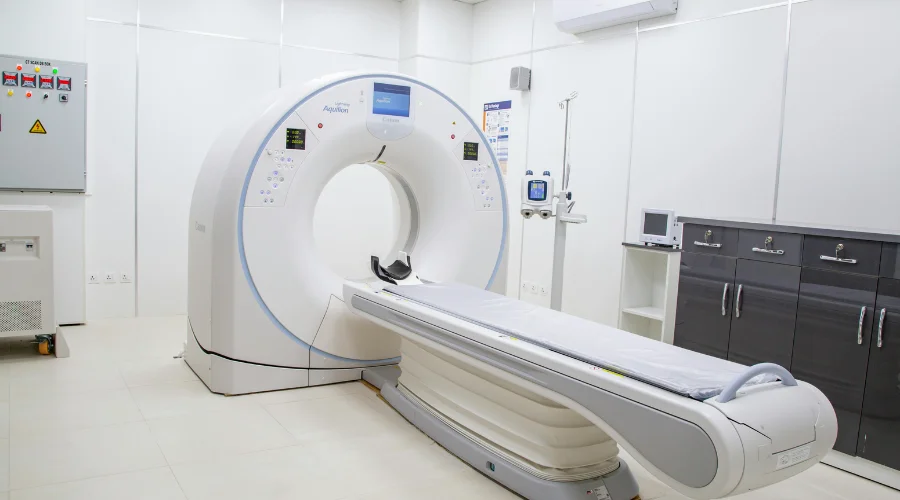
It usually starts with your medical history and a physical or neurological exam, checking reflexes, strength, sensation. An MRI is typically the clearest way to see disc herniation and nerve compression.
An X-ray sometimes rules out other causes, and further imaging or testing gets added only when it’s actually needed. Imaging shows what’s happening structurally, but your doctor still has to read it against your actual symptoms.
Not everyone with back pain needs an MRI right away, either. Many doctors wait a few weeks to see how symptoms respond to initial care first, unless there are red flags like progressive weakness or numbness.
Imaging can then be used to confirm findings regarding how much of the spine is involved, whether one nerve root or multiple are affected, and if the spinal canal is narrowed as well.
Combining a physical exam with proper imaging allows your doctor to see the full picture rather than half of it.
What To Expect During Treatment and Recovery from Slip Disc?
Non-surgical recovery will likely involve gradually progressing through physical therapy. Activity is scaled to your tolerance as you advance, with regular check ups to monitor your recovery.
Should you require surgery, most surgeons will recommend moving around relatively soon afterwards.
- Pain management, incision care, and physical therapy (if recommended) will be all part of the recovery process.
- Patients will gradually return to normal activity as they recover.
- Your recovery time will depend on a variety of factors. These include the severity of your condition, your overall health, and how well you follow your care plan. There is no magic number for everyone to follow.
The best indicator of a good recovery is sticking to your treatment plan. Neglecting physio, returning to strenuous activity too early, or stopping medications on your own accord can delay recovery or cause your symptoms to return.
Guided activity is almost always preferable to bed rest for prolonged periods. Your doctor will likely schedule follow up appointments to ensure your recovery is on track and make changes to your care if needed.
What Does Slip Disc Treatment Cost in Patna?
Depending on what treatment path you end up taking, pricing can vary. Conservative management with medications, physiotherapy, and follow-up appointments will be less expensive, generally ranging in the few thousand rupees over all sessions.
A discectomy surgery to treat slip disc will cost anywhere from ₹1,40,000 to ₹1,80,000. Keep in mind, if your surgeon does any spinal fusion or implants any artificial discs, you will pay more due to cost of materials and additional procedure complexity.
Please note: All costs are estimates. Your price will vary based on the exact procedure performed, length of hospital stay, your individual case. So, please ask for an estimated cost after your consultation.
How to Choose a Doctor for Slip Disc Treatment in Patna?
Orthopaedic surgeons can certainly treat your spine, but not all have extensive training focused on the spine itself.
Ideally, you want someone who has experience with both conservative and surgical treatment, performs minimally invasive techniques when appropriate, and knows how to track your symptoms neurologically (not just on scans). Diagnostic capabilities as well as access to quality rehab after your procedure are important too.
Dr. Vaibhav Sinha, spine specialist in Patna, specializes in minimally invasive spine surgery and has experience with navigation-assisted robotic surgery and endoscopic spine surgery. His focus is on sciatica treatment and nerve compression disorders.
➤ Book an Appointment with Dr. Vaibhav Sinha for a personalized treatment plan.

Why Choose Big Apollo Spectra for Slip Disc Treatment?
At Big Apollo Spectra, we combine orthopedic and spine care so you have access to every treatment option under one roof. Transitioning from physiotherapy to something more serious, and maybe even surgery, is much easier without having to change hospitals.
Having minimally invasive options like endoscopic spine surgery is one thing, but being able to perform MRIs and X-rays before deciding on treatment is just as important. Big Apollo Spectra is equipped with all those facilities.
As the top orthopaedic hospital in Patna, our surgical facilities are designed around precision-based procedures, so you know you’re in the right place.
After surgery (if needed) you’ll also have access to rehabilitation via our physiotherapy team and follow-up visits. Continuity of care is what we believe is most important when you’re going through treatment yourself.
FAQs
Following are a few questions regarding the slip disc issue and the possible treatment paths you can follow.
1. Can a slip disc be cured 100%?
No, a structural reversal cannot be guaranteed. But most patients recover fully, or get substantial relief, with the right treatment.
2. Which doctor is best for a slip disc?
A spine-trained orthopaedic surgeon, someone like Dr. Vaibhav Sinha at Big Apollo Spectra.
3. Which is the best treatment for slip discs?
Depends entirely on your symptoms and how you respond to initial care.
4. Is slip disc surgery risky?
Less than it used to be. Minimally invasive and endoscopic techniques have made it considerably safer.
5. Is slipped disc lifelong?
No. Most patients recover and get back to normal activity.
6. Will a slipped disc ever go away?
For a lot of patients, yes, symptoms resolve substantially with conservative treatment.
7. Can a slipped disc heal without surgery?
In many cases, yes, depending on severity and whether a nerve’s involved.
8. When does a slipped disc require surgery?
When conservative treatment hasn’t worked, or nerve compression is getting worse.
9. Is endoscopic spine surgery suitable for a slipped disc?
For select cases. Your imaging and condition decide that.
10. How long does recovery take?
Varies by person and treatment type. There’s no fixed timeline here.
11. Which doctor treats a slipped disc in Patna?
Dr. Vaibhav Sinha at Big Apollo Spectra Hospital is one of the best options locally.
Seek Care for Slip Disc Pain and Numbness
A slipped disc doesn’t automatically mean surgery. The treatment plan usually depends on your symptoms, whether a nerve’s involved, and what’s actually going on with the disc.
Getting evaluated early by a specialist is what actually determines the right path, and both conservative and surgical approaches have their place depending on the case.
What matters most is not sitting on it. Symptoms that feel manageable now can get harder to treat if nerve compression goes unaddressed, while catching things early usually keeps more options open, conservative and surgical.
So, whether you’re just starting to notice back pain or have been living with it for months, getting a clear, personalised assessment is the most useful next step you can take, rather than guessing at what might help based on generic advice.
If back or neck pain isn’t improving, don’t wait! Consult Dr. Vaibhav Sinha at Big Apollo Spectra Hospital for a personalised evaluation and treatment plan.