Asthma is affecting millions of people around the world. If you are one of them then you have likely asked yourself at some point or another; Will I EVER get rid of asthma once and for all? Currently, there is NO CURE for asthmatics.
However, that does NOT mean you are destined to live with poor breathing forever. Depending on the type of treatment plan and making a few lifestyle adjustments, you may well be able to control your asthma so well that you hardly even know it’s there.
In the following blog, we cover why asthma can’t be cured yet, what remission really means, and how you can keep your symptoms in check for the long run.
>> Consult Dr. Vaibhav Shankar for Asthma Care →
Can Asthma Be Cured Permanently?
No, asthma cannot be completely cured by modern medicine. Since it is considered a chronic inflammatory disease of the airways, the inflammation within your airways requires ongoing management.
This means even though you may have no issues, there is almost always going to be some level of sensitivity to triggers in your airways ready to respond at a moment’s notice.
That is why doctors speak of “control” instead of “cure.” Control is defined as having good control over your symptoms so you can breathe freely, sleep throughout the night, and engage in daily activities without asthma holding you back.
Once you figure out the right combination of medication and trigger avoidance, many people do not experience an episode for months or years.
Knowing the differences between uncontrolled asthma vs severe asthma also helps, because simply experiencing an episode does not automatically indicate a permanent worsening of your overall status.
In other words, a cure would mean you were free from asthma, but controlling a chronic illness effectively is achievable for most people.
Understanding these two concepts gives you direction on how you should approach treatment options. Rather than continually trying to chase a cure that currently does not exist, use your time to concentrate on finding effective treatments.
Why Asthma Cannot Be Permanently Cured?
Asthma stems from chronic airway inflammation that makes the bronchial tubes in your lungs remain reactive, regardless if you’re experiencing no symptoms. There is an inherent reason for inflammation in asthma – it will continue to be active unless controlled.
- Genetic factors are at play as well, since asthma often runs in families. Researchers have identified many genetic connections to airway hyper-responsiveness (excessive reaction to stimuli) and to hypersensitivity to allergens.
- Your environment provides additional triggers for asthma. When exposed to dust, pollen, smoke, cold air, and other pollutants, your body may react with asthma symptoms. While you cannot control your environment entirely, controlling those exposures is critical.
- Another factor is your immune response. Your immune system identifies non-threatening substances such as allergens as threats and responds by creating inflammation and producing mucus when you come into contact with them.
Because your immune system retains “memory” of these events, it does not lose this ability to respond to allergen exposure. Hence, this is usually why your symptoms can return even after months or years of being free of symptoms.
Many people experience this firsthand. For example, someone who had mild childhood asthma experienced no symptoms until they were in their twenties, but began noticing wheezing again after contracting a severe infection or working under extreme stress. The disease itself was never absent; it simply went dormant.
This is exactly why long-term monitoring matters, even when you feel great.

Can Asthma Go Into Remission?
Yes, you may be able to put your asthma into a state of remission. This is especially true in children.
Research indicates that many children who suffer with mild asthma will notice significant reduction in their symptoms during the teen years or adulthood. This is due to maturation of airways and shifts in how the body responds to allergens with age.
However, when asthma develops in adults (adult onset), it tends to behave differently than childhood on-set asthma. Adult onset asthma rarely enters complete remission and is usually managed for life; however, effective management can lead to extended periods of time where you do not experience symptoms.
“Remission” refers to the absence of symptoms and no longer needing medications for maintenance. However, the underlying sensitivity of your airways has not been completely eliminated.
Therefore, unless medically directed, you should never discontinue medication. It is a very common occurrence for people to prematurely cease use of medication, which leads to resurfacing of symptoms.
Therefore, if you find that you are experiencing few or no symptoms and wonder whether you should cut-back your medication use, do NOT GUESS.
>> Consult with a pulmonologist doctor in Patna prior to making any adjustments regarding tapering medication use.
A timely consultation could potentially prevent a future painful setback.
How Asthma Can Be Effectively Controlled?

There are several ways to get good asthma control and these methods have been shown to be effective on their own. The combination of the habits listed below will provide better overall management of your asthma compared to one individual remedy.
1. Asthma Medications
Inhaled corticosteroid (steroid) medications should be used every day to help reduce long-term airway inflammation which can lead to ongoing flare-up episodes.
Reliever medications, such as salbutamol, should be used quickly to open your airways if you are experiencing a flare-up episode; however, reliever medication does not address the underlying inflammation.
2. Biologic Therapies
For those with difficult to manage asthma or severe asthma, biologic therapy has become a viable treatment option. Biologics target specific immune pathways of the allergic inflammatory response and may offer symptom relief when traditional therapies do not work adequately.
3. Staying Away from Triggers
When you identify and avoid the things that trigger your asthma symptoms, you will experience fewer flare-up episodes.
Each individual’s personal asthma triggers are different. Tracking what causes your symptoms will allow you to develop an avoidance strategy tailored to your needs and behaviours.
4. Following-Up Regularly
Seeing your pulmonologist is recommended regardless of how well your asthma is being managed. Regular follow-up visits also allow for adjusting your treatment regimen based upon changes in your lung health due to seasonal allergies, stress, or infection, prior to an emergency occurring.

5. Monitoring Your Symptoms
Tracking your symptoms, peak flow readings, and how much inhaler you use provides you with a quick response mechanism. Increased use of reliever inhalers often will be the first indication that your asthma is getting out of hand and you need to take action.
6. Vaccine Protection
By receiving your flu and pneumonia vaccines, you significantly lower your chance of contracting upper respiratory infections (the number one trigger of severe asthma attacks). This makes it easier to protect your lungs during high-risk seasons.
The combination of these six components provide most patients with a good opportunity to breathe almost normally all day long.
Other Lifestyle Choices You Can Make To Assist In Controlling Asthma
Medications do have their place in controlling asthma. The impact of many lifestyle choices however has far greater influence over asthma control than most people would suspect.
1. Exercising:
Regular moderate exercising can help strengthen your lungs. Select activities based on what you feel comfortable doing. Always start by warming up before you begin any activity.
2. Maintaining a Healthy Weight:
Extra weight is not only a health issue but it also puts a lot of pressure on your lungs and airways. Therefore, by getting rid of extra calories and maintaining a healthy weight, you will find that breathing is more comfortable.
3. Quitting Smoking:
Your airway tissues are greatly affected by smoking which also makes asthma worse. Smoking cessation can help you get your lungs in good condition.
4. Improving Indoor Air Quality:
You will feel much better when you reduce the dust, mold, and odor inside your house. The most important time is when you sleep. Creating a better breathing environment is of utmost importance.
5. Breathing Exercises:
Breathing exercises such as diaphragmatic breathing and pursed-lip breathing can help you maintain good respiratory conditions and at the same time reduce breathlessness caused by minor flare-ups.
6. Controlling Allergies:
There is a close link between allergies and asthma; therefore, if you control your allergic rhinitis or sinus, it is very likely that you will have fewer asthma attacks.
7. Reducing Stress:
Stress in the body can result in symptoms that you can hardly explain because of the hormonal response. The best thing you can do is relax and get enough sleep as they will have a positive impact on how your lungs are functioning.
These small consistent actions will result in having fewer bad days.
When Should You Visit a Pulmonologist?
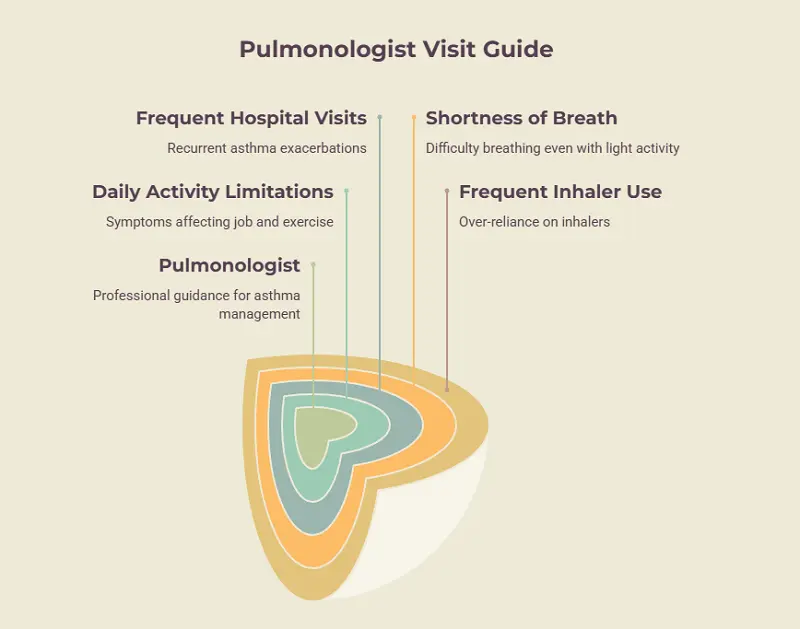
You should see a pulmonologist if you’re having trouble managing your asthma symptoms alone and need some professional guidance to determine how to properly use your inhalers instead of trying new random things or following advice from the internet.
Notice when you:
- use your inhaler too often compared to recommendations,
- have nighttime symptoms that wake you up from sleeping,
- experience shortness of breath even when you are lightly active.
Also, if you have repeated trips to the hospital because of your asthma and your symptoms prevent you from doing your daily activities like your job or limit your ability to exercise, then clearly your current treatment plan is not providing you with as much relief as needed.
The pulmonology department at Big Apollo Spectra Hospital can provide a second opinion on your treatment plan. The specialists will be able to test (Spirometry) and make medications adjustments based on crucial findings.
Consult a Pulmonologist Today →
Catching these signs early usually means a simpler fix and a faster return to normal breathing.
Frequently Asked Questions
1. Can childhood asthma disappear completely?
In many children with mild asthma, symptoms can significantly reduce or disappear by adulthood.
2. Is asthma curable with home remedies?
No, home remedies can’t cure asthma and shouldn’t replace prescribed treatment.
3. Can exercise cure asthma?
No, but regular exercise improves lung function and overall control.
4. Can asthma come back after years?
Yes, symptoms can return after years, often triggered by infections or stress.
5. Can I stop using my inhaler if I feel better?
No, stopping without medical advice can cause symptoms to return suddenly.
6. Do asthma patients live long?
Yes, with proper control, most patients live long, normal lives.
7. What is the survival rate of asthma?
Survival is high with proper management; most risks come from uncontrolled disease.
8. How to reduce asthma naturally?
Avoid triggers, maintain a healthy weight, practice breathing exercises, and manage stress.
Seek Timely Asthma Care and Regular Monitoring
Right now there is no long term cure for asthma but that should not deter you from getting treated and managing your asthma.
With the right combination of medications, avoidance of triggers and lifestyle habits, most patients lead active normal lives without asthma holding them back.
Early diagnosis and consistent follow-up care are essential in preventing any possible complications as well as keeping your lungs working properly for many years to come.
If you feel like your asthma symptoms are disrupting your daily life or if you’re unsure whether your current treatment is controlling your asthma like it should, it would be worthwhile to see a specialist sooner rather than later.
Consult Dr. Vaibhav Shankar, Pulmonologist at Big Apollo Spectra Hospital, Patna →