Heart disease is among the leading causes of death in India and accounts for an estimated death of 28% Indians according to the Indian Council of Medical Research (ICMR) .
People from India are developing cardiovascular disease almost ten years earlier than those from western countries and typically experience this at some time after age 40 through 50.
The reason why this is so dangerous is that cardiovascular disease usually develops silently. Most people will experience no symptoms until there’s a serious event such as a heart attack.
Learning about what may be causing heart disease and learning to recognize possible warning signs could literally save your life.
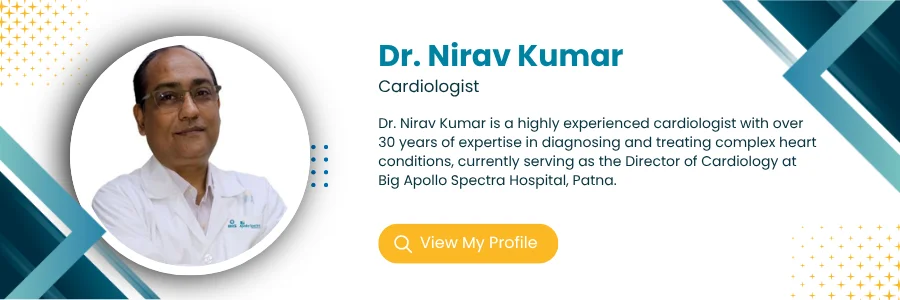
➡️ Have concerns about your heart? Consult Prof. Dr. Nirav Kumar at BIG Apollo Spectra Hospital, Patna – Book Your Appointment!
Understanding What is Heart Disease

What causes heart disease? And how do I know if I have it? Heart disease isn’t just one thing. It’s an umbrella term that covers a variety of disorders that cause problems with the structural and functional integrity of the heart.
The best way to prevent a life-threatening situation is to understand the causes of heart disease; and learn to identify the symptoms before they develop into something worse.
The American Heart Association defines heart disease broadly to include many types of conditions including coronary artery disease (CAD), heart failure, arrhythmias (abnormal heart rhythms) and diseases of the valves (valvular heart disease), and diseases of the muscles of the heart itself (cardiomyopathy).
CAD is by far the most common type of heart disease. In CAD, the major vessels that supply blood to the heart become blocked because plaque builds up inside them (atherosclerosis).
According to the Indian Heart Association, CAD has been responsible for a substantial proportion of deaths from heart disease in India.
Causes of Heart Disease in India
Heart disease is caused through a combination of factors such as your genetic predisposition, past health issues and how you live your life.
These risks are broken into two categories; some can be changed by the individual and others cannot. By knowing the difference, you will have the ability to concentrate on the things within your control to try to minimize your chances of having a heart disease.
Unhealthy diets with excessive fat from animal foods, lack of exercise and smoking contribute significantly to heart disease.
These habits raise your blood pressure, elevate your blood sugar and increase your bad cholesterol and lower your good cholesterol, all contributing to damage occurring inside the arterial walls.
| Modifiable Causes (Can Be Changed) | Non-Modifiable Causes (Cannot Be Changed) |
| Unhealthy diet | Family history of heart disease |
| Smoking and tobacco use | Age (older = higher risk) |
| Physical inactivity | Sex (male = higher early risk) |
| High blood pressure (treatable) | Ethnicity (South Asian higher risk) |
| High cholesterol (treatable) | Genetic predispositions |
| Type 2 diabetes (manageable) | Congenital heart defects |
ALSO READ: Why is Desk Job Bad for Heart Health?
Risk factors associated with heart disease are listed below, categorized by risk type:
Lifestyle Risks:
- Eating a high-fat, high salt, low fibre diet
- Not being physically active/leading a sedentary lifestyle
- Smoking/tobacco use
- Drinking too much alcohol
- Having chronic mental stress
Medical Risks:
- Hypertension (high blood pressure)
- Diabetes Type II or Insulin Resistance
- Having High LDL Cholesterol/Low HDL Cholesterol
- Being obese/abdominal obesity
- Having chronic kidney disease
Genetic / Non-Modifiable Factors:
- Family history of heart disease
- Age (risk increases after 45 in men, 55 in women)
- Male sex (higher baseline risk)
- South Asian ethnicity (higher susceptibility to CAD)
The predominant factor behind heart disease in India is usually a mix of all these causes.
What Symptoms to Notice? Early vs Late Warning Signs
Heart disease often develops quietly. Many people have significant arterial narrowing before they feel any symptom at all. Recognizing the difference between early warning signs and severe late-stage symptoms is crucial for timely diagnosis.
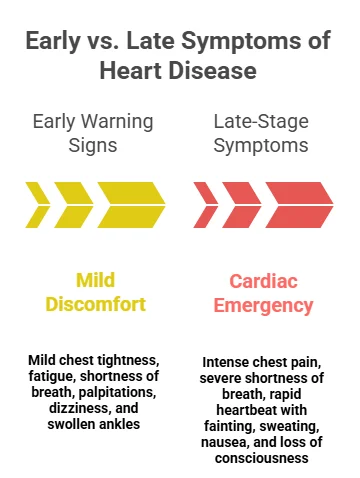
Early warning signs are often mild and easy to dismiss. They include:
- Mild chest discomfort or tightness after exertion
- Unexplained fatigue or reduced exercise tolerance
- Occasional shortness of breath during activity
- Mild palpitations (fluttering or racing heartbeat)
- Dizziness or lightheadedness when standing
- Swollen ankles at the end of the day
Severe late-stage symptoms that signal a cardiac emergency include:
- Intense, crushing chest pain radiating to the arm, jaw, or back
- Sudden severe shortness of breath at rest
- Rapid or irregular heartbeat with fainting
- Profuse sweating and nausea without an obvious cause
- Loss of consciousness or sudden cardiac arrest
It’s important that you rush to the ER if any of the above critical signs are present in your body. Moreover, there can also be a few cases where there aren’t any symptoms, thus necessitating early screening for anyone who has risk factors.
PEOPLE ALSO READ: Heart Disease Symptoms vs Heart Attack Signs
The Hidden Dangers of Silent Heart Disease

While there’s a type of heart disease where you will notice the pain due to chest discomfort, but as is often the case with silent ischemia, the heart gets inadequate blood supply and may not even produce any noticeable signs of distress (chest pains), or other symptoms of being distressed.
In fact, some research suggests that many individuals experiencing significant coronary artery disease experience no symptoms at all prior to their first myocardial infarction (heart attack).
Due to this high rate of asymptomatic individuals suffering silent ischemic episodes, it is recommended that screenings be completed on an annual basis to help identify heart disease prior to having a MI (heart attack) through ECGs, lipid profiles, stress tests, regardless of whether you feel you’re “healthy”.
Knowing what could potentially lead to your developing a heart condition and/or potential ways your heart condition may develop into noticeable symptoms may be somewhat beneficial.
However, the most important step to take once you learn what factors could contribute to developing a heart condition, and possibly create symptoms is determining if you belong to any of the populations who would benefit from early testing. The next section will explain who would benefit from testing and screening for heart disease.
When to See a Doctor?
If you find yourself with symptoms that are quite new to you or just keep coming back, then you definitely need to see a cardiologist.
Don’t hang around waiting for a “classic” heart attack because one of the downsides of cardiovascular warning signs is that sometimes they are so subtle that the only symptom is fatigue or acidity and the person can easily dismiss them.
The following are some of the main symptoms that should ring alarm bells and we should not ignore that; these might be symptoms of heart problems:
- chest pain, pressure, or tightness especially during activity
- shortness of breath even with mild exertion
- irregular or rapid heartbeat and palpitations
- persistent fatigue or weakness
- dizziness, lightheadedness, or fainting
- swelling in the legs, ankles, or feet
- pain radiating to the arm, jaw, neck, or back
Statistics show that people with diabetes, hypertension, high cholesterol, obesity or those with a family history of heart disease are at a significantly higher risk than other people and, therefore, these groups should definitely get themselves checked without delay.
Diagnosis & Tests
When the doctor suspects that a person has heart disease, there are several non-invasive tests which will provide medical professionals with an accurate view of the condition.
The ECG (electrocardiogram) records the electrical signals produced by your heart and if irregularities in the rhythms of the heartbeat exist or evidence of a prior heart attack exists then these issues will be evident.
The echocardiogram (echo) utilizes high frequency ultrasound waves to evaluate both the structural integrity and functioning ability of your heart.
Through this test, medical professionals are able to determine how effectively your heart is pumping. A treadmill test (TMT) evaluates how your heart reacts during times of physical exertion and may identify areas of blockage in arteries even when you feel fine at rest.
These diagnostic tools are all pain-free, easily accessible and can detect potential health issues before serious damage occurs; therefore making treatments much easier and minimally invasive.
→ Read more: How early diagnosis of cardiovascular disease can help avoid surgery?
Treatment Options with a Stage-Based Approach
Cardiac treatment is not one-size-fits-all. The appropriate treatment depends on how advanced the disease is at the time of diagnosis.
This is the main reason why early detection is very important, it allows simpler and less risky treatment options.
1. Early Stage
The goal at this point is to reverse risks and keep the condition from getting worse. People will be advised to make lifestyle adjustments: a heart-healthy diet low in saturated fat and sodium, getting at least 150 minutes per week of aerobic exercise, quitting smoking, controlling weight, and use of relaxation methods such as yoga or mindfulness.
Medication, depending on the patient’s condition may include statins, antihypertensives, or antiplatelet agents. No surgical operations are necessary.
2. Mid Stage
When the condition has moderately worsened or there are warning signs, then minimally invasive procedures can be done.
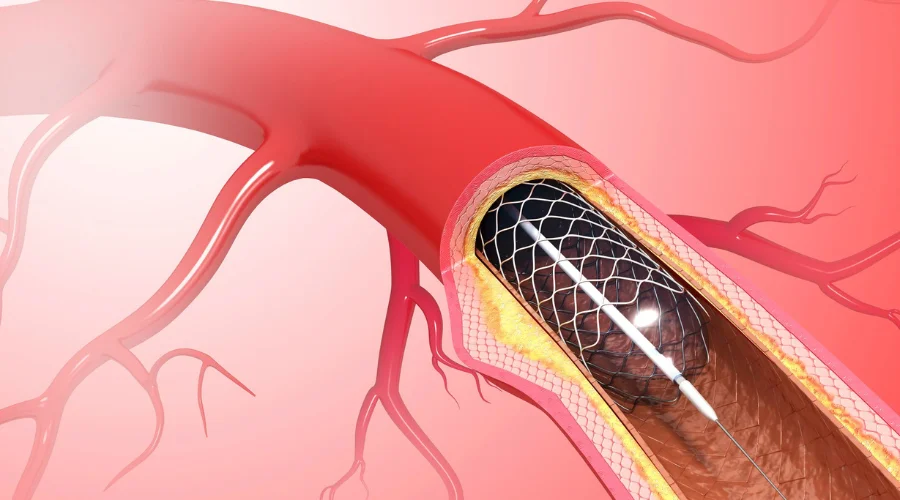
Besides those, you will have to continue medication. Percutaneous coronary intervention (PCI) or angioplasty balloons the artery to allow the easy passage of blood.
The current medications are continued along with these new interventions which include stenting.
This operation requires only a small incision in the wrist or groin, no open-chest surgery. Recovery time can be as short as a few days.
3. Advanced Stage
CABG is a surgical procedure in which blocked coronary arteries are bypassed with healthy blood vessels from other parts of your body.
In severe cases, there can be several blockages or there can be serious damage to valves. In these cases, surgical intervention is the only solution.
Surgery to repair or replace the valve may be considered if the patient has advanced valvular disease.
These surgical procedures carry more risks than the minimally invasive methods, which is why staying away from such severe stages through early detection is best.
✅ Book a Consultation with Dr. Nirav Kumar, Director of Cardiology | BIG Apollo Spectra Hospital, Patna | Call 0612-3540100 | www.bigapollospectra.com

Prevention Tips for a Healthy Heart
If you possess risk factors, or you even want to make certain that your heart remains healthy for many years to come, these research-based methods will form a sturdy shield against cardiovascular disease for you.
1. Heart Screening
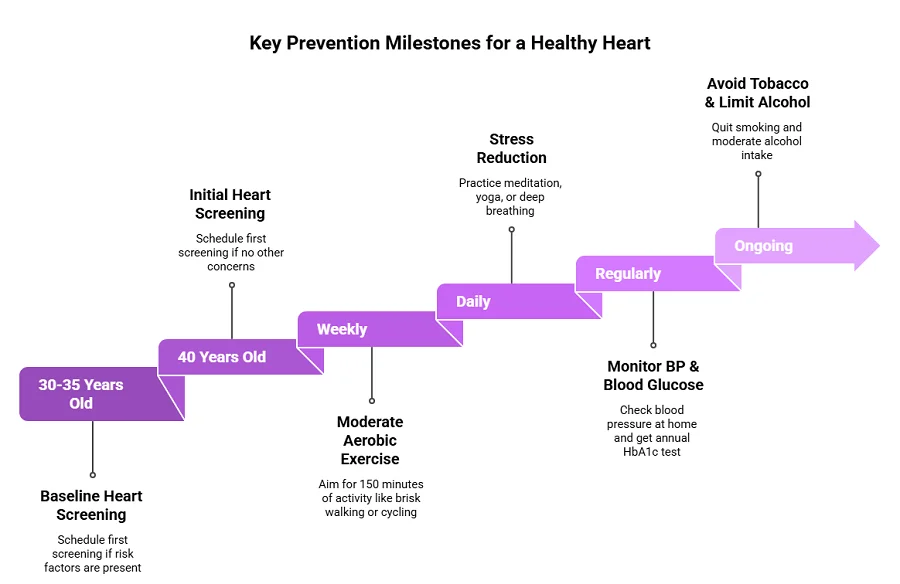
Periodical consultations with a healthcare professional can be highly effective in preventing potential problems from arising. Individuals with risk factors should have a baseline heart screening as early as 30-35 years of age.
However, if there are no other issues, the first screening should be scheduled when the person reaches 40 years of age. Periodic screenings will enable doctors to monitor the heart condition of patients and check for any newly arisen problems.
2. Healthy Eating (Reducing Sodium & Reducing Fats)
The American Heart Association recommends that individuals follow the DASH diet (Dietary Approaches to Stop Hypertension).
By choosing low-fat and low-sodium foods, such as fruits, vegetables, whole grains, and lean proteins, people can reduce the likelihood of developing a heart problem while also setting up the groundwork for a healthy lifestyle.
Consuming processed foods, trans fats, and sodium (less than 2, 300 mg per day) should be minimized.
3. Exercise Plan
It would be a good idea for individuals to find ways to perform a minimum of 150 minutes of physical activity at a moderate-intensity level each week.
To name a few, aerobics exercises that involve rapidly walking, riding a bicycle, and swimming are good.
According to the World Health Organization (WHO), getting 30 minutes of moderate-intensity aerobic physical activity daily could decrease an individual’s risk of experiencing their first heart attack by 35%.
4. Stress Reduction Techniques
Chronically experiencing psychological stress will increase one’s cortisol levels. High cortisol levels lead to elevated blood pressure and inflammation, which are the two major factors contributing to the increased risk of cardiac disease.
The researchers’ findings show that by meditation techniques, yoga and deep breathing exercises, individuals can reduce high blood pressure and thereby lower their overall risk of a cardiac incident.
5. Monitoring BP and Blood Glucose Levels
Both hypertension and hyperglycemia can increase an individual’s risk of developing cardiac disease prior to exhibiting any clinical manifestations.
It is essential for individuals at-risk for developing hypertension or diabetes to regularly monitor their blood pressure levels via home monitoring devices and/or pharmacy locations, and to annually undergo testing of their hemoglobin Alc (HbAlc) blood test (average blood glucose level over three-months).
READ: Blood Pressure and Heart Health
6. Abstain from Using Tobacco Products and Limit Alcohol
There is overwhelming evidence that quitting tobacco use can significantly decrease an individual’s risk of developing coronary artery disease.
Tobacco use remains the leading cause of death from cardiac-related illnesses that are preventable. Even occasional or social tobacco use doesn’t eliminate the risks associated with tobacco products.
Excessive alcohol consumption is documented to elevate blood pressure, and chronic excessive alcohol consumption is identified as one factor that contributes to cardiomyopathy.
The steps above protect you every day – while regular screening ensures that anything developing beneath the surface is caught and treated in time.
FAQs
Following are some of the commonly asked questions about the prevalence of heart disease in India and how to navigate it:
1. Why is heart disease so common in India?
India has a genetic disposition to increased levels of abdominal fat, as well as insulin resistance & dyslipidemia which are all significant cardiovascular risk factors.
These have been compounded further by rising rates of stress, increasing consumption of processed foods and decreasing levels of physical activity.
2. Are heart problems always painful?
No. Many forms of heart disease such as silent heart attacks and arrhythmias may cause no chest pain whatsoever.
3. How do I know if my symptoms are serious?
Any new, persistent or worsening of symptoms associated with exertion, particularly chest discomfort, shortness of breath or palpitation, require immediate consultation by a cardiologist.
4. Can lifestyle changes reverse heart disease?
Although lifestyle modification may reduce progression and/or stabilize early stages of coronary artery disease, and under certain circumstances may also partially reverse formation of arterial plaque, more advanced disease will generally necessitate either pharmacologic or operative intervention.
5. Is 90% of heart disease preventable?
Research recently published in the European Heart Journal (the INTERHEART study), reported that nearly 90% of the risk of developing a myocardial infarction was due to modifiable risk factors such as smoking, diet, and lack of physical activity.
Schedule Your Heart Health Check-up Today
Heart disease is no longer simply a disease that affects older adults; it now affects young working individuals.
Even if you do not display any visible or apparent symptoms related to heart problems, you could still be suffering from some form of cardiovascular illness. The best way to fight this illness is through awareness.
Being able to recognize the warning signs of a potential heart attack or other forms of cardiac-related illnesses earlier, by having regular check ups with a cardiologist and by implementing long-term and sustainable lifestyle changes will greatly improve your chances of lowering your risk factor for developing heart diseases.
If you are concerned regarding your own heart health then please feel free to contact Professor Dr. Nirav Kumar who is the senior cardiology specialist at the BIG Apollo Spectra Hospital located in Patna – one of the top hospitals in India when it comes to providing advanced treatment options for heart related issues.
Book an Appointment with Prof. Dr. Nirav Kumar →