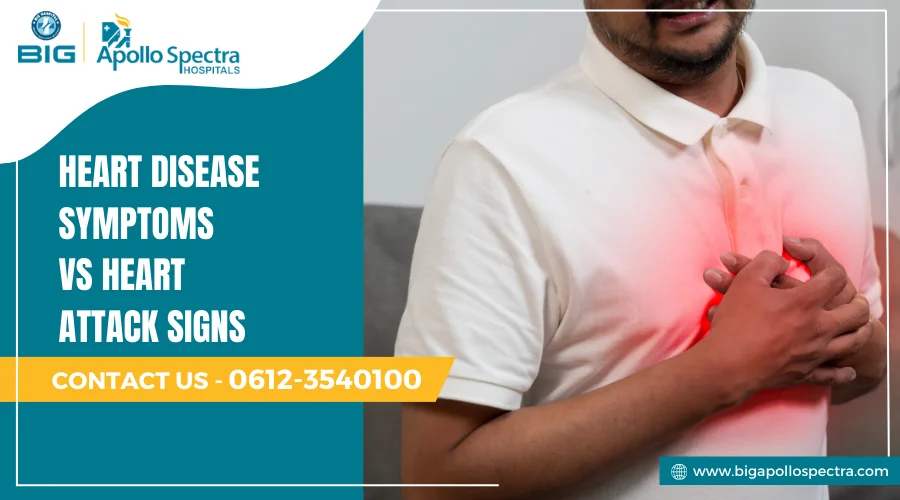
You feel a weird pressure in your chest after climbing the stairs. It disappears in a minute and you brush it off. But what if your heart was trying to tell you something?
Many people mistake the signs and symptoms of heart disease for stress or for indigestion. Too many people wait too long. But knowing the difference between heart disease symptoms vs heart attack signs isn’t just medical knowledge; it could be a matter of life and death.
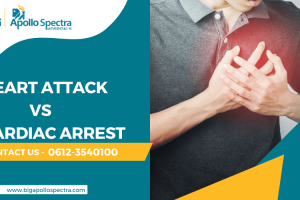
Heart disease is a chronic condition that affects your heart over many years. A heart attack, on the other hand, is a sudden life threatening condition for which you need to act immediately.
Knowing the difference gets you on the right path – whether you need to book a consultation with your doctor or whether you need to call the emergency line.
Heart Disease Symptoms vs Heart Attack Signs: What’s the Difference?
Many people confuse and mistake the symptoms of heart disease with heart attack symptoms – and they’re not the same; not by a long shot. Heart disease refers to a group of chronic conditions that affect your heart and that occur over years (such as coronary artery disease, arrhythmias).
On the other hand, a heart attack occurs when blood flow to part of the heart is blocked (usually due to a blood clot) which will cause the heart muscle to begin dying within minutes.
So, are heart disease and heart attack the same? Absolutely not. Heart disease is a long-term chronic condition. A heart attack occurs suddenly, and the following section will help you to distinguish between both conditions.
Key Differences
The clearest way to understand the gap between these two conditions is to look at them side by side. The table below compares the most important factors.
| Factor | Heart Disease | Heart Attack |
| Onset | Gradual, over months or years | Sudden, within minutes |
| Cause | Narrowed or damaged arteries | Blocked artery (clot) |
| Duration | Chronic, ongoing condition | Acute emergency |
| Symptoms | Mild, recurring, often dismissed | Severe, intense, persistent |
| Urgency | Medical evaluation needed | Call emergency helpline immediately |
NOTE: If you live in or around Bihar and are experiencing any cardiac symptoms — whether gradual or sudden — do not delay seeking care. A trusted and reputed heart hospital in Patna like Big Apollo Spectra can provide the diagnostic tools and specialist attention your heart deserves. Early evaluation often makes the difference between recovery and a serious event.
Understanding these differences gives you a framework. Now, let’s look more closely at what each condition actually feels like — starting with the slower, often overlooked signs of heart disease.
Heart Disease Symptoms: The Early Warning Signs You Shouldn’t Ignore
Heart disease develops gradually, which is why it is so easy to ignore. Symptoms can come and go over months or years, making it easy to brush off as fatigue or anxiety. But your body is sending you indicators — you just need to know how to read them.
What’s more, men and women present heart disease symptoms differently. Early signs of heart disease in males tend to be more classic: chest discomfort, pain on exertion.
However, heart problem symptoms in females can be more ambiguous: jaw pain, nausea, exhaustion. If you have risk factors — high blood pressure, diabetes, obesity, that increases your chance of developing heart disease
Here are the most common heart disease symptoms:
- Chest discomfort (angina): A squeezing or pressure sensation in the chest, or a dull aching that can be mistaken for heartburn. Typically develops with physical exertion or stress and subsides with rest. Often lasts a few minutes.
- Shortness of breath: Feeling winded even after the mildest of exertion — think walking up a flight of stairs. Over time, this can also occur at rest or while lying flat.
- Fatigue: A persistent, generalized feeling of tiredness that is out of proportion with your level of activity. This is one of the most common symptoms of heart disease and is often overlooked as stress or lack of sleep.
- Swelling in your legs or feet: Fluid accumulation or edema is a common symptom of heart disease. If your ankles are puffy for days at a time, seek medical advice.
- Irregular heartbeat: A fluttering or racing or skipping beats can indicate an arrhythmia. You may feel like your heart is fluttering in your chest or pounding.
- Dizziness: Feeling lightheaded or frequent dizzy spells is a potential warning sign of heart disease. This happens due to reduced blood flow to the brain
These symptoms are not to be ignored — especially if they happen again and again. Early detection of heart disease will allow you to manage the condition before it becomes a serious threat.
Heart Attack Symptoms: The Emergency Symptoms That Require Immediate Action
A heart attack develops when a coronary artery becomes completely blocked, usually by a blood clot. As a result, blood flow to part of the heart muscle is cut off and that muscle tissue begins to die.
This is why heart attack symptoms are sudden, unyielding, and not relieved by rest. Understanding how heart attack occurs — due to plaque buildup in arteries which leads to blockage — can help you understand why they differ from heart disease symptoms.
Pre heart attack symptoms in male typically include classic chest pain, along with pain in arm, and cold sweating. But why are heart attack symptoms different in women? Because women are more likely to experience atypical symptoms that many people mistake for something else. Symptoms such as nausea, back pain, jaw aching, or fatigue that’s all-consuming — symptoms that might be ignored.
There are also silent signs of a heart attack that can occur without any chest pain at all, which is why every potential sign should be noted.
If you’re wondering about the signs of heart attack a month before, they can include unusual fatigue, recurring chest pain or discomfort, as well as general discomfort that disrupts your sleep. This “warning window” is often overlooked but could be the first sign of a more serious condition.
At a Glance: Heart Attack Warning Signs
- Sudden chest pain or pressure: Heavy, crushing sensation in the middle of the chest that lasts more than a few minutes (not relieved by rest like angina is).
- Pain spreads to arm, jaw or back: Pressure or pain in the left arm, neck, jaw or upper back (shared nerve connections cause this).
- Cold sweat: Unexpected sweating (even when you are not hot) – a sign of the body’s “emergency response” to cardiac stress.
- Nausea or vomiting: Heart attack can cause stomach upset or vomiting (especially in women) due to shared nerve connections.
- Sudden shortness of breath: Can’t catch breath (even if there is no chest pain) – this means the heart isn’t pumping enough blood/oxygen.
- Feeling of impending doom: A sharp, overwhelming sense of impending doom and like something is terribly wrong (this is NOT imagined).
Call Emergency Services Immediately If:
You or someone around you notices chest pain or pressure for more than a few minutes, especially when combined with any of the symptoms listed above. Heart attack symptoms in women may be subtler, so trust your instincts. Do not drive yourself to the hospital. Call emergency services right away.
Remember: Heart disease is gradual so you can see it coming if you know what to look for.
A heart attack is an emergency. Call our Emergency Line @ 0612-3540100 | 0612-7131415
When To See a Doctor for Heart Disease?
Not every symptom is a crisis – but don’t wait to find out if they are!
If you’re an otherwise healthy adult and you notice any of the following symptoms (even if they’re not always there), make an appointment with a cardiologist as soon as possible.
- Recurring chest pain/discomfort or tightness during activity
- Fatigue or shortness of breath without reason
- Swelling in legs or feet that doesn’t resolve
- Irregular heartbeat (palpitations) that happen repeatedly
- Dizziness when standing, exercising, or when exerting yourself
For those of you in the area, Big Apollo Spectra is the best hospital in Patna with state-of-the-art cardiac care available and excellent cardiologists to evaluate you if you think you’re having symptoms. It is always better to act early than to wait for an emergency situation.
Get Checked Before a Cardiac Crisis
Your heart speaks to you through symptoms – learn the language and save your life. Heart disease is a gradual condition that builds over years so you can see it coming if you know what symptoms to look for. However, a heart attack has no warning period.
So, don’t wait to make an appointment if you’re having persistent symptoms. If symptoms are sudden and severe, seek emergency care. Your life is worth the call.
Schedule a preventive heart checkup today at Big Apollo Spectra Hospital and our team of skilled cardiologists will help you find out your current heart status and how to better protect your heart health for years down the line.