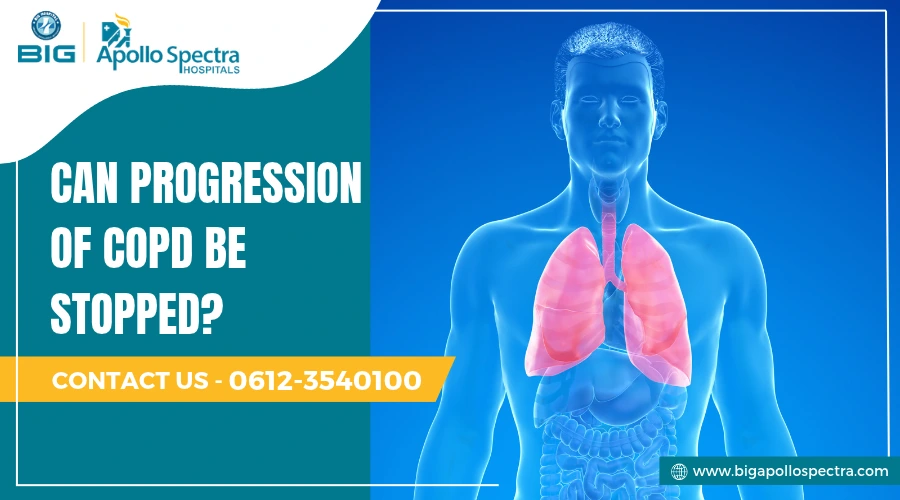
Chronic obstructive pulmonary disease is a long-term lung condition, and the lung damage it causes is generally permanent. But there’s some reassurance – with the right treatment and a few consistent lifestyle changes, you can usually slow it down and preserve the lung function you’ve still got.
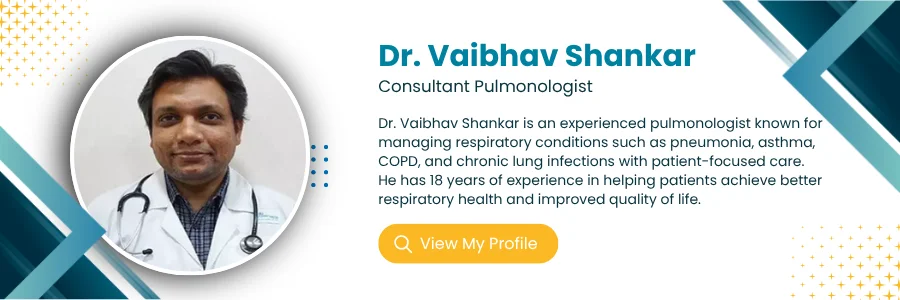
Dr. Vaibhav Shankar, Pulmonologist at Big Apollo Spectra Hospital, Patna, sees COPD patients and spends a fair amount of time helping them stay ahead of flare-ups. So let’s get into the real question: can progression of COPD be stopped, or only slowed?
Can Progression of COPD Be Stopped?
The honest answer is; it cannot always be stopped completely, but we can definitely slow it down from moving faster than it should. While the COPD progression itself cannot be typically reversed (it can be slowed by early diagnosis, quit smoking, adhering to prescribed medications, and maintaining regular follow-up appointments), and slowing the progression can help reduce the rate at which lung function declines.
Managing your symptoms will also allow for better control over your breathlessness and coughs. Unfortunately reversing lung damage and undoing tissue already harmed due to COPD is currently impossible.
The amount of slowing the progression will vary depending upon how severe your condition is, along with other factors such as a previous history of smoking, pollution/dust exposure at work, and most importantly how well you are able to adhere to your prescribed treatment regimen. People who may have the exact same diagnosis can have two very different prognoses due to their choices.
As previously mentioned your prognosis is not set in stone when you receive your first diagnosis. It changes based upon the choices you make after being diagnosed.
Why Does COPD Progress Over Time?
To understand why COPD worsens, it helps to know what’s happening inside your lungs. The disease hits both your airways and the tiny air sacs responsible for oxygen exchange, and that damage builds up over time.
Chronic Inflammation and Airway Narrowing
COPD keeps your airways inflamed. That inflammation thickens the airway walls and narrows the space air has to move through. Your body also starts making more mucus, which blocks airflow even more.
Over months and years, this ongoing irritation wears down lung tissue – including the alveoli, the air sacs that let oxygen into your blood.
Common Triggers Behind COPD Progression
A handful of factors speed this up. Cigarette smoking tops the list, but second-hand smoke, air pollution, and occupational dust exposure all play a part too. Repeated respiratory infections matter just as much, since each one puts extra strain on lungs that are already struggling.
NOTE: If chest infections keep coming back, getting bronchitis treatment in Patna sorted early can stop a minor infection from speeding up your COPD.
Even small, repeated doses of the irritants add up over time. Knowing what drives the disease is one part of the picture. Spotting when it’s getting worse is the other.
What are the Signs That COPD Is Getting Worse?
Your body usually warns you before things turn serious.
- Growing breathlessness is often the first sign especially during activities that were easier to do before like climbing stairs and carrying groceries. A cough that won’t let up, or gets worse, along with wheezing, are common too.
- You might notice more mucus than usual, or a tiredness that doesn’t go away even after a full night’s sleep. Flare-ups that hit out of nowhere are another thing worth tracking closely.
Sometimes the shift is gradual, spread across months. Other times it arrives all at once, during what doctors call an exacerbation. Either way – pay attention. Severe breathing trouble, bluish lips, or confusion aren’t symptoms to sit with. That’s an emergency, and it needs care right away.
Noticing changes in your COPD symptoms? Consult Dr. Vaibhav Shankar for an evaluation.
Catching these signs early gives you and your doctor more options. Waiting it out almost never works in your favour.
How Can COPD Progression Be Slowed?
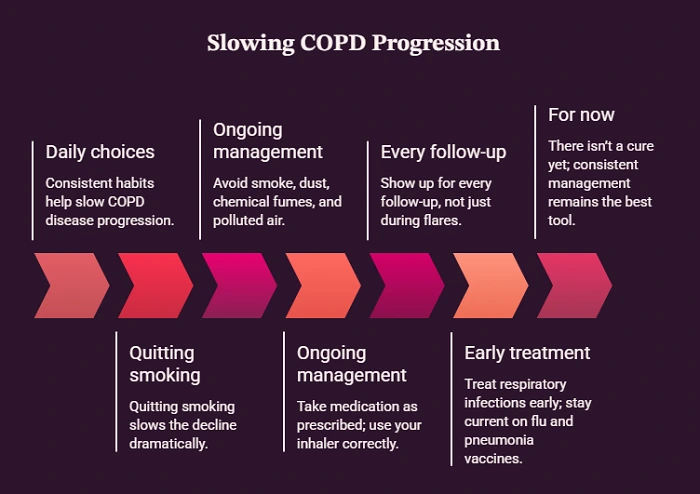
This is where your daily choices do the heavy lifting. Slowing COPD disease progression comes down to a handful of consistent habits rather than one big fix.
Quitting smoking is, hands down, the single biggest thing you can do. Can COPD be reversed by quitting smoking? No – but it slows the decline dramatically.
Staying away from second-hand smoke, workplace dust, chemical fumes, and polluted air matters almost as much, since your lungs don’t really care whether the smoke came from your own cigarette or someone else’s.
A few other things that make a real difference:
- Take your medication exactly as prescribed, even on the good days
- Use your inhaler correctly (ask your doctor to double-check your technique now and then)
- Show up for every follow-up, not just when symptoms flare
- Treat respiratory infections early instead of waiting them out
- Stay current on flu and pneumonia vaccines, since they lower your risk of the infections that trigger flare-ups
A lot of patients ask about a promising cure for COPD in research somewhere, hoping to cure COPD permanently. There isn’t one yet, so these management steps remain the best tools available.
For more day-to-day habits worth building, our guide on lifestyle changes to manage COPD covers that ground in more detail.
None of this demands perfection. Showing up consistently beats any single dramatic change.
COPD Treatment Options That Help Manage the Condition
COPD treatment isn’t a template. Your pulmonologist builds your plan around your symptoms, your lung function test results, and how far along your condition is.
Medications That Control Symptoms
Bronchodilators are usually where treatment starts. They relax the muscles around your airways so breathing gets easier. If exacerbations keep happening, inhaled corticosteroids might get added to bring down inflammation. Some patients end up on combination inhalers that deliver more than one medication at a time.
Beyond Medication: Rehabilitation and Monitoring
Pulmonary rehabilitation mixes supervised exercise, breathing techniques, and education to help you handle daily life more easily. If your blood oxygen runs low, oxygen therapy may come into the picture. Regular check-ins with a specialist keep your treatment plan adjusting as your condition changes.
Not everyone needs every treatment on this list. What you get depends on your symptoms, your test results, and your history, which is exactly why ongoing pulmonology care in Patna matters so much.
Treatment only covers half of this, though. What happens outside the clinic carries just as much weight.

Lifestyle Changes to Prevent COPD from Getting Worse
Your day-to-day habits back up everything your treatment is trying to do. Physical activity that suits you – even just gentle walking – helps maintain muscle strength and lung capacity. Breathing exercises, often taught in pulmonary rehab, help you get more out of each breath.
Good nutrition and staying hydrated keep your energy and immune system working the way they should, which matters a lot when you’re managing a chronic lung condition. Staying away from tobacco smoke, vaping included, isn’t negotiable.
A few habits worth folding into your routine:
- Take short, regular walks instead of occasional long ones
- Practice pursed-lip breathing when activity leaves you short of breath
- Keep indoor air clean – less dust, avoid strong fragrances, no smoke
- Stick to an activity level that matches your current health, and skip strenuous exercise when symptoms aren’t under control
Pulmonary rehabilitation can help you build exercise tolerance safely, under guidance, instead of guessing what your lungs can take. Can COPD be reversed with exercise? No. But moving regularly genuinely changes how your lungs function day to day.
These habits work best alongside proper medical treatment, not instead of it. Together, they give you more say in how your days actually go.
Can Lung Function Improve After COPD Treatment?
Yes – in a real but limited way. Medication and pulmonary rehabilitation are part of the COPD management plan that often improve symptoms, exercise tolerance, and overall quality of life. Plenty of patients end up breathing more comfortably and feeling less wiped out once their treatment plan clicks.
That said, feeling better doesn’t mean the lung tissue underneath has healed. Wondering is COPD reversible in early stages? Know that even early treatment can’t rebuild damaged alveoli or airway structure, it just helps you manage things more effectively from there.
Spirometry is the standard test doctors rely on to measure airflow limitation and track lung function changes over time.
It’s a different tool from imaging like chest X-rays, which show structural changes rather than how well air actually moves through your lungs. Our breakdown of spirometry vs chest X-ray goes into how these two diagnostic tests serve different purposes.
Feeling better is a realistic goal worth chasing. Just keep your expectations anchored in what treatment can and can’t do.
How Is COPD Progression Monitored?
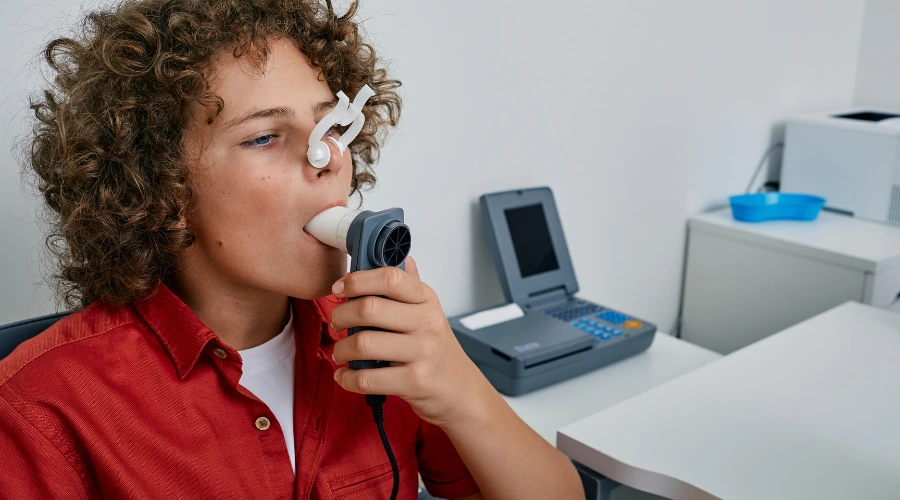
Regularly monitoring for changes with your doctor, prior to such issues becoming major health problems, will allow your doctor to identify any potential problem areas, and take action accordingly.
Monitoring usually involves routine clinical visits where the doctor reviews what symptoms have been experienced by you; routine pulmonary function tests (spirometry) are performed to assess lung function; and regular assessment of your blood oxygen levels are performed.
In addition, a review of frequency of flare-up episodes since the last office visit will assist in identifying whether an adjustment needs to be made in your treatment plan.
Therefore, failing to attend scheduled follow-up appointments when you feel fine, may result in the loss of opportunity to monitor for and detect evidence of progression of disease early enough.
Please inform your doctor immediately if you begin experiencing increased difficulty with breathing; if you begin to see changes in either the quantity or quality of your mucus; or if you find that you are having an increase in the number of flare-up episodes than previously experienced.
Additionally, respiratory infections can severely exacerbate the symptoms associated with COPD, therefore early detection of infection(s) is important. If you have a persistent cough, consider getting evaluated as soon as possible.
As previously mentioned, consistent early evaluation of your condition will result in improved outcomes. Waiting until your symptoms become severe/overwhelming rarely results in a positive outcome.
When Should You Consult a Pulmonologist in Patna?
You don’t need to wait for a crisis. Here’s when it’s time to book an appointment:
- Your breathlessness is worsening, even with routine activities
- You’re having frequent COPD exacerbations
- Your cough has turned persistent or is changing in character
- Everyday activities feel noticeably harder than they used to
- Your symptoms aren’t improving despite taking medication as prescribed
Dr. Vaibhav Shankar, a trusted COPD specialist in Patna, along with the pulmonology team at Big Apollo Spectra Hospital, provides ongoing evaluation and personalized treatment planning for COPD patients at every stage of the disease.
Big Apollo Spectra also offers full COPD treatment in Patna, from diagnostic testing through long-term follow-up care. Book an appointment if any of these symptoms sound familiar.

Frequently Asked Questions
1. Can COPD progression be stopped completely?
Not entirely. It can usually be slowed down significantly with treatment, lifestyle changes, and consistent medical care.
2. Can lungs heal from COPD damage?
No. Current treatment can’t reverse damaged lung tissue, but it can help you manage symptoms well.
3. Does quitting smoking slow COPD progression?
Yes, significantly, it’s the single most effective step a patient can take.
4. Can COPD patients live a normal life?
Many do, with proper treatment, especially when it’s caught and managed early across the different stages of COPD.
5. How can I prevent COPD from getting worse?
Quit smoking, avoid environmental triggers, stay consistent with medication, and keep up with regular pulmonologist visits.
Seek Pulmonology Care for COPD
COPD isn’t reversible, but how it plays out for you isn’t entirely out of your hands either. Early diagnosis, quitting smoking, sticking to your medication, and showing up for follow-ups all genuinely slow things down. There’s no single best medicine for COPD and your results come from pairing the right treatment with habits you actually keep up.
Noticing new or worsening symptoms? Don’t sit on it. Consult a pulmonologist at Big Apollo Spectra Hospital, Patna, and take the next step toward protecting the lung function you still have.