
Having a brain tumour diagnosis often brings about a flood of doubts and questions in the mind of the patients, and suddenly nothing else matters. The first thing almost everyone wants to know is whether surgery’s coming. However, the probability of surgical intervention is not valid in all cases.
A doctor recommending brain tumour surgery is weighing many things at once – the tumour’s type, where it sits, how large it’s grown, and whether it is pressing on the parts of the brain that control movement, speech, or memory.
Maybe your scan just came back and you’re searching for a qualified neurosurgeon in Patna. That’s exactly what this guide will walk you through.
It covers when surgery actually becomes the answer, what happens during the surgery, and what getting better afterward tends to look like, so you’ve got real questions ready and you stay informed throughout the process instead of just nodding along at your appointment.
What is a Brain Tumour?
It’s an abnormal growth of cells, in or around the brain. That’s really it at the core. Some stay benign, slow and contained. Others turn malignant and start pushing into whatever’s nearby.
There’s also a split worth knowing: primary tumours start in the brain, secondary ones (sometimes called metastatic) spread from cancer somewhere else in the body.
How fast something grows changes everything about how it gets handled. A tumour that’s sat quietly for years isn’t the same emergency as one that expands quickly.
Here’s a part people rarely expect though. Even a benign tumour can wreak havoc if it’s sitting in a sensitive area or presses on surrounding tissue.
So, size alone tells you almost nothing. What you actually feel, day to day, shows up as brain tumour symptoms, and ask ten patients and you may get different stories, because so much rides on exactly where the tumour sits and how large it has become.
So: benign or malignant, primary or secondary. Small distinction on paper. Huge difference in how fast your case moves and which specialists get involved.
Brain Tumour Surgery in Patna
Most patients in Patna start asking crucial questions the moment a scan turns up something unexpected. At Big Apollo Spectra, we take the concerns of patients after a brain tumour diagnosis sincerely and understand the state of shock this kind of diagnosis might induce. Here’s what you should be asking about at the appointment:
Ask what tumour type they suspect, and how the diagnosis got there. Ask why surgery specifically, not something more conventional is being considered.
Find out what the other alternatives are, what you stand to gain either way, what could go wrong, how closely they’ll watch you once it’s done.
A lot of people weighing brain tumour treatment in Patna also want to know about rehab timelines, and whether radiotherapy or chemotherapy ends up being part of the picture too.
One real conversation with your neurosurgery department will cover more ground and will help you have answers before you commit to a plan.
Meet the Brain Tumour Specialist
Dr. Pradeep Kumar, Senior Consultant in Neurosurgery at Big Apollo Spectra, a superspecialty hospital in Patna, holds an MBBS, MS in General Surgery, M.Ch. in Neurosurgery, plus over 10 years of medical expertise.
His clinical focus includes endoscopic brain and spine surgery and craniovertebral junction disorders, built around evidence and personalized treatment planning rather than a fixed template for every patient.
A direct conversation with a specialist clears up more than you’d think, usually fast. Consult the doctor and go over the scans and decide the next action step.
When Is Brain Tumour Surgery Needed?
Several things go into this before anyone recommends an operation. Tumour type and its likely behaviour, first. Size and location next, along with how much it’s pressing on the tissue around it.
Then symptoms, worsening headaches, new weakness, anything that’s shown up lately, plus whatever the latest imaging results indicate about growth over time.
Your general health matters here too. Surgery always comes with risks even for those so-called routine operations. The whole thing has to be worth the risk so that the doctors can make the decision of taking advantage of these operations or doing otherwise after weighing them against risks.
The cases where some tumours grow quite slowly one could do better simply by periodic monitoring than by getting operated at the first opportunity; while the others will be so well treated either by radiotherapy or medication and surgery never enters the picture.
Two people can have two totally diverse recommendations after considering not merely their age but also the symptoms and overall suitability to the operation.
A complete brain tumour diagnosis is, of course, the key that enables your doctor to tailor the treatment to you specifically and not blindly follow the rule books applicable to others.
Knowing what goes into it empowers you to ask better questions during the discussion of your case.
What Factors Affect Brain Tumour Treatment Decisions?
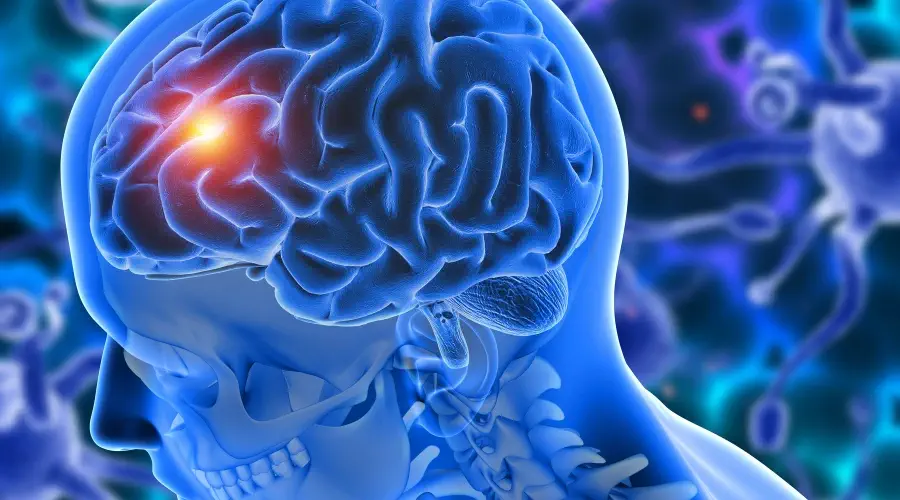
Deciding on the right treatment path involves far more than the tumour itself. Pathology, tumour’s location, the symptoms you’re actually dealing with, whatever imaging has shown so far, these all go into it. Your general health and, just as much, your own preferences shape where things land.
Surgery’s often only one piece of the picture for some patients. Plenty of patients need radiotherapy or chemotherapy afterward too, depending on tumour type and how much could safely be removed during the operation. For help making sense of all of it, neurosurgery care in Patna is available at Big Apollo Spectra.
What Are the Types of Brain Tumour Surgery?
Different tumours, different approaches. What technique your neurosurgeon picks hinges on where the tumour sits, its size, how easy or difficult it is to reach. Three main routes tend to come up, though what’s realistic shifts case by case.
Craniotomy
A small section of the skull is removed temporarily so the surgeon can get straight at the tumour. That’s a craniotomy.
Once the surgeon has dealt with the tumour, the bone usually gets replaced, gets secured, and the skull heals by itself over the weeks that follow.
Minimally Invasive or Endoscopic Approaches
Some tumours, depending on position, can be reached through smaller access points, or with endoscopic tools, skipping a full craniotomy entirely.
This brain tumour operation route aims to leave the surrounding tissue mostly undisturbed, though it’s not an option for every shape or position a tumour can take.
Biopsy
Sometimes taking the whole thing out isn’t safe, or even the goal. A small tissue sample does the job instead, confirming exactly what the surgeon is treating.
That sample shapes whatever happens next, even when brain tumour removal surgery itself isn’t on the table yet. Nobody’s case gets treated like a template here. Every case is assessed individually.
You’re not expected to pick between these on your own. Your neurosurgeon talks you through which approach suits your case and why, based on the imaging and clinical findings, as part of the broader neurosurgical procedures this hospital offers for brain and spine conditions.
Approach decided, and the obvious thing to wonder next is how doctors land on a diagnosis in the first place.
How Is a Brain Tumour Diagnosed Before Surgery?
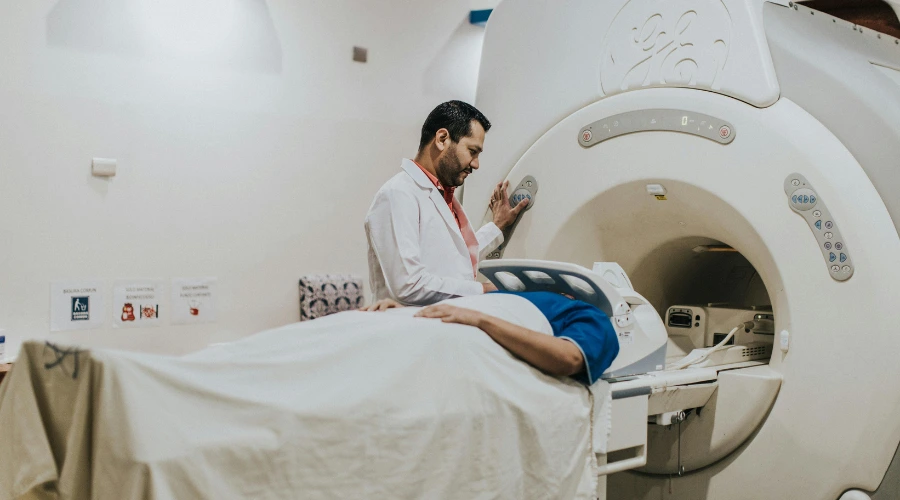
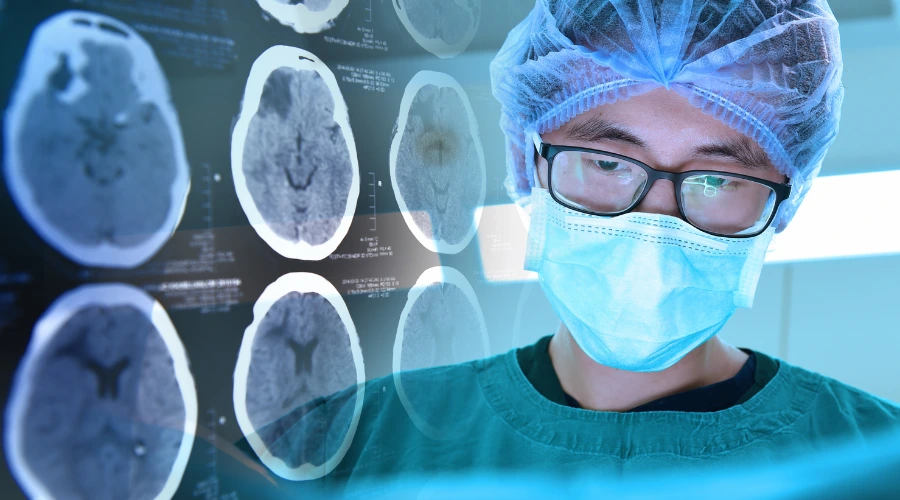
Doctors usually take the medical history first followed by a neurological exam, and after that they order radiologic imaging. But it is only after all three reports are available that the complete medical picture emerges.
MRI is the technique that best shows the detail in soft tissues so it can localize the exact position of the tumour very accurately whereas CT scan is able to produce results quickly in situations where time is of the essence e.g., when a bleeding is suspected or there is a dramatic change in neurological signs and symptoms.
Pictures from imaging are not reliable in identifying the specific type of the tumour. Most of such work has to be done through biopsies or tissue examination, either at the time of surgical operation or as a preparatory step beforehand.
Exceptional instances may refer to a multidisciplinary team that can bring radiologists and oncologists on the table, look at all data together, and then decide if they want to go into treatment planning. This kind of thorough review makes sure nothing important gets missed.
At that stage when diagnosis is confirmed, the surgical team then gets to explain to you in detail about the procedure and what that involves.
What Happens During Brain Tumour Surgery?
The day starts with a pre-operative assessment and a finalised anaesthesia plan, built around your health history and whatever approach got chosen. You’re then positioned carefully, and the surgical site is prepared according to the chosen technique.
From there, your surgeon accesses the tumour through whichever route was settled on, craniotomy, endoscopic technique, biopsy, and either removes all or part of it, or pulls tissue for analysis, exactly as mapped out beforehand. Vital signs and neurological responses get watched the entire time.
Surgery wraps, and you’re moved to recovery where the team’s watching for anything unexpected or any complications.
Exactly how long this all takes, and what it looks like, comes down to where the tumour sat and how complicated the case turned out to be. Rarely does one surgery look like the other.
Knowing roughly what’s ahead tends to make the day itself feel a lot less unpredictable.

What Are the Risks of Brain Tumour Surgery?
Risk comes with any major operation, this one included, and how much the risk depends heavily on the patient and exactly where the tumour is located.
Bleeding, infection, swelling in the brain, seizures, sometimes, in the days following the operation are some complications worth noting.
Speech, movement, memory, vision, any of these can shift temporarily, occasionally permanently, depending on which part of the brain gets involved.
Anaesthesia brings its own separate set of risks, which is worth a conversation on its own. And every so often a small portion of the tumour is not removed on purpose, if taking it all out would risk healthy tissue nearby, which can mean more treatment further down the road.
Most patients don’t run into any of these complications. Plenty recover with no real setbacks at all. Your treating team should walk you through which risks are relevant to your specific case rather than presenting a generic list.
Knowing what to watch for beforehand makes the monitoring afterward actually make sense.
What Is Recovery Like After Brain Tumour Surgery?
A handful of things shape recovery after brain tumour surgery:
- What was the type of the surgery and how extensive it was,
- exactly where the tumour was located,
- what symptoms existed going in,
- general health beforehand.
Any complications during or after the surgery can shift the whole recovery timeline, sometimes by quite a bit.
No two hospital stays look alike either. Some people walk out within days. Others need a longer stretch of observation before discharge even comes up.
Physiotherapy, speech therapy, occupational therapy, any of these might end up part of getting your function back, depending on what the surgery actually involved.
Neurological monitoring often continues well past discharge, just tracking how things are healing over the weeks and months that follow. Where rehab becomes part of the plan, neurological rehabilitation support helps rebuild strength, coordination, and everyday independence, at whatever pace actually fits your condition.
Ongoing support ends up mattering nearly as much as the surgery did.
Frequently Asked Questions
Here are some answers to what patients tend to ask most about this procedure and everything that follows.
1. Is surgery necessary for every brain tumour?
No. Some need removal with surgery. Others get watched through regular scans, or treated with radiotherapy, chemotherapy, or targeted medication instead, depending on type and how it’s behaving.
2. How long does brain tumour surgery take?
Depends where it sits, how complex the case is, which approach the surgeon picks. A few hours for some operations. Considerably longer for anything involving deeper or more delicate areas.
3. Can a brain tumour return after surgery?
Yes, that’s possible. Type, grade, and how much was removed during surgery all factor into the odds. Regular follow-up scans are what catch regrowth early, before it turns into a bigger problem.
4. How long does recovery take after brain tumour surgery?
It really varies from person to person. Follow-up imaging, physiotherapy, other rehab support, a lot of people need some combination of these, and your care team gives you a timeline built around your actual procedure, not a generic one.
Seek Early Care for Brain Tumour
One option among several, that’s what surgical intervention for a brain tumour really is, not some automatic next step. What’s right depends on the tumour and your overall health.
Imaging, sometimes a biopsy too, is what gives your care team enough information to build a treatment plan that actually fits your case, whether that ends up being surgery, watchful monitoring, or another route entirely.
Just got a diagnosis? Still sitting with the options? Talk to a qualified neurosurgical team directly, that’s the most useful next move, not another search engine query at midnight.
The team will walk you through what it actually means, what’s realistic, what recovery could look like, so you can move forward with a clearer picture ahead.