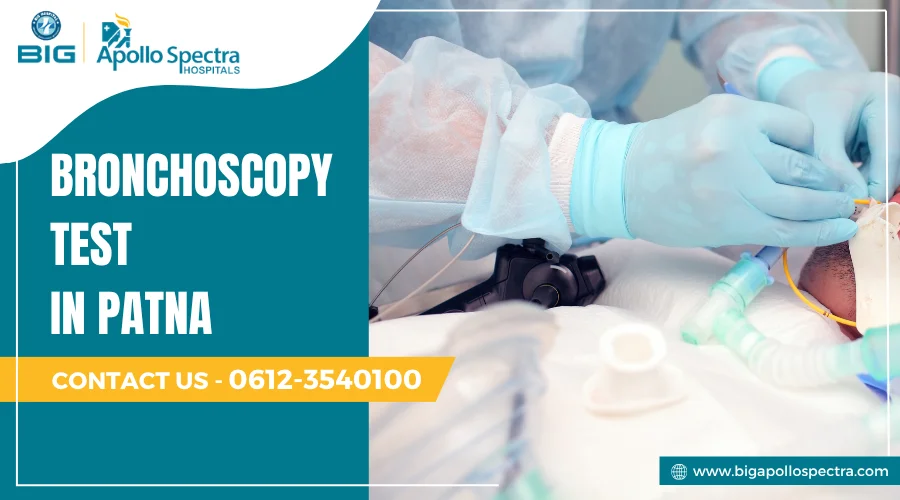
Bronchoscopy in Patna is a procedure where a doctor passes a thin, flexible tube through your nose or mouth to see inside your airways.
This procedure clearly means no guesswork, no reading between the lines of a scan. It’s usually ordered when your symptoms don’t quite add up, or when the doctor needs an actual sample of tissue, mucus or fluid rather than just a picture.
A scan shows shape. This shows what’s going on inside visually. If you’re in Patna and dealing with a cough that won’t quit, a strange-looking scan, or a suspected lung condition, bronchoscopy is something you can get done locally as part of a real pulmonology workup, not something you get referred elsewhere for.
Once you know what the test is, it stops being scary. So, here’s what the procedure involves as part of pulmonology care in Patna and why it matters.
>> Consult Dr. Vaibhav Shankar to Enquire About Bronchoscopy
What is Bronchoscopy?
Picture a thin tube with a light and a camera on the end. That’s a bronchoscope that can be flexible or rigid. Most patients get the flexible kind; it’s better tolerated. Rigid bronchoscopy is reserved for specific situations, like pulling out something lodged in the airway.
Once the doctor guides it through your nose or mouth, it goes down the throat, into your airways, the camera feeds a live view straight to a screen. That’s the airway examination part.
If something looks off along the way, the doctor just takes a sample right then, tissue, mucus, whatever’s needed, so you’re not coming back for a second visit to do it.
Bronchoscopy in Patna at Big Apollo Spectra
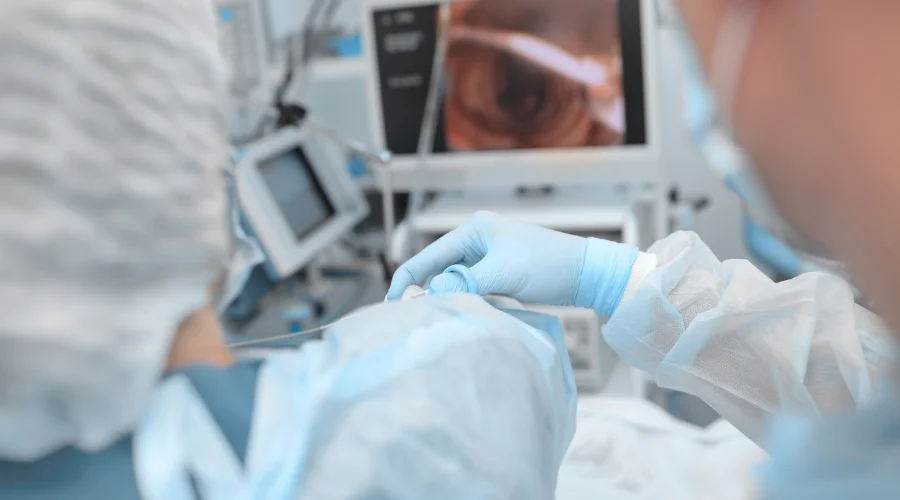
Big Apollo Spectra runs this out of its pulmonology department, with the diagnostic setup built specifically for airway and lung diagnostic workup.
That’s a big part of what makes Big Apollo Spectra Hospital a bronchoscopy hospital in Patna worth considering over somewhere without on-site pulmonology expertise.
Nobody gets recommended for a scope without being evaluated first by the pulmonology team, so the test gets shaped around actual symptoms instead of handed out by default.
Dr. Vaibhav Shankar, a pulmonologist doctor in Patna on staff, is one of the specialists who sees patients through this process. There’s a practical upside to staying put for this kind of thing too: your results, your follow-up, whatever comes next, all stay with one coordinated team who already knows your case.
Why Is Bronchoscopy Done?
There’s usually a specific reason behind a bronchoscopy test in Patna. It’s not a catch-all.
Diagnosing lung conditions: Sometimes it’s diagnostic. Symptoms that don’t have a clear explanation, a chest X-ray or CT scan that needs a closer look, suspected infection, suspected lung disease, or an airway finding nothing else has been able to explain.
Collecting samples: Other times it’s about getting a sample, mucus, biopsy tissue, bronchial washings, because it depends on laboratory analysis, not imaging.
Treating certain airway problems: Occasionally, it’s therapeutic. Bronchoscopy is also used therapeutically, such as clearing an obstruction within the airway.
What it isn’t is routine. As the best pulmonologist in Patna, Dr. Vaibhav Shankar doesn’t reach for this test for every cough or chest infection, only when a direct airway evaluation would actually change the diagnosis.

Conditions That May Require Bronchoscopy
A few specific situations tend to push things in this direction rather than keeping things at the imaging-and-bloodwork stage.
- Symptoms that haven’t budged despite standard treatment, for one.
- Lung infections where sputum testing hasn’t given a clean answer.
- Tuberculosis evaluation fits here too, in select cases where things still aren’t fully clear.
- TB left alone isn’t a small issue, either, and we’ve written separately about the complications of untreated tuberculosis if that’s relevant to you.
Beyond that: abnormal imaging, suspected airway blockage, certain lung masses, some chronic respiratory conditions are other scenarios where a closer look matters.
None of it means a TB or pneumonia diagnosis automatically requires a bronchoscopy test, though. It only comes up when the symptoms and the prior test results genuinely point toward needing a direct look inside.
When Does a Doctor Recommend Bronchoscopy?
No respiratory specialist in Patna jumps straight to this. There’s almost always an earlier evaluation that didn’t fully answer the question first.
- Persisting symptoms despite treatment.
- Imaging that needs direct confirmation.
- Unexplained bleeding from the respiratory tract.
- A suspected blockage. Needing an actual tissue sample rather than another scan.
- A suspected infection that needs confirming.
- Lung abnormalities nobody’s explained.
Any one of these can tip the decision towards the diagnostic test.
The order usually runs evaluation, then imaging or function tests, a spirometry vs chest X-ray comparison maybe, and bronchoscopy only if those earlier steps still leave something open ended. Your symptoms, the exam, whatever’s already been tested, it all feeds into the call.
How Is a Bronchoscopy Performed?
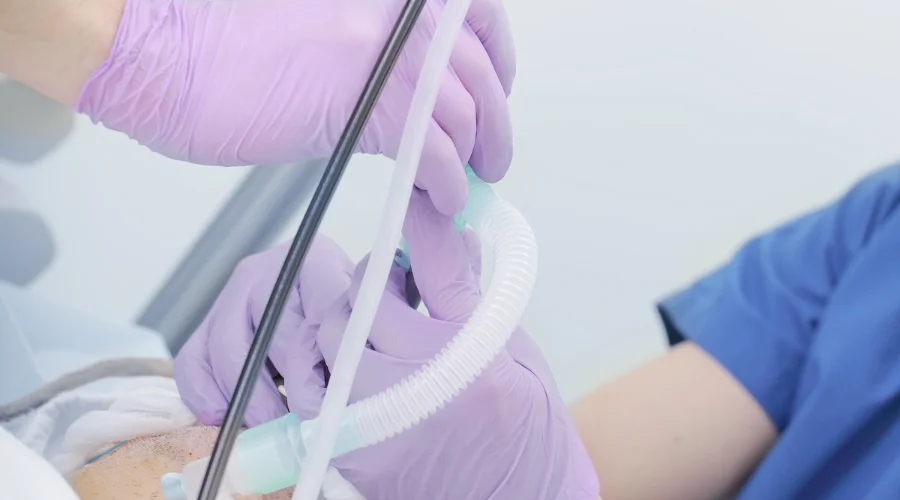
Here’s how a bronchoscopy procedure in Patna is broken down:
Before the Procedure:
First, the run-up. Your doctor goes through your history, your current medications, anything already tested. Sedation on the table usually means fasting instructions beforehand, and the team will walk you through whether sedation or local anaesthesia fits your case specifically.
During the Procedure:
Then the procedure itself. You’re made comfortable, sedation or anaesthesia kicks in, and the scope goes in through the nose or mouth, down into the airways.
The doctor takes a careful look at the airway walls, grabs a sample if one’s needed, pulls the scope back out. Timing depends entirely on what’s being checked.
After the Procedure:
Afterward, you’re watched for a while as the sedation wears off. A scratchy throat or mild cough is normal, not something to panic about.
Your team tells you exactly when it’s safe to eat, drink, get back to your routine, and it’s worth sticking to the specific window rather than guessing on your own.
Is Bronchoscopy Painful?
Sedation or local anaesthesia takes most of the edge off, so the honest answer sits somewhere between “no” and “not really.” Painless would be overselling it, though.
Expect some pressure in your throat, an urge to cough, maybe irritation as the scope moves through. How rough or uncomfortable it feels really does vary from person to person and depends on what’s actually happening, whether there’s a biopsy involved, for instance. The team’s watching your breathing and oxygen levels the entire time and adjusts as they go.
Risks and Possible Complications of Bronchoscopy
Anything that goes into your airway carries some risk. Serious complications, though, aren’t common.
A sore throat or temporary cough afterward is the usual story, and it clears up in a day or two for most people. Mild bleeding can happen, especially after a biopsy. There’s a small infection risk. Some patients get a bit of breathing difficulty briefly.
On the rarer end, pneumothorax, a collapsed lung, shows up in the clinical literature, though it’s genuinely uncommon.
How much of this applies to you comes down to your overall health, why the test was ordered, and whether it’s a plain diagnostic look or includes a biopsy or treatment step.
Once the procedure itself is behind you, the focus shifts naturally to getting back to normal.
Recovery After Bronchoscopy
Expect to sit in a recovery area while sedation wears off, a few hours depending on what was used. A sore throat or hoarse voice for a bit is typical and settles on its own.
Most people are back to normal within a day, though that depends on whether a biopsy or intervention happened, which your doctor will tell you about.
Call your doctor if there’s ongoing bleeding, worsening breathing trouble, fever or chest pain once you’re home; none of that belongs in a normal recovery.
Bronchoscopy vs Other Lung Tests
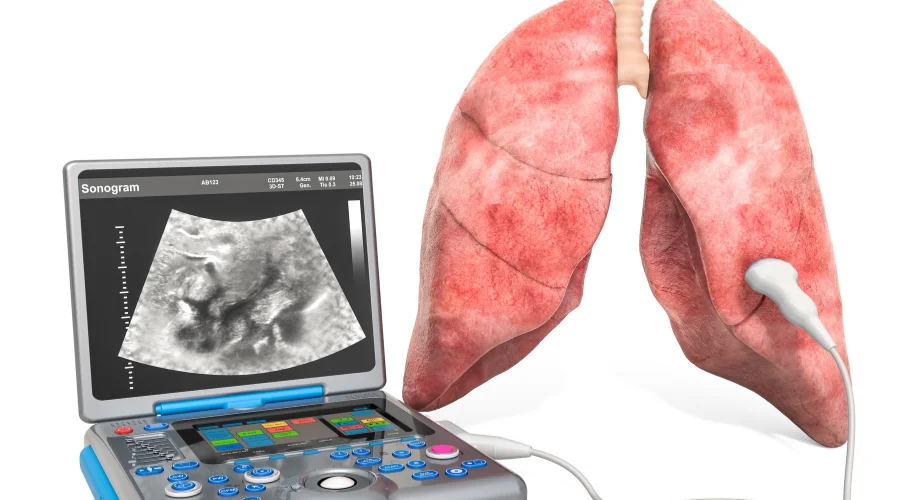
This doesn’t replace a chest X-ray, a CT scan, or spirometry, they’re answering different questions entirely. A chest X-ray or CT scan shows the structure, what your lungs and airways look like.
Spirometry and other pulmonary function tests check function, airflow capacity, how well your lungs actually work. Bronchoscopy is the only one test that lets the doctor see inside directly and grab a sample on the spot, something neither imaging nor breathing tests can do.
One practical question left: when do you actually need to see someone about this?
When Should You Consult a Pulmonologist in Patna?
A handful of symptoms are worth taking to a lung specialist in Patna rather than sitting on.
- A cough that won’t quit.
- Breathing trouble that doesn’t make sense.
- Infections that keep coming back.
- Something odd on your chest imaging.
- Coughing up blood.
- Unexplained lung findings.
Whether any of that actually adds up to needing pulmonology care in Patna that includes bronchoscopy isn’t really a call to make on your own.
Dr. Vaibhav Shankar and the pulmonology team at Big Apollo Spectra can look at your symptoms and tell you what’s genuinely next. Book Appointment if any of that sounds familiar.
FAQs
1. What is bronchoscopy used for?
Looking directly at the airways, and pulling samples when a diagnosis needs more than an imaging.
2. Is bronchoscopy painful?
Not quite painful. Expect pressure, some coughing, maybe throat irritation while it’s happening.
3. How long does a bronchoscopy take?
Fairly short, generally, though it stretches out only a bit if samples are being collected.
4. How long does it take to recover from bronchoscopy?
A day, for most people. Longer if a biopsy or other step was involved.
5. What can a bronchoscopy detect?
Infections. Abnormal tissue. Blockages. Pretty much anything behind unexplained respiratory symptoms that other tests missed.
6. Is bronchoscopy safe?
Yes, generally, in the hands of a trained specialist. Like any procedure, it’s not zero-risk.
7. Who performs bronchoscopy?
A pulmonologist trained specifically in airway procedures, usually with a specialised team backing them up.
Book Lung Evaluation in Patna
Bronchoscopy lets doctors look directly in the airways and investigate lung conditions that other tests couldn’t fully explain on their own, with the bonus of collecting samples right there when a lab result is what’s actually needed.
Whether you need one depends on your symptoms, your exam, and what’s already been tested along with other test results.
Getting lung treatment in Patna right starts with getting the diagnosis right, so if your respiratory symptoms have been sticking around, the next move is a proper evaluation with a pulmonologist in Patna. Book Appointment with the pulmonology team at Big Apollo Spectra and find out if this test actually makes sense for you.