

Sciatica is an extremely common global medical issue; it causes severe pain that radiates down in the legs from the lower back. It is caused by either irritation or compression of the body’s longest nerve called the sciatic nerve.
But here’s the silver lining: many individuals see an improvement in their sciatica issues, even those that are severe enough to require surgery. Plus, mild cases will usually improve with conservative treatment and management.
As such, determining whether one should rely upon themselves for care (self-care), or if they should seek out additional assistance from a professional, is very critical.
Most patients who suffer from sciatica report having experienced sharp leg pain, tingling sensations in their feet, along with numbness in their feet, and some also have difficulty walking due to the weakness that accompanies their pain.
Consulting our best orthopedic doctor in Patna at Big Apollo Spectra Hospital can assist you in developing a plan of action for your recovery.
➤ Book an Appointment with Dr. Anand Bhushan (Ortho Specialist and Surgeon) | Emergency Line : 0612-3540100 | 0612-7131415
Can Sciatica Heal on Its Own?
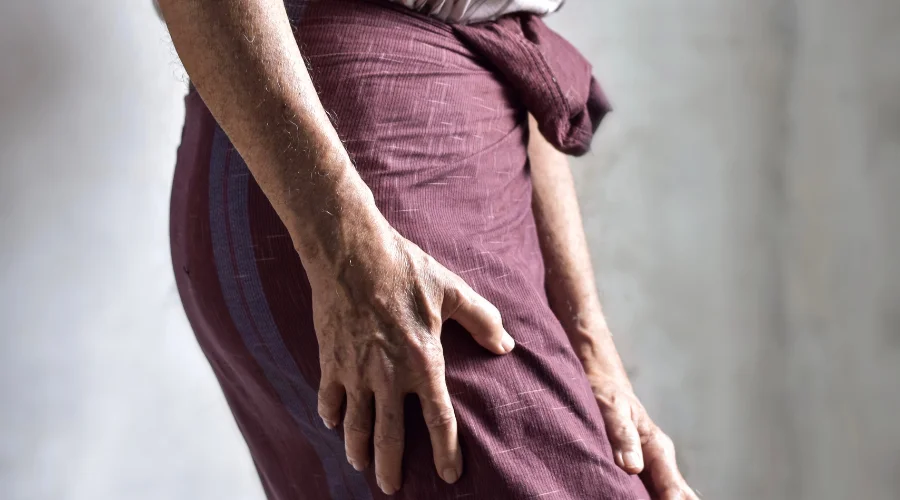
Yes. Many patients who are diagnosed with mild to moderate sciatica will be able to get better on their own, using conservative treatments, and without undergoing surgery.
So, can sciatica go away on its own? As stated above, yes.
Research from the American Academy of Orthopaedic Surgeons clearly indicates that approximately 80-90% of all patients who are suffering from some degree of sciatica will be able to recover from this problem on their own, without needing to undergo any type of surgical procedure.
This is primarily because your body has a natural capacity to reduce inflammation of nerves, which allows for normal functioning to occur again. The time frame associated with how quickly patients recover can vary depending upon the severity of the compression of the nerve.
However, as a rule of thumb, the patients with moderate sciatica will likely start experiencing pain relief only after 4 to 8 weeks of consistent conservative care.
Besides, minor sciatica sufferers can notice their pain resolving within just a few days or weeks.
Successful recovery from sciatica hinges upon the most effective strategies to reduce pressure on the irritated nerve. So, one of the ways to achieve this is by not staying in bed for a long time.
Movement is good for healing. Gently do physical activities. Do the sciatica-targeting exercises. All these will be quite helpful in quickening recovery.
Also, changing one’s posture, using pain relievers properly, and doing physical therapy are some of the things that support faster recovery. So, it’s best to look for a physiotherapy timetable. This will facilitate your rapid recovery under professional supervision.
Note:
Recovery timeline largely depends on how your body reacts and the severity of nerve compression, besides it is very difficult to give an exact time for how long does sciatica last for an individual. The healing time varies based on different factors.
How Long Does Sciatica Take to Heal?
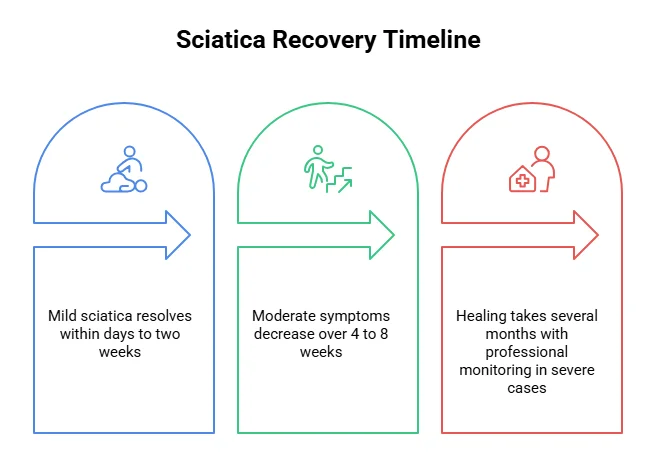
Sciatica recovery is not one-size-fits-all. It actually depends on a variety of factors:
- Mild sciatica: A very short and mild episode of sciatica can be cured within a few days to two weeks, with periods of improvement and periods of deterioration. Recovery is done by rest, stretching, and gentle exercise.
- Moderate cases: For people with moderate sciatica, relief from symptoms can be found in a matter of weeks. In about 4 to 8 weeks, the majority of people suffering from moderate cases of sciatica find that all of their symptoms have decreased in intensity, if they have completed the correct amount of appropriate conservative treatment and have religiously followed exercises for sciatica relief.
- Chronic cases of sciatica: Symptoms of chronic sciatica can take several months to heal. Plus, it needs professional monitoring for proper recovery.
➤ Book a Consultation for Chronic and Persistent Symptoms

Factors Affecting Recovery
Following are a few factors that affect your prospects for recovery from sciatica:
1. Age
The ability to repair tissues (such as spinal discs and ligaments) is generally better in youth. In addition, a young person typically has greater flexibility of their spine than an older person.
Hence, young individuals suffering from sciatica usually have a faster recovery from their symptoms than the elderly ones.
Besides, acknowledging the fact that aged people might need a longer time for the inflammation associated with the nerves to diminish is also quite important.
2. Poor Posture
Sitting or standing in an abnormal manner for a long time can lead to excessive pressure on the nerves. This, subsequently, increases the inflammation, which may result in delaying the process of your recovery.
By improving your posture, you will not only be able to recover but also prevent the future incidence of sciatica.
3. Activity Level
Individuals having sedentary jobs or lifestyles tend to have serious problems related to sciatica. The majority of the people suffering from sciatica are relieved from their symptoms if physically active.
On the other hand, you also need to be very cautious not to push yourself very hard leading to pain and more problems.
4. Disc Problems
Generally, several months are needed for the healing of severely herniated or bulging discs and the subsequent reduction of pressure on the nerves.
5. Obesity
Extra weight puts more pressure on your spine which can make things worse and delay your recovery. By losing weight, you can speed up your recovery from sciatica.
By establishing a good understanding of the many factors that can affect recovery from sciatica, you can make the best recovery possible and know when you should seek more medical care for your lower back pain and leg pain.
Signs Your Sciatica Is Improving
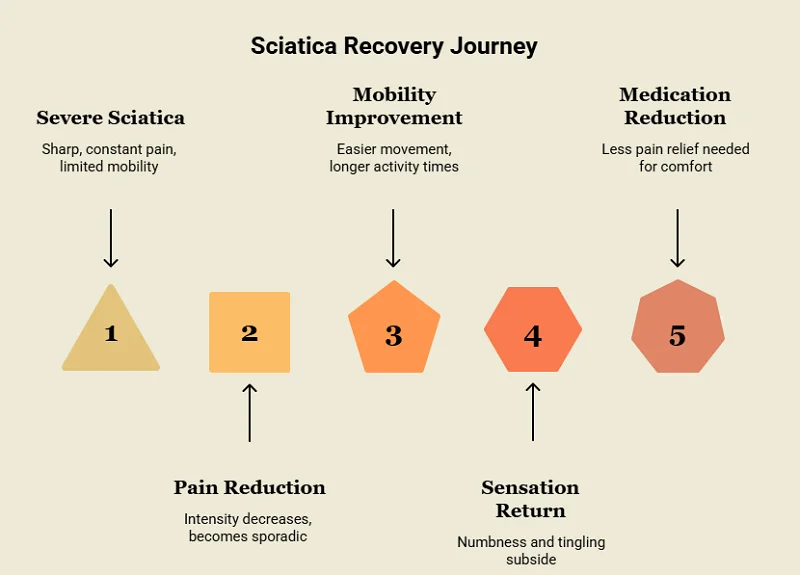
You don’t need a doctor to tell you when you are getting better and recovering from your sciatica symptoms. Here are some indicators of recovery:
- Pain starts to decrease in intensity: The pain will initially be very sharp, shooting pain, and over time it will start to decrease in severity. The pain will then become sporadic instead of constant, and will be only present for certain activities or movements.
- Better mobility: You are able to move more and carry out more activities, for example bend, walk and sit without pain. Also, you are able to sit for longer periods of time and be able to walk for longer distances without triggering immediate pain.
- Less numbness and tingling: As the nerve starts to heal from the inflammation, the numbness and tingling sensation that has been traveling down your legs and into your feet will start to subside and you will feel the normal sensations again.
- Less pain relief medication needed: This can be over the counter pain relief such as ibuprofen or prescribed pain relief by your doctor. The need for less pain reliever is a great sign that your body is healing from your sciatica.
Other signs of sciatica improving are improved sleep, better mood and increased confidence when moving around.
Just because things are getting better for you does not mean that you can stop your conservative care. These improvements are your body’s signal that conservative care is working, but persistence in treatment helps maintain momentum toward complete recovery.
What Helps Sciatica Heal Faster?

You control most of what will speed up your recovery process. These approaches have been proven to give you better results than other options.
1. Stretching and Gentle Movement with Caution
Stretching and moving gently (walking and yoga) will help to relieve some of the pressure off of your nerves. It is also important to avoid “aggressive” stretching as it may make inflammation worse.
The goal is consistency. A little bit of gentle movement each day can be better than an intense session once in a while.
2. Hot and Cold Therapy
Cold therapy will help to reduce inflammation in the first 48 hours after injury. Heat helps with range-of-motion and circulation.
Use alternating therapy for best results (use 15 minute sessions and alternate every few hours).
3. Physiotherapy
Physiotherapy allows you to get professional assistance so that you can learn how to use specialized movements and hands-on techniques from a trained professional who will be able to guide you on how to correct movement patterns that are compressing your nerves and thus preventing recurrence.
4. Posture
Sitting up straight and standing straight will decrease the pressure of your discs on your nerves.
Check your posture regularly to ensure that you do not develop any compensation patterns that could delay your recovery time. Consider buying an ergonomic chair or setting up a standing desk at home.
5. Sleep Positions
Sleeping on your side with a pillow in-between your knees decreases spinal stress. Do not sleep on your stomach as this creates unnatural twisting motion in your spine and increases sciatic pain.
Combined strategies work synergistically. And using multiple approaches simultaneously produces faster healing than relying on single interventions.
➤ Consult Dr. Anand Bhushan Today for a Sciatica Recovery Plan
When Sciatica Does NOT Heal on Its Own
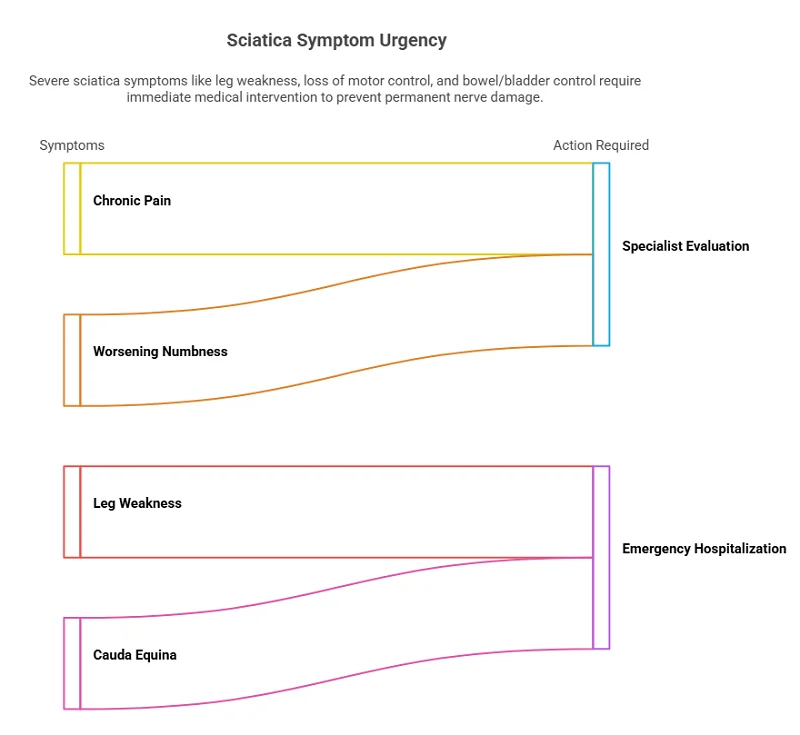
There are several red flags to watch out for that could require an immediate call to your physician as they could be a sign of more severe compression of nerves.
- Six to eight week periods of chronic pain suggests more serious nerve compression.
- When sciatica becomes serious, the sooner you seek care from a healthcare provider; the less likely it will cause long term damage to your nerves.
- Numbness that progressively worsens over days indicates increasing pressure on the nerve. Imaging tests and evaluation by a specialist would be recommended instead of waiting in these cases.
- Significant leg weakness that makes walking difficult or inhibits ability to control foot movement indicates damage to your nerves. It is urgent to get evaluated by an orthopedic if you are experiencing any symptoms of leg weakness.
- Walking difficulty or loss of balance suggest significant involvement of your nerve(s) and motor function. Get a doctor immediately if you experience loss of movement due to nerve damage.
- Cauda equina syndrome, a condition that leads to loss of bladder/bowel control, needs immediate hospitalization and it’s an emergency. If not treated, permanent paralysis can result from cauda equina syndrome.
- Treatment may be considered if imaging tests show the nerve being severely compressed. Your doctor will rely on these images to decide if conservative treatment is still suitable for your condition.
Understanding that sciatica can cause paralysis in critical cases will make you realize the urgency of medical treatment.
Complete paralysis caused by sciatica is a very rare condition, however, doctors’ intervention is necessary to prevent nerve damage that progresses over time. Contact our orthopedic specialists for a paralysis risk assessment if you have a chronic case of sciatica.
Get a professional evaluation early on so that you can determine the cases that respond to treatment and those that require a more aggressive approach. Recognizing and treating sciatica early will aid you in preventing long-term effects.

When Should You See a Doctor for Sciatica?
Timing is everything when it comes to treating sciatica. Don’t delay if you have persistent problems with sciatica like symptoms but also don’t panic.

- Long-Term Symptoms: If you’ve been experiencing persistent symptoms from sciatica for longer than 6 weeks, you should seek out the help of an expert who will be able to help diagnose what may be causing your problem, so that you get the right treatment for your condition as quickly as possible.
- Recurring Severe Symptoms: If you are experiencing repeated bouts of severe pain due to sciatica, or if you find that your symptoms are getting worse over time, there could be something structurally wrong, which needs to be diagnosed by a qualified doctor, and treated appropriately.
- Restrictions on Mobility Due to Sciatica: If you find that your daily activities are being limited, or if you’re having trouble working, exercising or doing other things because of sciatica, then it’s better to seek out some form of treatment sooner rather than later in order to improve your mobility and function.
- Sleep Disturbances: If you’re unable to sleep well enough to recover from your injury because of chronic pain from sciatica, then we would recommend seeking out medical assistance.
- Worsening Symptoms: If your symptoms suddenly become much worse, this is a sign that there has probably developed a new complication, and we would strongly advise you to see one of our ortho doctors immediately.
Book Your Appointment Now!
Our team of orthopedic specialists at Big Apollo Spectra Hospital provide complete diagnostic services and treatment plans based upon the individual patient’s requirements and condition.
Our doctors are highly skilled and experienced in diagnosing and treating all types of musculoskeletal conditions including sciatica pain.
We utilize state-of-the-art technology and methods to assess each patient’s condition and develop effective treatment plans to address their specific problems.
For example, orthopedics at Big Apollo Spectra often utilize X-ray imaging and clinical assessments to evaluate patients suffering from sciatica and to determine if their condition can be successfully treated using conservative therapies.
In cases where surgery is required, we ensure that our patients receive the best available care through collaboration with leading surgeons.
We specialize in providing the best sciatica treatment in Patna and offer both conservative and advanced treatment options designed specifically for each patient. To schedule an appointment and begin your road back to good health and optimal recovery, contact us now!
Frequently Asked Questions
Right below we’ve answered a few questions related to sciatica healing and recovery process.
1. What are the signs that your sciatica is healing?
Indicators of improvement include a reduction in pain levels, increased ability to move comfortably, less numbness/tingling, greater comfort while sitting/walking and reduced reliance on medications.
2. How long will sciatica take to go away?
Mild sciatica resolves generally within 1-2 weeks. Moderate sciatica takes approximately 4-8 weeks to improve. But chronic sciatica can take several months of continuous treatment before showing significant relief.
3. Can sciatica heal without surgery?
YES! 90% of all sciatica cases are resolved using non-surgical means such as physical therapy, stretching, and lifestyle changes.
4. Is walking good for sciatica?
Gentle walking can promote the healing process by promoting blood flow to affected areas and also helping to reduce pressure against the nerves.
According to a study by European Journal of Pain, leisure-time physical activity is shown to be beneficial in cases of sciatica. However, please refrain from participating in high-impact activities that exacerbate your condition.
5. What is the fastest way to recover from sciatica?
Treatments that include combined approaches are most effective at accelerating the healing process.
These treatments include physiotherapy, targeted stretching, hot/cold therapy, posture correction, and sleeping correctly.
Combine these under the care of an orthopedic and you can expect better recovery outcomes. The faster you heal from sciatica, the sooner you can resume normal daily routines.
6. Can sitting make sciatica worse?
Yes, prolonged periods of sitting increase compression of the sciatic nerve. Changing positions frequently, utilizing an ergonomic seating chair, and taking regular breaks to stand up can all help to prevent worsening symptoms.
7. Can massage help sciatica?
Yes, massage is beneficial for reducing muscle tension in areas surrounding the compressed sciatic nerve.
Additionally, massage promotes healthy circulation which assists in healing processes. When done properly, massage provides complementary benefits in conjunction with other forms of treatment.
8. How do I know if my sciatica is serious?
Persistent pain beyond 6 weeks, progressive numbness or weakness, mobility limitations, sleep disturbance, or loss of bladder/bowel control indicate serious conditions requiring immediate medical evaluation.
Fix Sciatica Pain Before Symptoms Worsen!
Most individuals can cure sciatica permanently using a combination of conservative treatments and by managing their lifestyle. By providing the right support for your body, eliminating potential causes of irritation, and allowing your body time to heal, your body will cure itself of sciatica.
For many people, improvement occurs very quickly, typically within weeks, when they take it easy, move slowly and carefully, and maintain good posture.
Getting early help is extremely important because if you address your sciatica at an early point before the condition has developed into chronic pain and other complications, you are much less likely to experience permanent or severe issues.
Manage sciatica properly from the onset. Combining home treatment with professional advice and treatment will result in better and faster results. Big Apollo Spectra provides the best orthopedic services in Patna for patients with persistent issues and agonizing pain.
Do not assume that your symptoms will go away on their own; there may be specific medical treatments required for certain symptoms.
At Big Apollo Spectra Hospital, we offer all of the necessary resources to support your recovery from injuries relating to your muscles, bones and joints.
From an initial evaluation of your injury, advanced diagnostic testing (i.e. MRI), physical therapy and specialized treatment, our team offers each patient individualized care.
Make an appointment today with one of our board-certified orthopaedic specialists to make sure that your sciatic nerve heals completely and normally. To schedule an appointment, please call us at 0612-3540100 or book an online appointment through our website.