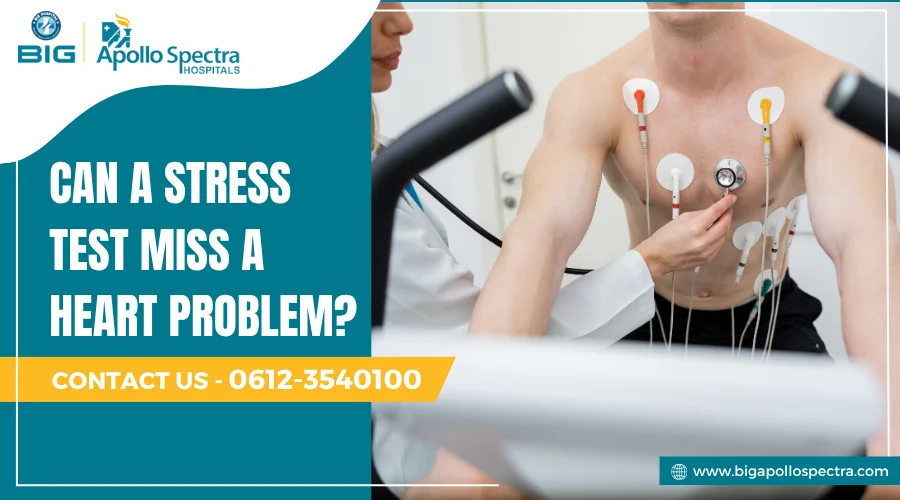
A stress test which doctors call an exercise tolerance test assesses how your heart functions under physical exertion. Medical staff track your heart rate, blood pressure, and electrocardiogram readings while you walk on a treadmill or pedal a stationary bike during this procedure.
The test enables doctors to diagnose coronary artery disease, irregular heart rhythms, and assess cardiac function. Cardiology professionals use stress tests as their main diagnostic tool to assess heart health because these tests provide essential information about cardiac function.
However, like any medical test, patients need to understand the limitations of stress tests to ensure comprehensive cardiac care.
Can a Stress Test Miss a Heart Problem?
Yes, stress tests can miss heart problems in certain cases. The screening value of these tests remains high but they demonstrate known restrictions in their diagnostic performance.
The detection rate of significant coronary artery blockages through standard exercise stress tests reaches 60-70% but this means 30% of cases remain undiagnosed. The identification of these diagnostic gaps enables patients and doctors to determine when supplementary tests should be performed.
The combination of test-related technical constraints and patient-specific factors often leads to missed diagnoses. People who are searching for the “best cardiologist near me” need to understand these essential variables for getting a complete and accurate cardiac evaluation.
1. Limitations of the Test Itself
Standard stress tests analyze heart electrical activity during exercise, which may not always reveal underlying problems. The test may miss blockages in smaller coronary arteries and those that do not cause substantial blood flow restrictions during the testing period.
The test results for blockages depend on their severity because partial blockages might not trigger abnormal readings even when they exist.
2. Patient-Specific Variables
The precision of test results depends heavily on various characteristics that belong to each patient. The ability to achieve target heart rates during testing may get harder for patients who take medications or have physical constraints or deconditioning which reduces diagnostic reliability.
The average time on the treadmill for stress test by age may vary and patients who stop early before reaching their target heart rate might not experience enough cardiac stress to detect problems.
The accuracy of electrical readings also gets compromised due to specific body habitus, chest wall issues, or particular medical conditions.
3. Atypical Heart Conditions
Standard stress testing methods present difficulties when diagnosing specific heart conditions. The condition known as microvascular disease affects small blood vessels instead of major arteries and can produce normal stress test but still have chest pain scenarios.
In the same way, cases of abnormal stress test but no blockage can also occur because of coronary artery spasm and other non-obstructive conditions that can cause temporary blood flow restrictions.
The complex nature of heart conditions demands healthcare providers to use multiple diagnostic approaches when making cardiac diagnoses.
The specialists at Big Apollo Spectra understand that and suggest diagnostic tests that help in timely diagnosis of issues. A complete assessment often combines test outcomes with the patient’s symptoms, medical background, and risk factors.
Supplementary Diagnostic Tools
The use of stress tests alone has its restrictions, so cardiologists perform additional diagnostic tests to get a full understanding of a patient’s heart health.
The diagnostic tools function together to identify medical issues which single tests would not detect.
1. Advanced Imaging Techniques
Ultrasound imaging during stress echocardiography enables doctors to observe heart wall motion and detect regions that receive insufficient blood flow. The diagnostic precision of stress tests with ECG monitoring becomes substantially better when using this method.
On the other hand, the radioactive tracer used in nuclear stress tests helps doctors see heart muscle blood flow patterns which makes it easier to detect circulation problems in specific areas. The testing method delivers optimal results for patients who fail to perform sufficient exercise during testing.
Cardiac CT angiography generates detailed images of coronary arteries through non-invasive procedures which help doctors detect blockages and plaque accumulation that standard stress tests may not be able to identify.
2. Invasive Diagnostic Procedures
Coronary angiography stands as the definitive diagnostic method for patients who receive unclear test results or experience ongoing symptoms even after normal test results.
The procedure requires a catheter insertion for contrast dye delivery into coronary arteries which produces the most precise visualization of blockages.
3. Continuous Monitoring Options
Holter monitors and event recorders enable doctors to track heart rhythms throughout long periods of regular activities which helps identify irregular heartbeats that standard stress tests might not detect.
The use of these devices serve patients best who experience intermittent symptoms. The combination of a normal echocardiogram but abnormal stress test results often requires extended monitoring to determine the root cause of the condition.
The combination of multiple diagnostic tests provides the most effective way to identify all cardiac conditions on time.
The evaluations remain safe and beneficial for patients when medical staff follow established protocols. If you have symptoms, you can consult an experienced cardiologist in Patna who can help you figure out which diagnostic tests would be the best fit for your condition.
Accurate Cardiac Diagnosis Saves Your Life
Stress tests deliver important cardiac data, but it should not be the only method to rule out heart disease in the presence of symptoms.
The recognition of stress tests with symptom assessment and continuous patient monitoring creates the most effective system for detecting heart problems before they become severe. Diagnostic gaps exist, and recognizing signs you need a stress test while understanding its limitations ensures appropriate care.
Don’t leave your heart health to chance. The Big Apollo Spectra’s cardiology team employs state-of-the-art diagnostic equipment alongside diverse assessment techniques to identify heart problems correctly.
Our cardiology team delivers complete heart care services that are personalized to your needs through detailed evaluations whether it is initial patient screenings or follow-up assessments after abnormal test results. Book your appointment now to receive prompt and precise medical diagnosis and complete heart care services that meet your individual requirements.