
Although digestive problems and blood pressure issues commonly affect people, most individuals do not explore the possibility of a connection between these health conditions.
Can gas increase blood pressure? Today’s stressful and fast-paced lifestyle makes it essential to examine this question because both issues are among the most common health complaints. So, a better grasp of how gastrointestinal issues may relate to hypertension would benefit millions who face these medical challenges.
The possibility of a causal relationship cannot be negated without examination even though these two conditions might seem unrelated at first glance.
Gas or bloating does not directly cause high blood pressure. However, it can sometimes lead to temporary increases in blood pressure due to discomfort, anxiety, or stomach distension.
This blog discusses some of these possible connections explaining why people with excessive gas might feel like they have high BP.
It’s important to understand that our bodies operate as interconnected networks where pain or discomfort in one region can provoke reactions elsewhere, which becomes evident when we examine how seemingly separate systems interact.
Let’s explore the connection between stomach gas and blood pressure to reveal your body’s intricate reaction to digestive distress.
Does Gas Increase Blood Pressure?
Research studies have found that gastrointestinal conditions that produce gas and bloating like Irritable Bowel Syndrome (IBS) and Small Intestinal Bacterial Overgrowth (SIBO) can lead to autonomic nervous system dysfunction.
One study was published in the American Journal of Gastroenterology to characterize Autonomic Dysfunction in Patients with Irritable Bowel Syndrome (IBS). The dysfunction may affect the body’s blood pressure regulation processes.
Furthermore, research published in Microbiome has also been done to explore the causal relation between changes in gut microbiome and development of hypertension.
Plus, changes in the gut bacteria composition can also influence the production of gas. Hence, this gives rise to a multifaceted relationship between gas and high BP.
This gives reasons to explore digestive health concerns whenever unexplained blood pressure fluctuation is encountered, which also demonstrates a comprehensive approach to patient care beyond traditional isolated system evaluations.
So, do these apparently distinct conditions show any kind of interdependence? Is there any relation between gas and blood pressure?
Studies indicate that stomach gas does not directly result in chronic hypertension but may cause temporary blood pressure spikes through multiple mechanisms.
Getting frequent gas episodes that leave you anxious about your heart and BP rises?
Dr. Vijay Prakash, Director & Consultant Gastroenterologist at BIG Apollo Spectra Hospital, Patna, can help you figure out what is actually behind your symptoms.
→ Consult Dr. Vijay Prakash.
Why Gas Can Feel Like High Blood Pressure?
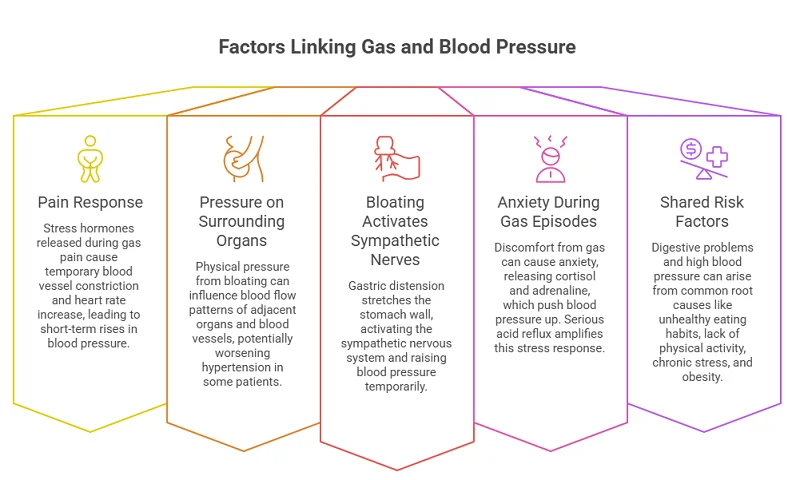
There’s no proven direct link between gas and high blood pressure, and more study is required to conclude a causal relationship. However, several factors can explain the associated or indirect link between these conditions.
1. Pain Response
The body’s stress response is a possible explanation for the connection between gas pain and blood pressure levels.
Your body releases stress hormones, adrenaline and cortisol, when abdominal discomfort from trapped gas occurs. These stress hormones trigger temporary blood vessel constriction and heart rate increase, which can lead to short-term rises in blood pressure.
2. Pressure on Surrounding Organs
The physical pressure inside the abdominal cavity might increase due to excessive bloating. This physical pressure from bloating might influence the blood flow patterns of adjacent organs and blood vessels.
The mechanical pressure typically doesn’t cause any significant blood pressure changes in healthy people but can worsen hypertension in some existing patients.
Consulting a stomach specialist doctor in Patna can help alleviate discomfort from excessive bloating and abdominal distension. Stomach distension for an extended period of time should always be checked by a doctor, especially if there are accompanying symptoms.
3. Bloating Activates Sympathetic Nerves
Trapped gas stretches your stomach wall; that’s gastric distension. Your sympathetic nervous system reads that stretch as a threat and raises blood pressure in response. The spike is short-lived. Once the gas clears, BP tends to settle back without any intervention.
4. Anxiety During Gas Episodes Spikes BP Too
Discomfort make people anxious. That anxiety releases cortisol and adrenaline, both of which push blood pressure up. Serious acid reflux makes the cycle worse.
The burning amplifies the stress response, and BP climbs a little further before things calm down.
5. Shared Risk Factors
The correlation between stomach issues and high blood pressure can also be due to shared health risks. These conditions may have common root causes rather than one directly causing the other.
Digestive problems and blood pressure increase arise from unhealthy eating habits alongside lack of physical activity, chronic stress, and obesity. So, patients can experience gastric problems and high blood pressure together without one condition directly causing the other.
Current studies about intestinal gas and blood pressure levels are very limited. However, the relationship may be most noticeable in conditions like gastritis and high blood pressure where sustained inflammation and stress from abdominal discomfort impacts various body systems.
Experiencing Frequent Symptoms That Disrupt Your Daily Routine?
Consult for a Thorough Diagnosis ⬇️

NOTE: Gas Does Not Cause Chronic High Blood Pressure
Here’s the reassuring part: no credible research has drawn a straight line between intestinal gas and lasting hypertension. If your BP is chronically high, the culprit is something deeper. It could be genetics, weight, diet, kidney function. Not a rough night of bloating.
Gas, then, is more of a short-term trigger than a root cause. However, GERD is a different conversation entirely and one that connects to blood pressure in ways that might surprise you.
Can GERD Affect Blood Pressure?
The data on this is harder to dismiss than most people expect. A Mendelian randomization study pulling from over 600,000 participants found genetic GERD consistently linked to higher systolic, diastolic, and mean arterial blood pressure. Why exactly? Here’s a few plausible mechanisms:
- Ongoing acid-related inflammation slowly damaging blood vessel walls
- Reflux-triggered vagal nerve activity throwing off heart rate and BP regulation
- Nighttime acid episodes breaking sleep and poor sleep has a well-documented effect on BP
- Shared risk factors – obesity, smoking, high-sodium diets, worsening both conditions at once
So, if you have GERD and your BP has been drifting upward, that’s probably not a coincidence. What matters now is knowing which symptoms actually require a doctor’s attention.
Precautions and Recommendations
Recognizing the indirect link between stomach gas and blood pressure allows you to engage in preventative health measures. These practical strategies provide effective management for both the conditions.
For Managing Stomach Gas:
- Use a food diary to discover which foods lead to bloating
- Opt for several small meals throughout the day instead of consuming large food portions.
- To reduce the chances of swallowing air during meals, try chewing your food well and maintain a slow eating pace.
- Try probiotics to maintain a healthy balance of gut bacteria
- Cut down on carbonated drinks and foods that create gas, such as beans and cabbage along with artificial sweeteners.
- Drink water throughout the day.
- Engage in mild physical exercise after eating to help your digestive system function better.
For Monitoring Blood Pressure:
- It’s important to keep track of your blood pressure frequently if symptoms of high blood pressure and stomach bloating appear together.
- Use deep breathing along with meditation and yoga to reduce stress levels.
- Follow a regular workout schedule that has received your doctor’s approval.
- Maintain a diet that limits sodium intake and incorporates plenty of fruits, vegetables, and whole grains for balanced nutrition.
- Follow your healthcare provider’s instructions and take blood pressure medications exactly as prescribed.
- Limit alcohol consumption and avoid tobacco products.
- Examine the potential relationship between stomach gas and blood pressure in your situation while bringing up these health conditions with your doctor.
ALSO READ: How to Prevent Hypertension Naturally?
Taking proactive steps can help alleviate the discomfort from stomach gas along with any lingering worries over high BP problems. Patients with hypertension should take readings on a regular basis to keep a track of fluctuations and accompanying symptoms.
When Should You Worry About Symptoms?
Most gas episodes clear on their own and leave no lasting trace. But certain symptom combinations aren’t something to sleep on.
See a doctor without delay if you notice any of these:
- Chest pain or tightness that doesn’t ease after passing gas
- BP consistently reading above 140/90 mmHg
- Breathlessness coming on at the same time as bloating
- Heart palpitations or a heartbeat that feels irregular
- Gas or bloating that hasn’t improved after two weeks
- Nausea and dizziness hitting together
Any of those patterns can point to something cardiac or gastrointestinal that routine gas simply doesn’t explain.
Dr. Vijay Prakash, Director & Consultant Gastroenterologist at BIG Apollo Spectra Hospital, Patna, recommends not waiting when digestive and cardiovascular symptoms appear at the same time.

FAQs
Following are some of the common queries regarding gastric issues and associated BP symptoms that patients may feel.
1. Can gas cause high BP readings?
Temporarily, yes. Physical stress and discomfort from gas can push your reading above baseline, though it usually drops once the episode passes.
2. Why does my BP increase when I feel bloated?
Bloating activates your sympathetic nervous system, which raises BP as part of a stress response; it settles once the pressure is relieved.
3. Is chest pain from gas dangerous?
Chest pain causes range from trapped gas to cardiac events. But severe or persistent pain, especially with breathlessness, needs a doctor the same day.
4. When should I see a doctor?
If chest pain, breathlessness, or dizziness keeps coming with your gas episodes or your BP won’t come down from above 140/90, don’t wait.
5. Does passing gas lower blood pressure?
Often it does. Releasing the gas removes the source of discomfort, the stress response winds down, and BP usually follows.
6. Can gastritis cause blood pressure to rise?
Gastritis causes real pain, and pain alone is enough to trigger a sympathetic stress response that raises BP temporarily.
7. Can acidity increase BP?
During bad episodes, yes. Frequent acidity stimulates the sympathetic nervous system, which can drive BP up in the short term.
8. What are the symptoms of too much gas?
Bloating, belching, flatulence, stomach cramps, and a nagging sense of fullness or pressure that won’t go away.
Consult a Doctor for Personalized Advice!
While research continues to explore whether gas can increase blood pressure, addressing digestive health issues can be a comprehensive approach to managing health and wellness.
The intricate connections between digestive health and hypertension demonstrate why healthcare should adopt a holistic perspective that views the body as a network of interconnected systems rather than isolated systems.
Anyone dealing with constant gas problems or bloating and suspecting its co-occurrence with unpredictable blood pressure changes should get professional medical help. Big Apollo Spectra Hospital delivers complete diagnostic testing and treatment solutions for digestive issues.
As a leading gastroenterology hospital in Patna, Big Apollo Spectra delivers customized patient care through the utilization of cutting-edge technologies and research-backed methodologies.
Proper medical attention should be sought for both digestive problems and blood pressure issues.
Work with certified medical practitioners to create a customized treatment plan for your specific health needs instead of trying to treat chronic conditions on your own. The investment you make in proper care and professional guidance today will protect your long-term health.