
Kidney stones (renal calculi, nephrolithiasis) are a very common problem affecting patients of all ages. They can cause significant pain, and in addition to that, they can cause patients to have a burning sensation while urinating, have an urgent need to urinate, have blood in their urine, or even have nausea or vomiting.
Ignoring a stone can result in significant and irreversible kidney damage. So, timely kidney stone treatment in Patna is paramount to preventing these complications. In fact, with the latest technology, getting the right care at the right time is entirely possible.
Whether it is your first stone or one of many recurrences, our specialists are here to guide you in the management of kidney stones.
Most patients diagnosed with stones make a full recovery with proper diagnosis and treatment. Patients are usually back to normal activities quickly after proper treatment.
Kidney Stone Treatment in Patna
Not all kidney stones require surgery. Most small stones (less than 5 mm in diameter) can be treated with increased fluid intake as well as medications that help break up the stones, allowing them to pass.
Larger stones can be treated with a variety of minimally invasive procedures to prevent complications such as obstruction, infection and permanent kidney damage. Early treatment generally helps with shorter recovery and is associated with fewer complications when compared to delayed treatment.
Many kidney stones can be treated without an operation. Options for kidney stone treatment without surgery require only fluids, pain management, and alpha-blockers.
However, for those patients who have a larger stone, there are several other minimally invasive procedures that can help treat their stone including ESWL (Extracorporeal Shock Wave Lithotripsy), Ureteroscopy, Laser Lithotripsy and PCNL (Percutaneous Nephrolithotomy).
If you are looking for the best kidney doctor in Patna, an experienced team of urologists and nephrologists are available at Big Apollo Spectra Hospital to provide specialized treatment for diseases and disorders of kidney and urinary bladder, equipped with latest technology and expertise.
With advanced minimally invasive technologies, most of the patients can have a quick and smooth recovery. Therefore, it is very important to get in touch with the right specialist at the earliest.
✅ Consult Dr. Kumar Rohit – Leading Urologist in Patna
The first step to choosing a kidney stone treatment method is knowing what your options are. Below we’ve organized the various treatments by stone size for easy comparison.
Kidney Stone Treatment in Patna: Available Options
The right treatment depends primarily on the size of your kidney stone. Here is a breakdown of what is typically recommended.
For Small Stones (Up to 5 mm)
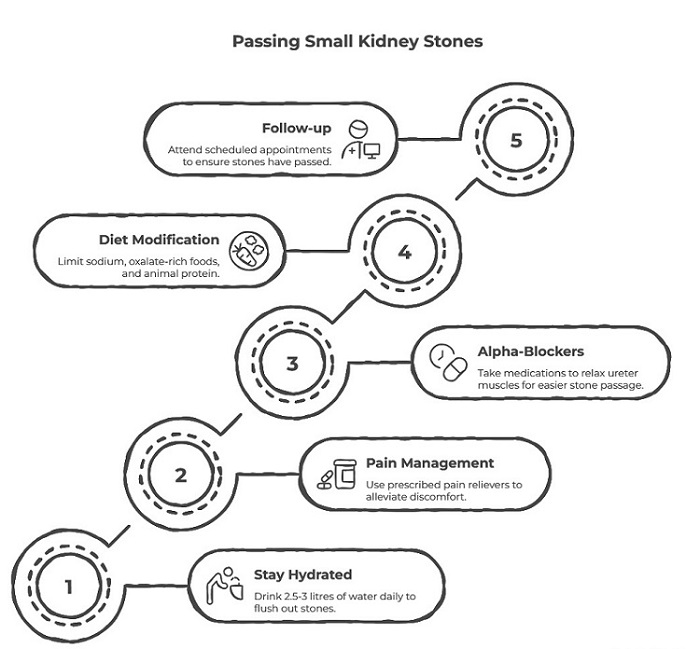
Some stones are relatively small (approximately 5mm in diameter) and can pass on their own with an increase in fluids and medications. Most patients manage this with a few simple steps, as advised by their doctor:
1. Stay Hydrated
Good hydration is key to passing small stones and we would recommend drinking at least 2.5-3 litres per day. Spacing this out rather than drinking large amounts at one time is more effective.
You can also gauge whether you are hydrated enough by looking at the colour of your urine; it should be a light yellow colour.
2. Pain Medications
Pain can persist while the stone passes and prescribed pain relievers (e.g. NSAIDs) can be used to alleviate the pain.
Taking ibuprofen not only relieves pain but also reduces the amount of inflammation around the urinary tract. Your doctor can guide you as to the appropriate dose and length of time to take these medications.
3. Medicines to Help Stones Pass Naturally
Alpha-blockers are a class of medications that relax the muscles in the ureter. By relaxing the muscles, the stone is able to move through the ureter more easily.
These medications are typically taken on a daily basis for several weeks to help pass the stone. The alpha-blockers are most effective for stones in the lower ureter.
4. Diet
Your doctor may recommend that you limit your intake of sodium, oxalate-rich foods, and animal protein to help pass the stone and prevent future stones. Your doctor monitors the stone’s progress and watches for blockage with scheduled follow-up imaging studies.
To pass small stones at home, the patient needs to make sure they are drinking plenty of water, taking all of their prescribed stone dissolving medication, and then following up with their doctor to make sure all of the stones have passed.
For Medium-Sized Stones (5 mm to 10 mm)
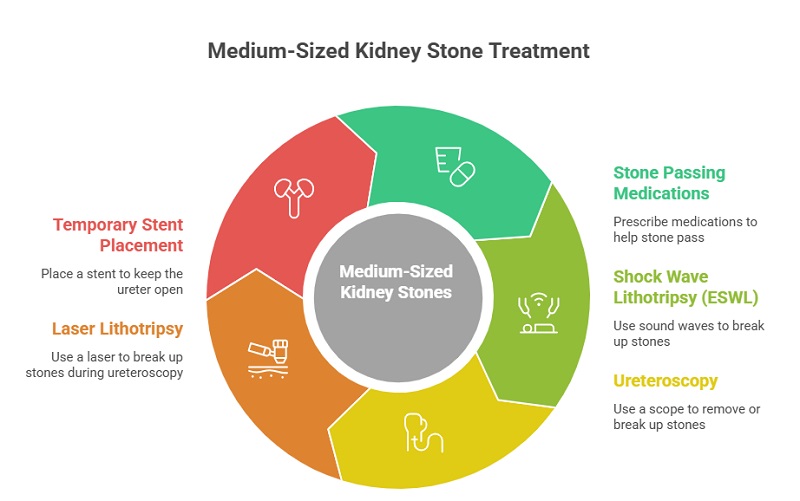
Some stones may pass on their own depending on size. Typically, most stones that are between 5-10 mm or larger require medical treatment. This is the case especially if the patient has severe pain, a blockage, an infection, or if the stone has not passed.
1. Stone Passing Medications
Some medications, such as alpha-blockers and anti-spasmodics, can help a stone pass, especially if they are in the lower part of the ureter.
Your physician may also prescribe pain medications in addition to these to help aid in the easy passing of your stone. Giving your stones a few weeks to pass with these medications is typically the first course of treatment, and then your doctor will monitor to decide if further intervention is needed.
2. Shock Wave Lithotripsy (ESWL)
Our treatment utilizes sound waves from outside the body to break up stones into smaller fragments, which then pass through your urine. Most patients are lightly sedated for the procedure. ESWL is primarily used to treat stones in the kidney or upper ureter.
3. Ureteroscopy
A ureteroscopy involves the surgeon using a thin, flexible scope and passing it through the urethra and bladder to visualize and remove stones that are in the ureter.
The stone can either be extracted with a basket device or the stone can be broken up and then removed. This procedure is very successful and prioritized for stones found in the middle to lower part of the ureter.
4. Laser Lithotripsy
Expert urologists use laser lithotripsy to break up stones into dust or small fragments during ureteroscopy, using a laser fibre and then flushing the fragments out.
The Holmium laser for kidney stones is the most commonly used laser type for this treatment. Some stones are hard and not suitable for ESWL treatment, thus laser lithotripsy is often used for these stones.
5. Temporary Stent Placement
Depending on the size and location of your stone, it may require a ureteral stent to be placed. The stent keeps the ureter open to allow urine to pass while the stone and its fragments are cleared.
The stent can be removed in the office several weeks later when studies confirm the stone has passed. Typically a stent is needed in cases of significant swelling or infection alongside the stone.
For medium sized stones, the choice of treatment is based on many factors including location, your specific symptoms, and the duration for which the stone has been present. Your urologist will review the various options with you and determine which one is best for you.
For Large Stones (Above 10 mm)
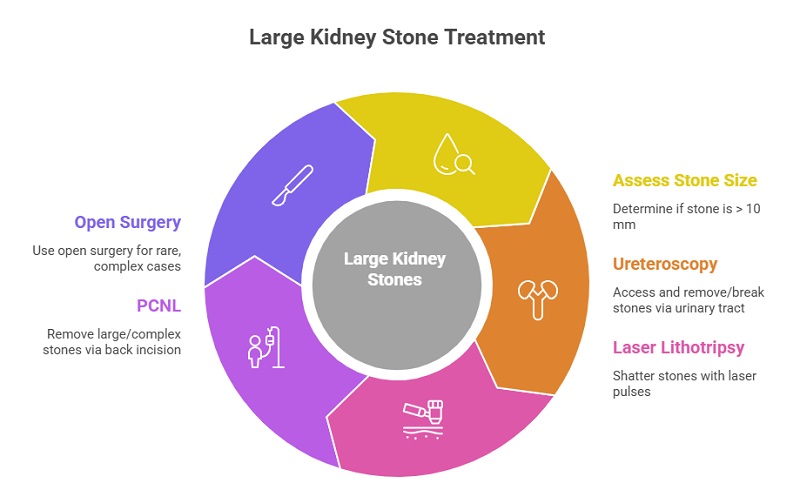
Stones greater than 10 mm in size generally do not pass on their own and need some intervention. Stones bigger than 20 mm are particularly suited for PCNL.
You can have an appointment with Dr. Kumar Rohit, MBBS, MS, the best urologist doctor in Patna at Big Apollo Spectra Hospital for these cases.
1. Ureteroscopy for Larger Ureteric Stones
Larger ureteric stones are treated with ureteroscopy. Using a scope, we are able to access the stones through the urinary tract and either extract the stone in its entirety or break it down into smaller fragments that can be subsequently extracted.
This modality has a number of advantages including the fact that no external incision is created and the patient generally returns to full activity much more quickly than with an open surgery approach.
2. Laser Lithotripsy for Breaking Bigger Stones
Large stones are shattered into tiny fragments using high energy laser pulses, and it can then either be flushed out of the body or removed.
It is precise and reduces the damage risk to urinary tract tissues. This procedure is carried out under anaesthesia and is very comfortable with minimal post-operative discomfort.
3. PCNL (Percutaneous Nephrolithotomy)
A small incision is made in the back to allow access to remove very large or complex stones that cannot be treated through the urinary tract.
PCNL is generally indicated for very large stones (greater than 20 mm in diameter) or stones with an irregular shape. Recovery is generally around 7 to 14 days. PCNL has a high success rate for stone-clearance.
4. Rare Cases Requiring Open Surgery
While open surgery to treat stones is generally rare nowadays, there may be a few exceptions such as large or complex stones, where a less invasive procedure is not indicated or has failed, and open surgery is required.
Open surgery for kidney stones is not as common as it once was, but can be necessary for certain circumstances. This type of surgery generally requires a larger incision and a longer recovery time.
Knowing about these treatment options in advance can help you have an informed discussion with your doctor. However, knowing the treatment options for kidney stones is only a part of the process.
Many patients miss the early signs that indicate the need for treatment. Thus, being able to identify the common signs and symptoms that indicate you need immediate treatment is just as important.
➡️ Book a Kidney Stone Diagnostic Evaluation at BIG Apollo Spectra Hospital, Patna
First Signs of Kidney Stones That Warrant Diagnosis
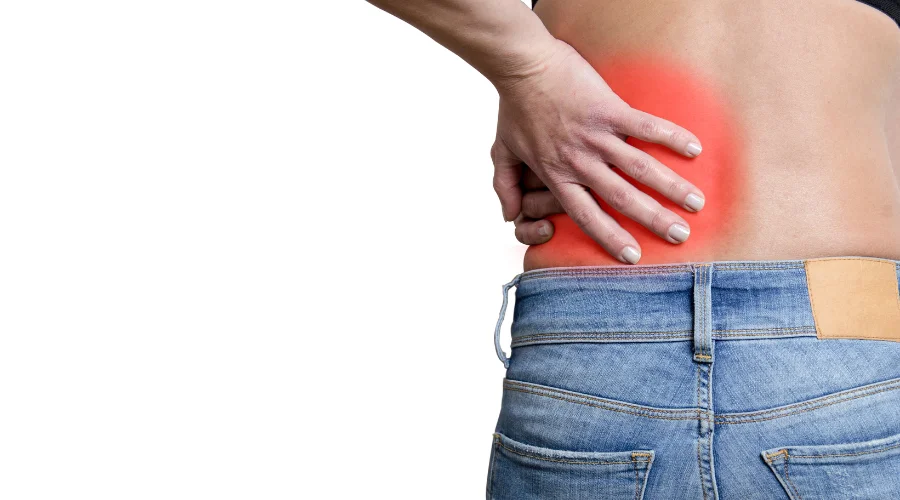
Kidney stones often announce themselves in unmistakable ways. Catching these signs early allows you to seek diagnosis before complications develop.
1. Severe Pain in the Back, Side, or Lower Abdomen
One of the characteristic symptoms of kidney stones is a sudden, sharp pain in the back or side, just under the ribs. This pain often extends down to the lower abdomen and groin. It is also possible for the pain to come and go and change in severity.
2. Blood in Urine
When a kidney stone moves around the urinary tract, it may injure the wall of the tract and cause bleeding. This is one of the common causes of blood in urine. The colour of the urine may change to pink, red, or brownish due to the presence of blood. There can be a stone-related issue even if there is microscopic blood detected in urine tests.
3. Burning Sensation While Urinating
Sometimes a stone near the bladder or in the ureter can irritate the lining of the urinary tract and cause a burning pain when urinating. This symptom is commonly confused with a urinary tract infection.
4. Frequent Urination
The feeling that you want to urinate again and again even if your bladder is not full is one of the symptoms of a stone. This overactive bladder behaviour can be explained by the fact that the stone is physically pressing against the urinary tract which cause the sensation of the need to urinate.
5. Nausea and Vomiting
Kidney stones can cause extremely severe pain, leading to a stress response and eventually nausea and vomiting. On top of that, the renal and the digestive system share the same nerve pathways, which explains why abdominal pain often accompanies kidney stone pain.
6. Fever and Chills
If fever accompanies the pain caused by a kidney stone, this is a sign that there is an infection in the urinary system. You definitely need to see a doctor if this occurs so that they can start the treatment right away and prevent the spread of the infection to the kidney.
7. Difficulty Passing Urine
If the stone is large enough, it can totally or partially block the urinary flow. This may result in a great deal of discomfort, and if no action is taken, it will lead to the rise of pressure in the kidney, which can eventually cause damage to the kidney.
Because these symptoms can overlap with other conditions, which is why getting the right diagnosis is essential. The next section covers what to watch for as an emergency.
Emergency Warning Signs – Take Action Immediately!
Certain kidney stone symptoms indicate an emergency. Don’t look for a scheduled appointment and head to a kidney stone specialist doctor in Patna without delay if you find yourself experiencing any of the following:
- Very severe pain that is not easy to handle even with over-the-counter medications
- High fever of 38°C and above along with urinary symptoms. This may be a sign of kidney infection.
- Blood in urine especially in large amount or with other symptoms
- Not being able to pass urine or very low urine output
- Having kidney stones again after having treatment for it
These are situations when you can’t take the risk of handling the problem yourself or waiting it out to see if the symptoms pass.
Only a urologist or nephrologist will be able to look at your problem properly and start the right treatment that will also help you avoid any complications later on.

How Do Doctors Diagnose Kidney Stones?
Right diagnosis helps in planning everything whether it’s the entire treatment timeline or the procedures to remove kidney stones. Most of the time, doctors begin with a physical examination and then order one or more of these tests.
- Physical examination: In order to determine the cause of your symptoms, your doctor will locate the areas where you feel pain, check for tenderness, and evaluate your symptoms as a whole.
- Urine test: The analysis of urine can reveal the presence of blood, minerals, and infection while confirming the presence of kidney stones.
- Blood test: Tests involving blood determine the kidney function and also reveal whether the level of calcium or uric acid and if it is elevated, which may be a cause for stone formation.
- Ultrasound: These tests are used to locate the stone, and it is a non-invasive test that doesn’t expose the patient to any radiation.
- CT scan: This is the most advanced imaging test available and provides the most detailed images of your kidney and ureter. It allows the detection of small stones as well as an assessment of the size and position of the stones.
- X-ray: An abdominal X-ray can help show whether or not there are any calcium-containing stones present. However, X-rays may not be able to show very small stones or non-calcium stones.
Once a patient is diagnosed with a kidney stone, the specialist will decide on a course of treatment, based on variables such as the size and location of the stone and the patient’s general health.
A choice must also be made as to which specialist should perform the treatment. Choosing the right specialist for your treatment is just as important.
Why Choose a Specialized Doctor in Patna for Kidney Stone Treatment?
Every kidney stone case is different. Some cases may need a urologist for procedures and surgery, while others need a nephrologist to control the underlying cause (such as diabetes, other metabolic disorders, or pre-existing kidney issues). Having both the urologist and nephrologist under one roof is a huge advantage to our patients.
Big Apollo Spectra Hospital, Patna has the best Nephrologist in Patna, Dr. Khushboo Rani, MBBS, MD and one of the best urologists in Patna, Dr. Kumar Rohit, MBBS, MS. This integrated approach means your care is coordinated, faster, and more effective. Here are some of the benefits you can expect:
- Advanced diagnostic imaging: The availability of high-resolution CT scans, ultrasounds, and X-rays for precise stone detection.
- Minimally invasive procedures: ESWL, Ureteroscopy, Laser Lithotripsy, and PCNL performed by experienced hands.
- Quick recovery: Less post-operative pain than traditional open surgery with minimally invasive techniques, which also means quicker return to normal activities.
- Experienced urologists: Specialists with extensive training for the management and treatment of kidney stones as well as more complicated urologic conditions.
- 24/7 access to emergency support: Patients have access to a doctor 24 hours a day, 7 days a week to address any acute kidney stone cases.
- Personalised treatment plans: treatment tailored for your specific stone size, lifestyle and medical history.
Big Apollo Spectra Hospital Patna has a panel of expert urologists & nephrologists who treat kidney stones with the latest & most optimal methods. Whether simple or complex cases of kidney stone; we have the right solutions at Big Apollo Spectra Hospital, Patna.
➡️ ➡️ Book Appointment at BIG Apollo Spectra Hospital
Frequently Asked Questions
These are some of the most frequently asked questions by patients about kidney stone treatment in Patna along with their answers.
1. What is the best treatment for kidney stones?
Treatment choices vary depending on the size of the stone. Smaller ones can be eliminated through natural means by drinking water abundantly and taking the prescribed medicines, whereas bigger stones require ESWL, Ureteroscopy, Laser Lithotripsy, or PCNL.
2. What is the cost of kidney stone treatment?
Costs of kidney stone treatment in Patna can differ significantly, depending on the type of surgery, the hospital you choose, and how complicated your case is.
However, a meeting with a doctor can help you to come up with an effective and practical plan and the accurate estimation of the cost.
3. How to 100% avoid kidney stones?
There is no 100% assured way that you will never get kidney stones but the risk can be minimized greatly by drinking plenty of fluids, consuming a wide variety of healthy foods, and cutting down on salt and foods high in oxalate.
PEOPLE ALSO READ: How to Prevent Kidney Stones?
4. Which doctor is best for kidney stone treatment?
If you are required to have a surgery or other invasive procedure then you should see a urologist, while a nephrologist manages kidney health and metabolic causes.
If you have not made a decision and are looking for a doctor to consult for early signs, then a nephrologist is a good choice to get a diagnosis and rule out underlying conditions.
5. Can I remove kidney stones without surgery?
Absolutely, that is right depending on the size; stones less than 5 mm in diameter are usually treated by simply increasing the water intake and using medications. On the other hand, ESWL which is a non-surgical method may be used for medium-sized stones.
6. Can a 7mm kidney stone dissolve?
It’s unlikely that a 7 mm stone would dissolve by itself, however, alpha-blockers and ESWL are used to break down the stone and aid in its passage without a surgical intervention.
7. Is laser treatment for kidney stones painful?
Kidney stone laser surgery is performed under anaesthesia, so there will be no pain during the procedure, however, you may experience mild discomfort for a day or two afterwards.
8. How long does recovery take after kidney stone surgery?
Generally, the time needed for the recovery of the patient post surgery of the minimally invasive procedures like ureteroscopy or PCNL range from a few days till two weeks. But it also depends on the type of surgery and the individual health condition.
If you are not able to find the answer to your question in the list above or you have symptoms that are still persisting over time, the best thing to do next is to talk to a specialist. When your kidneys are affected, it is not something that you should put off.
Get Advanced Kidney Stone Treatment Today
If kidney stones are detected early, the condition can be controlled well and the patient can be treated by the right experts. A timely diagnosis stops a slight pain turning into a major kidney issue. If you have been experiencing symptoms, the most secure thing to do is see a urologist or nephrologist without hesitation.
Besides the doctor’s prescription, making some changes in your lifestyle and habits can also keep kidney stones at bay and safeguard your kidney health in the long run.
Going to a nephrologist can help you handle recurrent occurrences by finding out the reasons for the formation of the stones, which will also help prevent kidney damage over time.
For dependable and all-round treatment, contact our team at Big Apollo Spectra Hospital, Patna, where skilled specialists are always willing to help you from the time you are diagnosed till when you are totally recovered and can finally take your first step towards a pain-free life.




Not all kidney stones require surgery, which is a huge relief for many people. It’s good to know that smaller stones can often be managed with just increased fluid intake and medication, making treatment less invasive and more manageable.
Thanks for highlighting the importance of early diagnosis and treatment of kidney stones. It’s reassuring to know that not all stones require surgery, especially smaller ones that can be managed with hydration and medication. Your emphasis on timely care to prevent irreversible damage really underscores why awareness and prompt action are so crucial.