
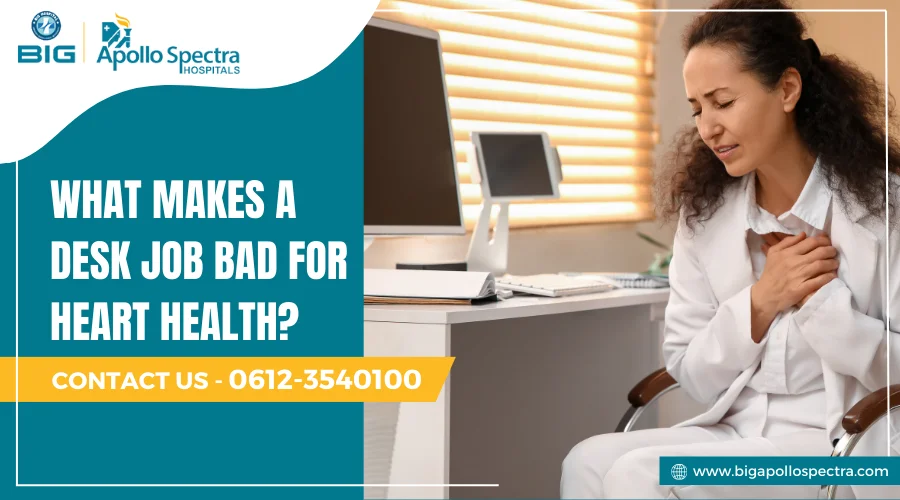
People spending long periods hunched over their desk is a common sight across IT parks, banking halls, coaching centers, and government offices throughout India.
The urban areas of Bihar including Patna, Gaya, and Bhagalpur now have more people who live sedentary lives because of their urban environment.
Heart disease now affects more people under forty who used to believe cardiac problems would only affect them in their older years. The desk job exists as a silent contributor to the growing cardiovascular emergency.
What Makes a Desk Job Bad for Heart Health?

Office environments function as more than physical work areas; they also create conditions which increase the risk of heart disease.
We need to study office culture aspects which control our daily activities to identify desk job health issues and the risk of heart problems down the line.
1. Prolonged Sitting as a Daily Habit
Your daily work activities require you to sit for 8 to 10 hours straight while taking brief interruptions only for meetings.
Physical symptoms of sitting too much begin to develop from the very first day of continuous sitting. Not to mention, your daily commute requires you to spend additional time sitting which extends your total inactive time to almost half of your daily awake period.
As a result, your heart must operate under constant pressure reducing blood circulation, forcing your heart to work harder even while “resting.”
2. Lack of Incidental Physical Activity
Office conveniences eliminate natural movement. Workers can execute multiple tasks through the digital environment and they do not need to move or walk to accomplish tasks.
Elevators serve as a substitute for stairways. The delivery service will deliver your purchased food directly to your desk. All this means the calorie-burning rate of desk workers is far lower than that of active professionals.
This metabolic slowdown creates major heart health problems because it enables cholesterol and fat to accumulate in arteries while the heart muscle becomes weaker because of reduced activity.
3. Work-Related Stress and Deadlines
The mental strain from targets leads to continuous stress which harms your cardiovascular system. Performance anxiety causes the body to release cortisol which leads to increased blood pressure and heart rate.
People who work beyond 10 PM experience sleep disturbances which interfere with their heart recovery process. Moreover, your body develops chronic inflammation which affects all your blood vessels including the heart arteries when a stressful life becomes your normal state.
4. Unhealthy Office Eating Patterns
The standard workplace routine includes multiple sugar-filled tea and coffee breaks which trigger your heart to experience multiple glucose spikes throughout the day. Processed snacks contain no nutritional value and lead to plaque development.
Many skip breakfast, then compensate with heavy lunches followed by hours of inactivity. These established patterns between sitting and eating lead to elevated triglyceride levels which together with insulin resistance create the conditions for desk job heart disease to develop through time.
5. Screen Time and Poor Posture
Your body position at the desk compresses your chest cavity which interferes with your lungs expansion. Your bloodstream receives less oxygen because of the reduced expansion. Furthermore, the stiffness in your neck and back region restricts your ability to move which decreases your chances of taking breaks.
Your heart needs to work more intensely to distribute oxygen because your breathing patterns become disrupted from poor posture, leading to increased cardiac effort.
6. Skipping Preventive Health Checkups
Desk work professionals tend to dismiss their initial symptoms which include chest tightness and fatigue because they assume these symptoms stem from stress.
Young professionals believe their age protects them from heart disease, so they ignore their first heart disease warning signs until their condition becomes life-threatening.
High cholesterol, pre-diabetes, and elevated blood pressure are not usually apparent at first. Moreover, the diagnosis gets further delayed when patients do not consider scheduled medical screenings. By the time symptoms become impossible to ignore, significant damage has often occurred.
The combination of these lifestyle choices establishes an optimal setting which leads to cardiovascular disease development even before any symptoms become noticeable.
The combination of these elements creates an environment which endangers heart health for people who work at desks. Poor heart health is indeed an issue among common desk job problems.
What Happens Inside Your Body When You Sit for 8+ Hours?
Prolonged sitting triggers biological changes harming your cardiovascular system:
- Reduced blood circulation: Blood pools in legs, heart works harder
- Increased triglycerides: Fat particles rise, muscles not using them
- Insulin resistance: Cells stop responding to insulin properly
- Lower HDL (good cholesterol): Protective cholesterol decreases
- Increased inflammation markers: Compounds rise, damaging arterial walls
- Rise in Blood Pressure: Arterial stiffness, endothelial dysfunction, increased workload
- Metabolic Slowdown: Reduced calorie burn, increased visceral fat, higher South Asian cardiac risk
These changes develop silently, detected only during cardiac screening. The best cardiologist in Patna at Big Apollo Spectra Hospital’s cardiac facilities offers comprehensive screening for desk workers.
Understanding maximum sitting time per day helps explain why sitting is the new smoking.
A Day in the Life of a Desk Worker’s Heart
Your heart doesn’t experience your workday the way you do. Your body experiences specific biological processes which occur when you spend a standard day at your desk in an office environment.
9 AM: Sitting begins—which triggers the metabolism to operate at a reduced level.
11 AM: The blood flow rate decreases at 11 AM because the legs fail to pump blood back effectively.
2 PM: Your cardiovascular system faces the stress of your post-lunch sugar peak.
6 PM: The body starts producing more stress hormones due to upcoming deadlines which causes blood pressure to increase.
10 PM: Poor recovery—inadequate sleep prevents heart repair.
The “Active but Sedentary” Myth
Sitting for 9-10 hours after a one-hour gym session will still raise your chances of developing cardiovascular disease.
Exercise provides no sufficient protection against the very scary effects of sitting too much. Your body requires continuous physical activity instead of short bursts of intense exercise.
The importance of breaking up sitting time far exceeds the duration of overall exercise time.
“Remember You Can’t Out-Exercise 10 Hours of Sitting.” Your heart needs movement throughout the entire day instead of depending on occasional intense physical activity.
Why Desk Jobs Increase Heart Attack Risk in Indians?

Indians are more vulnerable to cardiovascular risks when they work in sedentary roles due to certain cultural and dietary factors.
1. High-carb Diet
The traditional Indian diet which includes large amounts of rice, rotis, and sweet foods leads to multiple insulin spikes during your work hours.
The body experiences glucose fluctuations which lead to the development of arterial plaque and the accumulation of abdominal fat.
The combination of sitting with this eating pattern leads to faster development of cardiovascular disease than consuming protein-rich foods which helps stabilize blood sugar levels.
2. Stress from Competitive Jobs
The professional pressure pervasive in the Indian work environment is at an extremely high competitive level which produces continuous mental stress.
The sympathetic nervous system remains activated because of this ongoing chronic stress which leads to elevated blood pressure and continuous high cortisol levels.
The body experiences permanent cardiovascular changes through this extended response which strengthens the negative connection between office job and high blood pressure.
3. Smoking + Tea Breaks
The social practice of taking smoke breaks with sugary tea leads to artery constriction from nicotine and multiple blood sugar spikes.
Smoking causes atherosclerosis to advance at a faster rate while it simultaneously increases both heart rate and blood pressure.
People who drink sugary tea daily will take in more calories and sugar which forms a dangerous combination that increases their chances of developing cholesterol issues from sitting jobs.
4. Lack of Routine Health Checkups
Most Indian professionals avoid annual screenings because their busy lives prevent them from following a regular checkup schedule.
Medical check-ups for patients serve as vital tools to detect diabetes, hypertension, and high cholesterol development because these conditions often progress and remain undetectable when patients do not receive ongoing medical monitoring.
By the time symptoms appear, substantial cardiac damage has often occurred, making treatment more difficult.
Why Indians Are at a Higher Risk Despite Being Young?
South Asians develop heart disease earlier because their genetic makeup predispose them to abdominal obesity, diabetes, and metabolic syndrome. Indians have higher visceral fat even with normal BMI.
The situation has reached an emergency state because this makes working long hours and heart attack risk particularly acute.
Thus, we offer comprehensive screenings for people who want to seek advice from a heart specialist in Patna for concerning symptoms.
Warning Signs Office Workers Often Ignore
You need to address these symptoms because they do not originate only from work-related stress:
- Mild chest discomfort: Pressure or tightness that comes and goes.
- Fatigue: Unusual tiredness that doesn’t improve with rest
- Shortness of breath on stairs: Struggling with previously easy activities
- Neck/jaw pain: Discomfort in upper body areas
- Sudden sweating: Cold sweats without exertion
The body produces these warning signals usually several months before a person experiences a serious cardiac event. Listen to what your body is telling you.
Who is at Highest Risk?
The danger level differs between employees who work at desks. Your cardiovascular risk will increase dramatically when you have any of these specific risk factors:
Age 30+: People in this age group show signs of cardiovascular system decline because they do not get enough physical activity and sedentary habits usually build up as time passes.
Family history: Genetic predisposition means lifestyle factors affect you more severely.
Diabetes: The condition of diabetes leads to blood vessel damage which results in faster plaque development.
High BP: The heart muscle experiences continuous stress from elevated blood pressure which leads to damage of arterial walls.
Belly fat: When there’s visceral fat, it releases inflammatory compounds which damage your cardiovascular health.
Smoking: Tobacco causes damage to arterial linings which increases the risk of developing sitting related heart disease risk.
Thus, it’s essential that if you have a combination of these risk factors, you book a preventive heart check-up right now to steer clear of complications in the future.
How to Prevent Heart Disease in Office Workers?

Prevention does not need people to make major changes in their way of life. These practical desk-friendly methods enable you to start heart protection now:
1. The 5-5-5 Rule
Set a timer for 55 minutes at a time. Stand and move for 5 minutes—walk around, stretch, or take calls standing. The goal should be to reach 500 steps which will take about five minutes to complete.
This enhances blood circulation while preventing blood pooling, and it also helps to restore metabolic functions. These micro-movements counteract sitting all day at work and exercise deficits effectively.
2. Desk Stretch Routine
Create a 3-minute desk sequence which includes shoulder rolls, neck stretches, seated spinal twists, and ankle circles for circulation. Also, add chest openers to combat slouching and hip flexor stretches to fight against the stiffness that develops from sitting.
Perform mid-morning and mid-afternoon. The stretches help people maintain their flexibility while improving blood circulation and decreasing muscle tension which makes it harder to move.
3. Stair Rule
Always take stairs for three floors or fewer, both directions. This enables people to convert their unproductive time into an ongoing cardiovascular workout.
Using stairs helps people increase their heart rate while they build leg strength, and they will burn more calories than when using elevators.
Staff members who work in higher office locations should exit the elevator three floors early before their actual destination. This practice leads to significant cardiovascular benefits while providing heart-healthy exercise options for otherwise sedentary people.
4. Hydration Alarm Method
Set hourly alarms for plain water—not chai or coffee. The body achieves better blood flow circulation and viscosity because of proper hydration, and the need to visit the bathroom creates ongoing physical activity. Place a big water bottle in plain sight on your work desk.
The recommended daily water intake is between 8 to 10 glasses. This creates natural movement breaks while providing hydration your cardiovascular system needs, combating prolonged sitting effects.
When Should You Get a Heart Check-Up?
Doctors use preventive screening to detect dangerous health conditions before any complications arise:
- Lipid profile: The lipid profile test should be annual for people aged 30 and above but doctors may request this test every six months for patients who have established risk factors.
- ECG: Baseline by 30, then annually with desk job and heart health concerns.
- TMT: Every two years after 35, or immediately with symptoms.
- 2D Echo: Every three years after 40, or sooner with high blood pressure or diabetes.
- Preventive screening: The patient needs annual screening tests if they have multiple risk factors.
As a top heart hospital Patna, Big Apollo Spectra Hospital offers complete cardiac screening packages.
Beat the Cardiac Risks of Sitting – Book Screening Today!
Your desk job doesn’t have to harm your heart. Small modifications to work routines throughout the day will produce major reductions in cardiovascular disease risk.
Your heart health depends on taking movement breaks, eating better, learning stress management techniques, and getting screened regularly.
Prevention stands as your initial defence because it provides a more straightforward approach than symptom treatment.
Concerned about your heart health? Our multispeciality hospital in Patna offers preventive cardiac screening services for patients.
Big Apollo Spectra Hospital delivers complete cardiac medical services with state-of-the-art diagnostic facilities and a team of specialized cardiologists. Book your appointment for heart health screening now!