
Shock after a broken bone is a medical emergency in which your circulatory system can’t deliver enough blood and oxygen to your organs, and it can set in within minutes to a few hours of the injury. You’ll typically notice a fast, weak pulse, pale and clammy skin, confusion, and rapid breathing as your body struggles to compensate for blood loss and trauma.
The severity depends on which bone is affected, how much tissue is damaged, and how much blood you’ve lost. Left untreated, shock can progress quickly and lead to organ failure, so recognizing it early matters as much as treating the fracture itself.
This is why prompt diagnosis makes such a difference to outcomes. Knowing what to watch for helps you or someone with you act before the situation becomes critical.
Dr. Rahul Anand specializes in complex trauma and fracture fixation at Big Apollo Spectra Hospital, Patna.
Consult Dr. Rahul Anand (MBBS | MS Orthopaedics) →
Symptoms of Shock After Broken Bone
Following are a few symptoms that may indicate shock after a broken bone. Understanding these symptoms is essential as it may help avoid complications in the long run.
1. Rapid Heart Rate and Weak Pulse
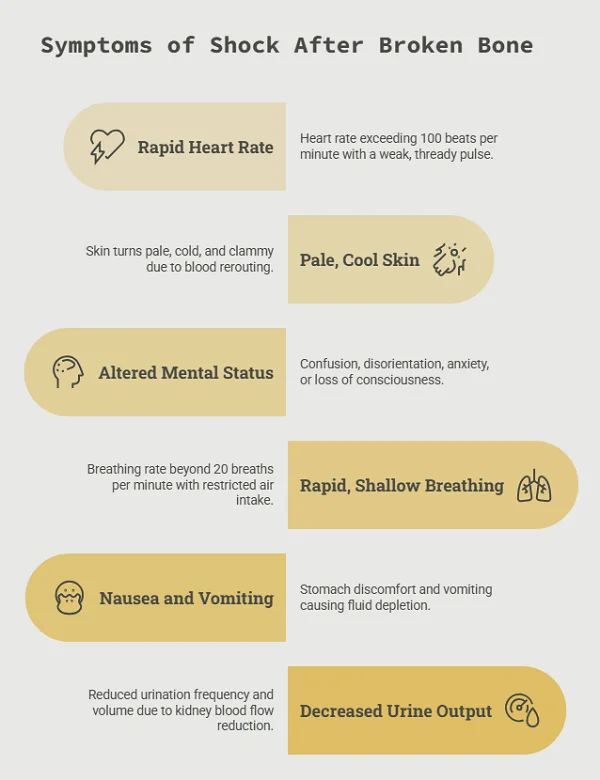
A fast heart rate exceeding 100 beats per minute marks the beginning of one of the earliest symptoms of shock after a fall or bone fracture. The body’s cardiovascular system responds by pumping faster as an attempt to compensate for decreased blood volume and circulation.
In spite of the heart pumping at a higher rate, there’s often a weak, thready pulse that medical professionals detect when checking the wrist or neck area. The heart faces difficulties in maintaining proper blood pressure throughout the body.
Moreover, patients commonly feel their heart racing or experience heart palpitations. The pulse may also become irregular as the heart works harder to maintain circulation of blood to vital organs. Medical professionals need to treat this symptom right away to prevent cardiovascular collapse. This symptom shows up between minutes to hours after the fracture.
2. Pale, Cool, and Clammy Skin
Going into shock from pain symptoms leads to noticeable skin changes that medical personnel can quickly detect. The facial area along with the lips and nail beds turns pale because the body reroutes blood toward vital organs.
Skin temperature feels cold during contact, especially in extremities such as hands and feet. The body’s stress response causes excessive sweating that leads to skin becoming clammy even though it feels cold to the touch.
The skin vessels located near the surface constrict to keep blood flowing toward heart, brain, and essential organs. The medical professional identifies this specific skin appearance, which includes pallor, coolness, and clamminess, as a classic sign of shock that needs immediate medical treatment.
3. Confusion and Altered Mental Status
Mental changes constitute one of the most dangerous symptoms which develop when shock occurs after a fracture. Patients may develop confusion alongside disorientation and they struggle to recall basic facts about themselves including their name and location.
While some patients experience excessive anxiety or restlessness, other individuals become unusually drowsy or unresponsive.
Reduced blood flow restricts brain oxygen delivery which results in these neurological symptoms. Family members are usually the first to observe personality changes and inappropriate reactions to questions. Severe shock cases may even lead patients to experience complete loss of consciousness.
The need for an immediate visit to an orthopedic doctor in Patna or your local area physician becomes essential when these mental changes are accompanied by a broken bone since delayed medical treatment can cause irreversible brain function damage.
4. Rapid, Shallow Breathing
Respiratory changes serve as major warning signs of shock following bone injuries. The body accelerates breathing to a faster rate, often beyond 20 breaths per minute, in an attempt to increase oxygen intake.
Although these rapid shallow breaths actually cause a limited amount of oxygen to enter the bloodstream. Patients frequently report feeling that their breathing is restricted or they cannot draw sufficient air even at rest.
Reduced tissue oxygen delivery leads the body to increase respiration rate through faster breathing patterns. The respiratory pattern may even become erratic and labored when shock advances.
Some patients develop panic or feel suffocated by their breathing problems, which intensifies their body’s stress response and quickens the progression of shock.
>> Book an Emergency Appointment with an Orthopedic Specialist

5. Nausea and Vomiting
Patients who experience shock following traumatic bone fractures typically present with gastrointestinal symptoms. The onset of nausea triggers a queasy stomach discomfort that may come in waves.
The progression of nausea may also result in vomiting which leads patients to throw up their stomach contents.
The digestive system experiences changes in blood flow during shock which disrupts normal stomach and intestinal operations. Moreover, the body’s stress reaction leads to hormonal fluctuations that affect the digestive system.
Furthermore, the fracture-related pain stimulates nerve pathways, which contribute to nausea as a result. Shock patients face serious risks from vomiting because it results in additional fluid depletion which worsens their circulation problems. The dual effect of decreased food consumption and vomiting-related fluid depletion can even accelerate the shock transition from mild to severe stages.
6. Decreased Urine Output
The severity of shock following bone fractures becomes evident through changes in kidney function. The body needs proper blood pressure and circulatory flow to produce normal urine quantities for waste removal.
During shock onset, blood circulation to the kidneys becomes severely reduced, thus lowering urine output. The affected person typically experiences lower urination frequency together with reduced urine volume.
The produced urine may even show darker coloration than usual. Severe cases lead to complete urine production cessation which indicates kidney dysfunction that can become permanent without medical intervention.
Medical professionals usually monitor urine output measurements to evaluate the effectiveness of ongoing treatment. Other shock indicators along with reduced urine output show that the body directs blood flow toward the heart and brain at the expense of kidney operation.
Noticing these signs after a fall or fracture? Don’t wait it out.
Consult Dr. Rahul Anand – Book Appointment →
Diagnosis and Treatment
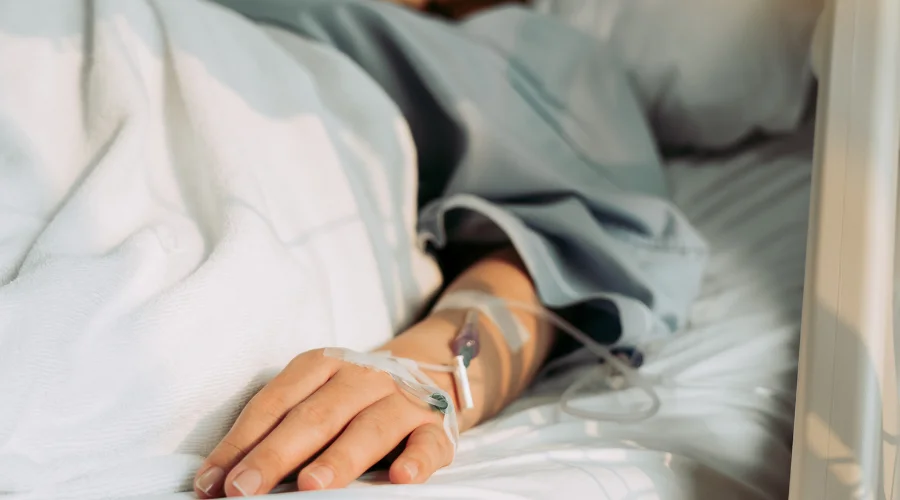
Medical professionals identify shock cases following bone fractures through a combination of physical exams and vital sign measurements.
Healthcare providers assess blood pressure alongside pulse rate and breathing patterns while checking for signs a broken bone is not healing properly.
Blood tests evaluate oxygen levels together with blood cell counts and markers for organ function. X-rays serve to evaluate the extent of fracture damage and the presence of healing indicators on X-ray images.
Treatment methods include fluid administration through IV lines together with blood transfusions (when necessary) and methods to manage pain.
Medical staff keep tabs on both cardiovascular stability and fracture healing progression since shock can delay the bone healing process for weeks.
Oxygen therapy along with medications to support blood pressure represent part of the emergency treatment protocol. Severe fractures and uncontrolled bleeding that leads to shock might require surgical intervention.
FAQs
Following are some of the common queries our patients have about broken bone injuries and their recovery.
1. What are the signs that a broken bone is not healing?
Persistent pain past the expected healing window, visible swelling or deformity, and tenderness at the fracture site are the main warning signs a bone isn’t healing properly.
2. Is it normal to feel tired after breaking a bone?
Yes, fatigue is common after a fracture because your body redirects energy toward tissue repair and inflammation control during healing.
3. How long does it take for a bone fracture to heal?
Most simple fractures heal in 6 to 8 weeks, though this varies with bone location, age, and severity of the break. Complications during bone fracture recovery such as a bone that doesn’t heal correctly following surgery may signal active issues that need specialized medical care.
4. How do you know if someone is in shock after a fracture?
Look for a rapid weak pulse, pale or clammy skin, confusion, and fast shallow breathing. These signs typically appear within minutes to hours of the injury.
5. Is shock after a broken bone an emergency?
Yes, shock after a fracture is a medical emergency that requires immediate treatment to prevent organ damage.
6. Can shock from a fracture be fatal?
Yes, untreated shock can be fatal because it deprives vital organs of oxygen and blood flow, leading to organ failure.
7. How long does shock last after a fracture?
Shock can last from a few hours to several days depending on severity, and it requires continuous medical monitoring until vital signs stabilize.
Don’t Ignore Shock After Bone Injury
The early detection of shock signs following a bone fracture becomes essential for preventing fatal outcomes and serious medical complications.
The prompt recognition of fast heart rate along with skin changes, confusion, breathing issues, nausea, and decreased urination helps in getting timely medical assistance. Your body needs immediate professional medical attention for these symptoms since basic first aid is not enough in these cases.
Medical attention should not be delayed because untreated symptoms increase the risk of severe consequences. Also, a broken bone which does not heal correctly following surgery might reveal active complications that need specialized medical care. When searching for a “bone hospital near me,” prioritize facilities with emergency capabilities and experienced orthopedic specialists who can address both immediate trauma and long-term healing needs.
Big Apollo Spectra stands as the best orthopedic hospital in Patna where patients can access complete orthopedic care and follow-up treatment. Take an appointment today if you’re not sure about your symptoms after a fall or fracture.